Where Each Type of Fat Lives
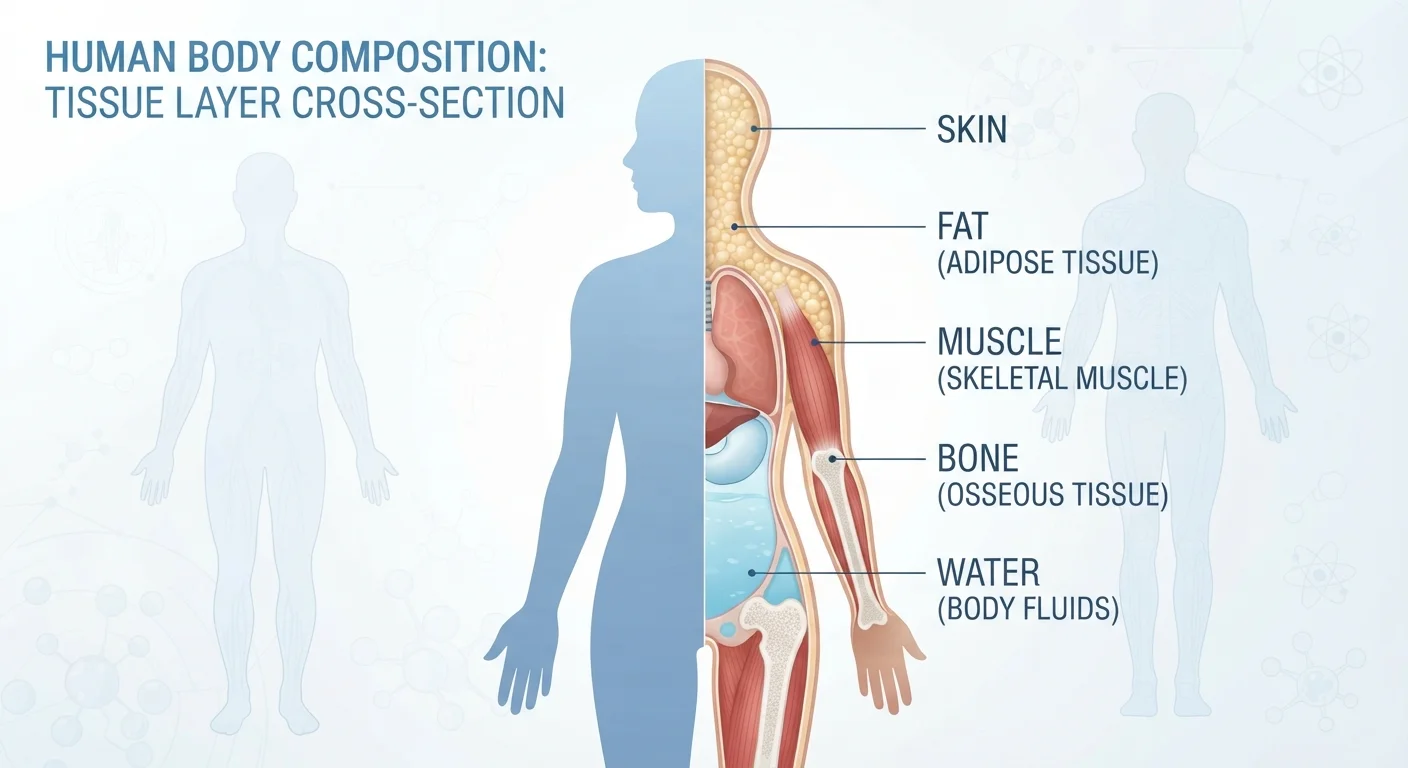
Body fat is not a single uniform tissue. Its biological behavior differs substantially depending on where it is stored — a distinction that matters far more than total weight or even total fat mass. Understanding the geography of fat is a foundational step in reading your health picture accurately, as explored in our overview of body composition.
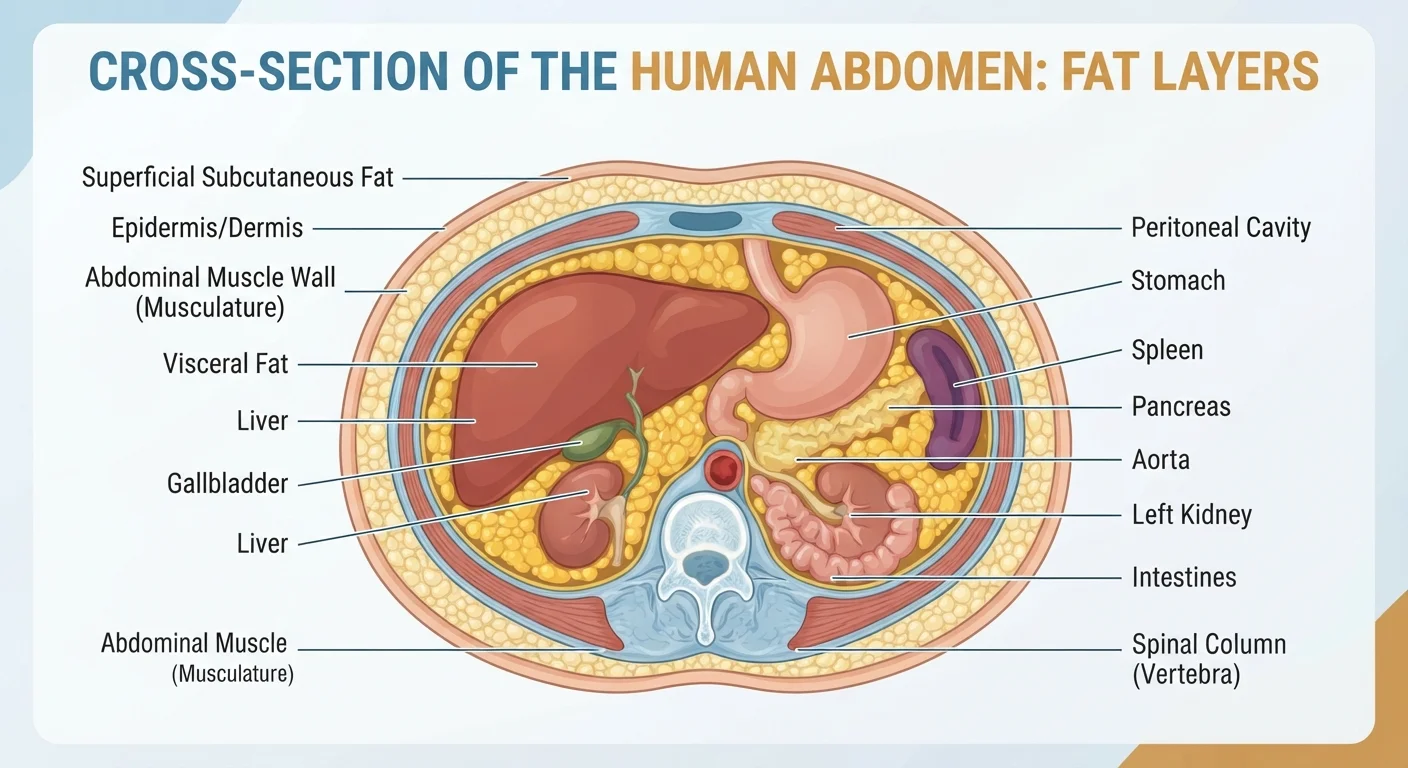
Visceral fat resides inside the abdominal cavity, packed around and between internal organs including the liver, pancreas, and intestines. Because it sits within the peritoneal cavity, it is not visible or directly pinchable from the outside. Subcutaneous fat, by contrast, lies in the layer directly beneath the skin across the entire body — abdomen, thighs, arms, and elsewhere. It is the fat you can grasp with your fingers and the type measured by skinfold calipers during body composition assessments.
This anatomical difference is not merely cosmetic. The two depots have distinct cellular profiles, drainage pathways, and hormonal outputs that translate into very different downstream health effects.
| Criterion | Visceral Fat | Subcutaneous Fat |
|---|---|---|
| Location | Inside abdominal cavity, around organs | Beneath skin, across the body |
| Visibility | Not visible or pinchable | Visible, measurable by calipers |
| Metabolic activity | Highly active; releases cytokines and fatty acids | Moderately active; secretes leptin |
| Cardiometabolic risk | High; linked to diabetes, CVD, inflammation | Lower; elevated risk only at very high levels |
| Response to aerobic exercise | Decreases preferentially and relatively quickly | Decreases gradually with sustained energy deficit |
| Clinical proxy measure | Waist circumference; imaging (CT/MRI) | Skinfold calipers; DEXA scan |
| Hormonal output | Pro-inflammatory cytokines (IL-6, TNF-α) | Leptin, adiponectin (relatively favorable) |
Why Visceral Fat Is Metabolically Dangerous
Visceral fat is highly metabolically active tissue. It releases free fatty acids directly into the portal vein — the blood vessel feeding the liver — exposing that organ to elevated lipid concentrations. This contributes to hepatic insulin resistance, elevated triglycerides, and impaired glucose regulation. Visceral adipose tissue also secretes pro-inflammatory cytokines (chemical messengers that promote system-wide inflammation), including interleukin-6 and tumor necrosis factor-alpha, at higher rates than subcutaneous fat.
Research published in major cardiology and endocrinology journals consistently identifies excess visceral fat as an independent risk factor for type 2 diabetes, cardiovascular disease, non-alcoholic fatty liver disease, and certain cancers — independent of overall body weight. This means two people with identical BMIs can carry meaningfully different cardiometabolic risk based on fat distribution alone. For a broader look at how BMI misses this nuance, see our comparison of body fat percentage and BMI.
~3x
Greater cardiovascular risk elevation from visceral vs. subcutaneous fat
Research in obesity medicine indicates visceral adiposity confers substantially higher cardiometabolic risk than equivalent subcutaneous fat mass.
35 / 40 in
Waist circumference thresholds flagging elevated visceral fat risk
Clinical guidelines commonly cite 35 inches for women and 40 inches for men as risk-associated waist circumference thresholds, though individual variation applies.
~30%
Visceral fat reduction possible with aerobic exercise alone
Several controlled trials have documented meaningful visceral fat reductions through regular aerobic activity even without significant caloric restriction or total weight loss.
Waist circumference is a commonly used clinical proxy: thresholds of 35 inches (88 cm) for women and 40 inches (102 cm) for men are frequently cited in guidelines as elevated-risk markers, though these cut-points have limitations across different ethnic backgrounds and body frames.
Subcutaneous Fat: Not Harmless, But Less Alarming
Subcutaneous fat is not inert — it plays roles in thermoregulation, mechanical cushioning, and energy storage. It also secretes hormones such as leptin, which signals satiety to the brain. In moderate quantities, subcutaneous fat is considered a relatively benign or even protective depot. Some research suggests that fat stored preferentially in the lower body (hips and thighs) may actually be associated with improved metabolic profiles compared to abdominal fat storage.
That said, very high amounts of subcutaneous fat — particularly in the abdominal region — do carry some metabolic risk, though generally lower than equivalent quantities of visceral fat. The distinction matters clinically: someone with large subcutaneous stores but little visceral fat often has a more favorable metabolic profile than their waistline alone might suggest.
Keep in mind that dietary fat consumed is a separate conversation from stored body fat. If you're curious how the fat in food relates to body composition, our article on what science actually says about dietary fat provides useful context.
How Each Type Responds to Lifestyle Changes
A key practical point: visceral fat is generally more responsive to lifestyle intervention than subcutaneous fat. Aerobic exercise — even without significant caloric restriction — has been shown in controlled studies to preferentially reduce visceral fat stores. Improvements in insulin sensitivity and inflammatory markers can appear relatively quickly, sometimes before body weight changes appreciably.
Subcutaneous fat loss tends to be slower and more gradual, following a sustained negative energy balance over time. It also demonstrates the well-documented phenomenon of regional variation: the body does not selectively burn fat from specific areas during exercise, despite the persistent myth of spot reduction.
For both fat types, the most evidence-supported strategies remain consistent: regular physical activity (with aerobic exercise showing particular benefit for visceral fat), a dietary pattern emphasizing minimally processed whole foods, adequate sleep, and stress management — all of which influence cortisol levels that independently promote visceral fat accumulation.
This article is for general informational and educational purposes only and does not constitute medical advice. Consult a qualified healthcare professional for personalized guidance regarding your health, body composition, or any medical condition.