Why Scale Weight Is a Noisy Signal
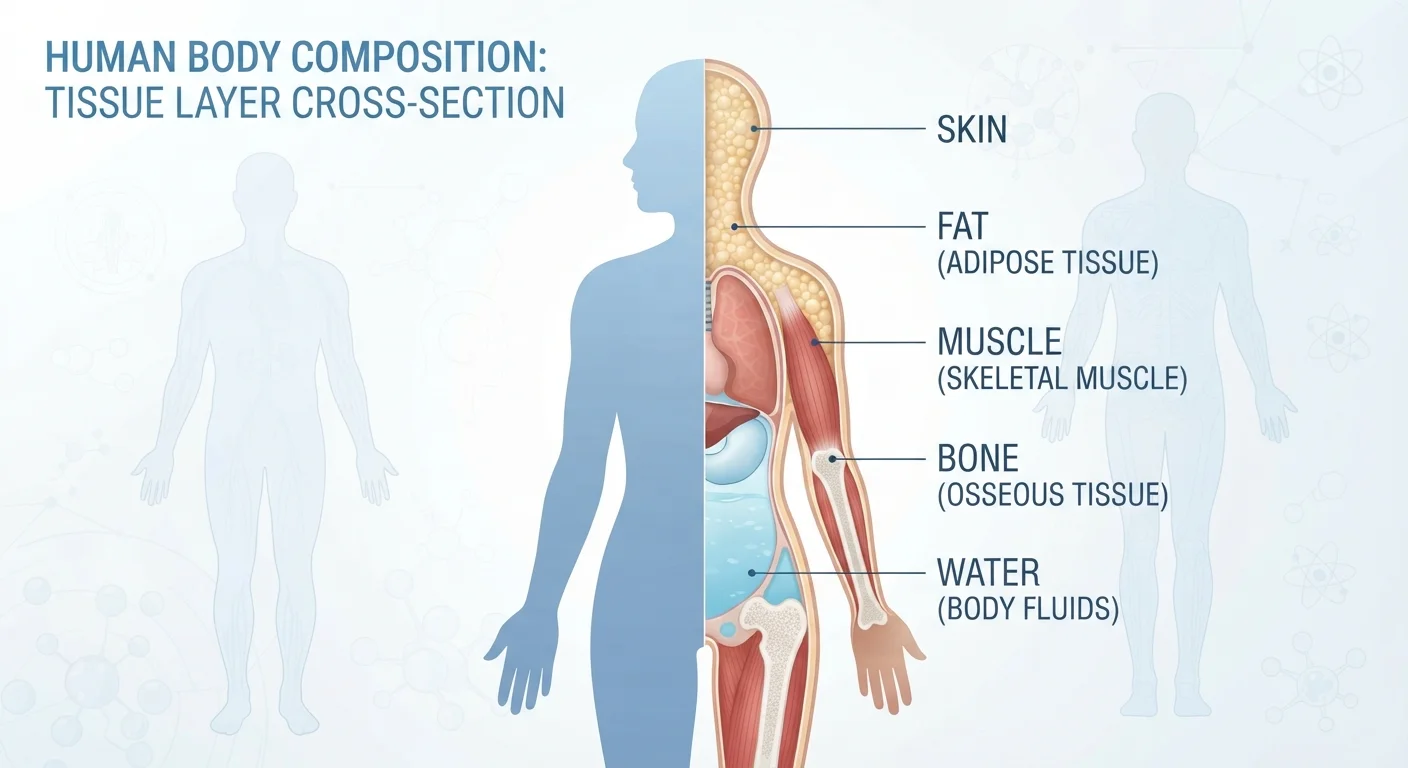
When people start a fitness program, the scale becomes the default report card. It's immediate, quantifiable, and familiar. The problem is that body weight reflects far more than fat mass — it captures muscle, bone, water, undigested food, and even the weight of blood volume changes that come with training adaptation.
On any given morning, your weight can shift by one to four pounds based purely on hydration status, sodium intake the prior day, hormonal fluctuations, and how recently you ate. None of those shifts represent meaningful changes in body composition. Yet a single higher reading can derail motivation that took weeks to build.
Understanding what your body is actually made of — and how the ratios of muscle, fat, bone, and water interact — reframes the scale as one imperfect data point rather than a verdict on your progress.
Common Mistakes That Distort How You Read the Scale
Most people don't make one big error — they make several smaller ones that compound into a distorted picture of their progress. Recognizing these patterns is the first step toward a more accurate and sustainable approach to tracking.
Weighing yourself daily and treating each reading as a meaningful trend.
Why it happens: Daily weighing feels like accountability, and people expect consistent downward movement to confirm their efforts are working.
Interpreting a weight plateau as evidence that the program has stopped working.
Why it happens: Linear progress is the mental model most people bring to fitness. A flat scale reading feels like stagnation, even when real adaptation is occurring beneath the surface.
Overlooking the simultaneous muscle gain and fat loss that often occurs early in a program.
Why it happens: People assume weight and fat are synonymous. When the scale doesn't drop despite consistent effort, they assume nothing is changing.
Ignoring water retention caused by inflammation, dietary sodium, or increased training load.
Why it happens: New or intensified exercise causes micro-trauma to muscle fibers, triggering an inflammatory response that draws water into the tissue. This can temporarily increase scale weight by several pounds.
Setting a single goal weight as the only marker of success.
Why it happens: Arbitrary target weights are easy to communicate and feel concrete. They also align with cultural messaging that equates a specific number with health or attractiveness.
What to Track Instead — and How
Replacing scale fixation doesn't mean abandoning measurement altogether. It means choosing metrics that actually reflect the changes your program is designed to produce.
1–4 lbs
Normal daily weight fluctuation range
Research on body weight variability consistently shows that hydration, food intake, and hormonal shifts can shift the scale by this amount within a single day, independent of fat change.
~5%
Body weight increase from muscle water retention
Studies on resistance training beginners document transient weight increases in the first weeks of training, primarily from muscle tissue swelling due to inflammation and glycogen storage.
2–4 weeks
Minimum timeframe to detect meaningful fat loss trends
Exercise physiologists generally recommend evaluating weight trends over a minimum of two to four weeks to filter out day-to-day noise and identify a reliable directional signal.
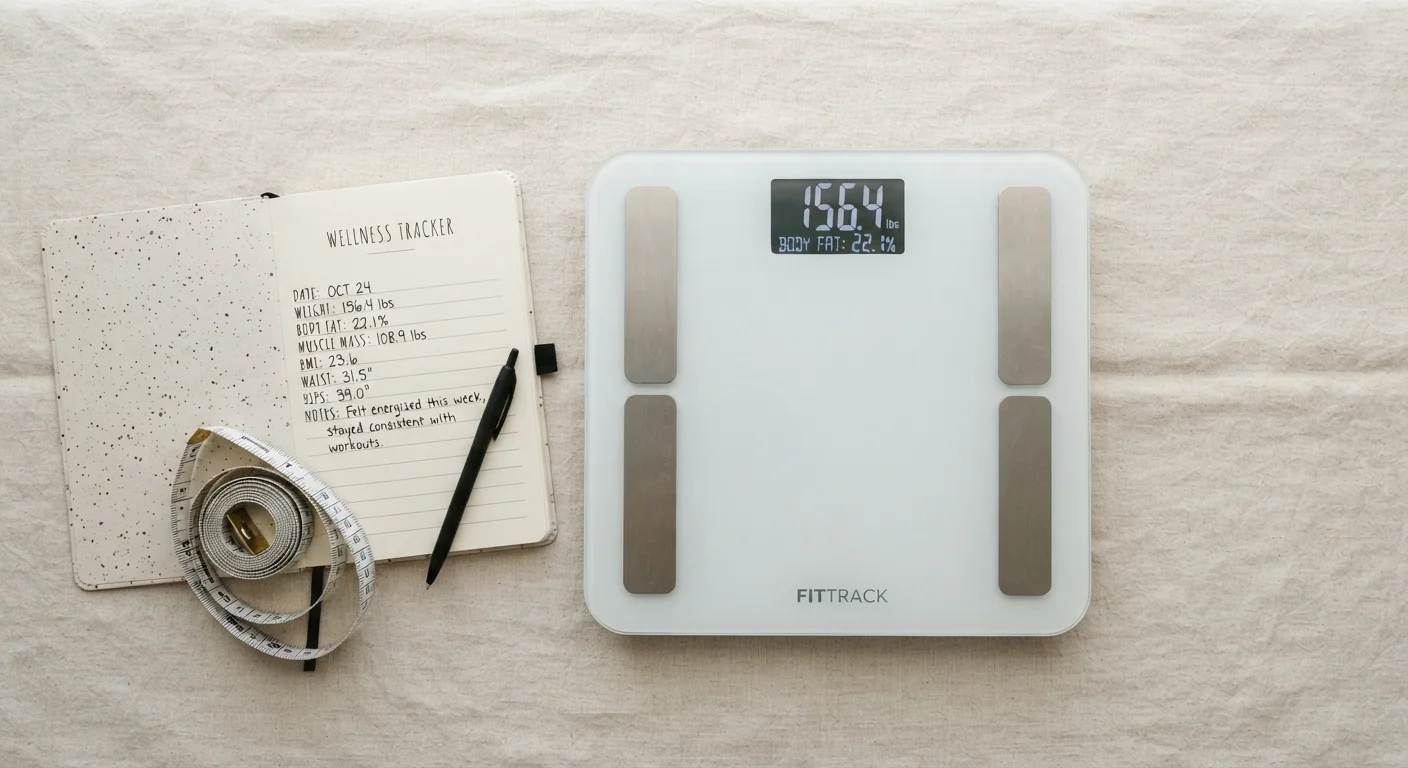
Body measurements — waist, hip, chest, thigh circumference — captured consistently using the same technique every two to four weeks can reveal fat loss that the scale obscures. A shrinking waist alongside a stable or slightly higher weight typically indicates simultaneous muscle gain and fat reduction, a result many programs aim for.
Performance markers are especially telling. If you're lifting more weight, running faster at the same heart rate, or recovering more quickly between sets, your physiology is adapting in ways the scale cannot register. These are clinically meaningful outcomes linked to reduced metabolic and cardiovascular risk.
Clothing fit, resting heart rate, sleep quality, and energy levels are also legitimate indicators. See how to track exercise progress without fixating on numbers for a broader framework that keeps measurement useful rather than anxiety-producing.
Before you set your next fitness goal, it's worth establishing a baseline across several of these metrics. The body composition metrics checklist outlines which numbers are worth gathering and how to interpret them together.
This article is for general informational purposes only and does not constitute medical advice. Consult a qualified healthcare professional before making changes to your diet, exercise program, or health management approach.