What Happens to Energy Expenditure During a Calorie Deficit
When calorie intake drops, the body responds on multiple fronts — and not all of them are obvious. Total daily energy expenditure has four main components: resting metabolic rate (RMR), the thermic effect of food, non-exercise activity thermogenesis (NEAT), and structured exercise. During a sustained calorie deficit, each of these can decline.
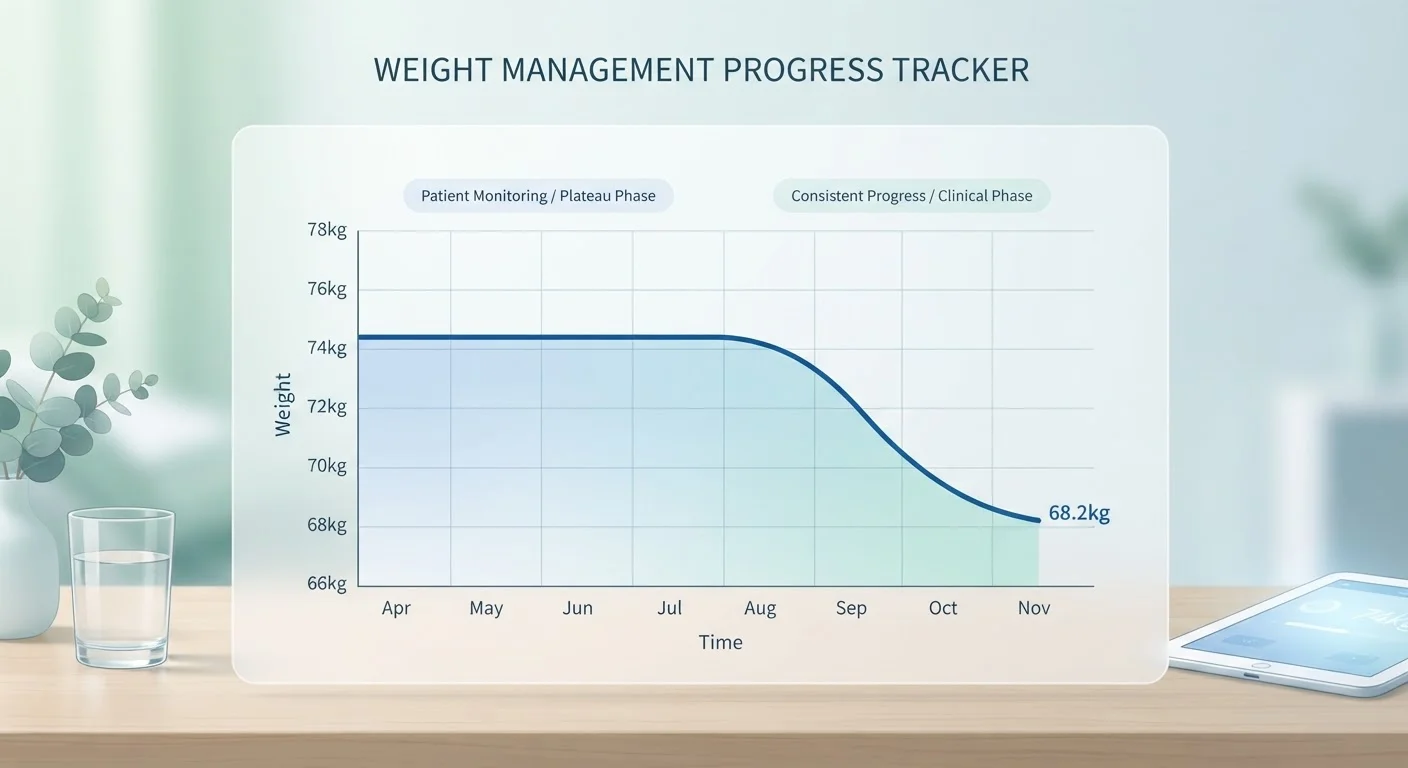
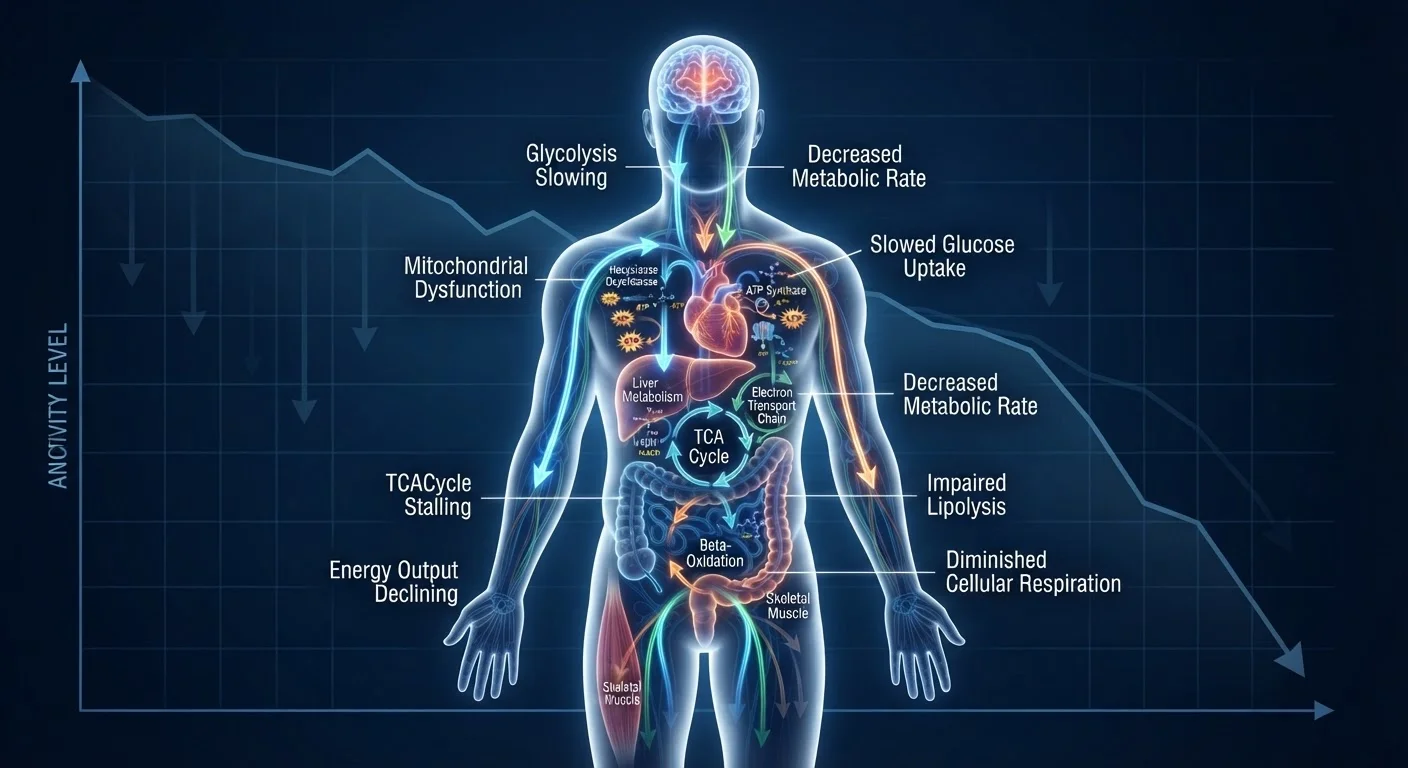
The most predictable drop comes from losing body mass: a smaller body simply requires fewer calories to maintain. But adaptive thermogenesis represents an additional suppression — a metabolic downshift that exceeds what weight loss alone would explain. The body becomes more fuel-efficient, squeezing more function out of fewer calories, much like a car adjusting its engine output to conserve fuel.
Research published in peer-reviewed journals, including landmark studies on prolonged caloric restriction, has consistently shown that total energy expenditure can fall by several hundred calories per day more than predicted by changes in body composition alone. For someone trying to maintain a calorie deficit, this moving target makes the process progressively harder over time.
The Role of Hormones and the Nervous System
Adaptive thermogenesis is not simply a passive change — it is actively driven by hormonal and neurological signals. Leptin, a hormone produced by fat cells, plays a central role. As body fat decreases, leptin levels fall, sending signals to the hypothalamus that trigger energy-conservation responses throughout the body.
Thyroid hormones, which regulate basal metabolic rate, also shift during caloric restriction. Levels of active thyroid hormone (T3) can decline, reducing the metabolic rate of nearly every organ system. Simultaneously, the sympathetic nervous system — responsible for the body's energy-expending "fight or flight" activity — becomes less active, further reducing calorie burn.
“The body has a remarkable capacity to defend its energy stores. When calories are restricted, it doesn't simply burn through fat — it adapts at every level to slow the rate at which energy is spent.”
— Rudolph Leibel, Obesity researcher and professor, Columbia University Medical Center
One particularly underappreciated driver is NEAT — the energy spent on all movement outside formal exercise, from fidgeting to walking around the house. Studies have shown NEAT can drop substantially during caloric restriction as the body unconsciously reduces spontaneous movement. Our overview of NEAT explores how large a role this overlooked factor plays in daily calorie burn.
Why This Biology Complicates Long-Term Weight Management
The persistence of adaptive thermogenesis is what makes long-term weight management particularly complex. In studies of individuals who have lost significant weight, suppressed metabolic rates have been observed for years after active dieting ended. This biological reality is a key contributor to the high rates of weight regain seen following caloric restriction — a phenomenon explored in depth in our article on why weight regain after dieting is so common.
It is also important to recognize that adaptive thermogenesis interacts with other metabolic variables. The relationship between calorie deficits and metabolic health is more nuanced than simple arithmetic. Two people running identical deficits may experience very different degrees of adaptation depending on genetics, diet composition, sleep quality, and stress levels.
Understanding these mechanisms reframes weight plateaus not as failures of discipline but as predictable physiological events. The science behind weight plateaus reflects this biology directly.
~10–15%
Extra metabolic suppression beyond body mass loss
Research on prolonged caloric restriction consistently finds that adaptive thermogenesis accounts for an additional 10–15% reduction in total daily energy expenditure beyond what body composition changes predict.
~500 kcal/day
Metabolic rate suppression in long-term dieters
A widely cited study of "The Biggest Loser" contestants, published in Obesity (2016), found that participants burned roughly 500 fewer calories per day than expected for their body size — years after the competition ended.
~300–400 kcal
Potential daily NEAT reduction during dieting
Research suggests that non-exercise activity thermogenesis can fall by several hundred calories per day during caloric restriction as the body unconsciously reduces spontaneous movement.
Evidence-Based Strategies for Limiting Metabolic Adaptation
While adaptive thermogenesis cannot be fully prevented, certain approaches have evidence supporting their ability to limit its magnitude.
- Preserve lean muscle mass: Resistance training during a caloric deficit helps maintain muscle tissue, which is metabolically active and accounts for a significant portion of resting energy expenditure. Loss of muscle amplifies metabolic adaptation.
- Avoid very low-calorie approaches: More severe caloric restriction tends to trigger stronger adaptive responses. Moderate, gradual deficits are generally associated with less dramatic metabolic suppression, though individual variation is substantial.
- Prioritize adequate protein intake: Higher protein intake during weight loss is associated with better preservation of lean mass. The thermic effect of food also differs by macronutrient, with protein requiring the most energy to digest.
- Maintain movement outside structured exercise: Because NEAT declines during dieting, consciously increasing daily activity — walking, standing, taking stairs — can partially offset reductions in overall energy expenditure.
Age also matters here. Metabolic changes across the lifespan interact with adaptive thermogenesis in ways that vary by life stage, as discussed in our article on age and metabolism.
This article is for general informational and educational purposes only and does not constitute medical advice. Always consult a qualified healthcare professional before making changes to your diet, exercise routine, or health management plan.