
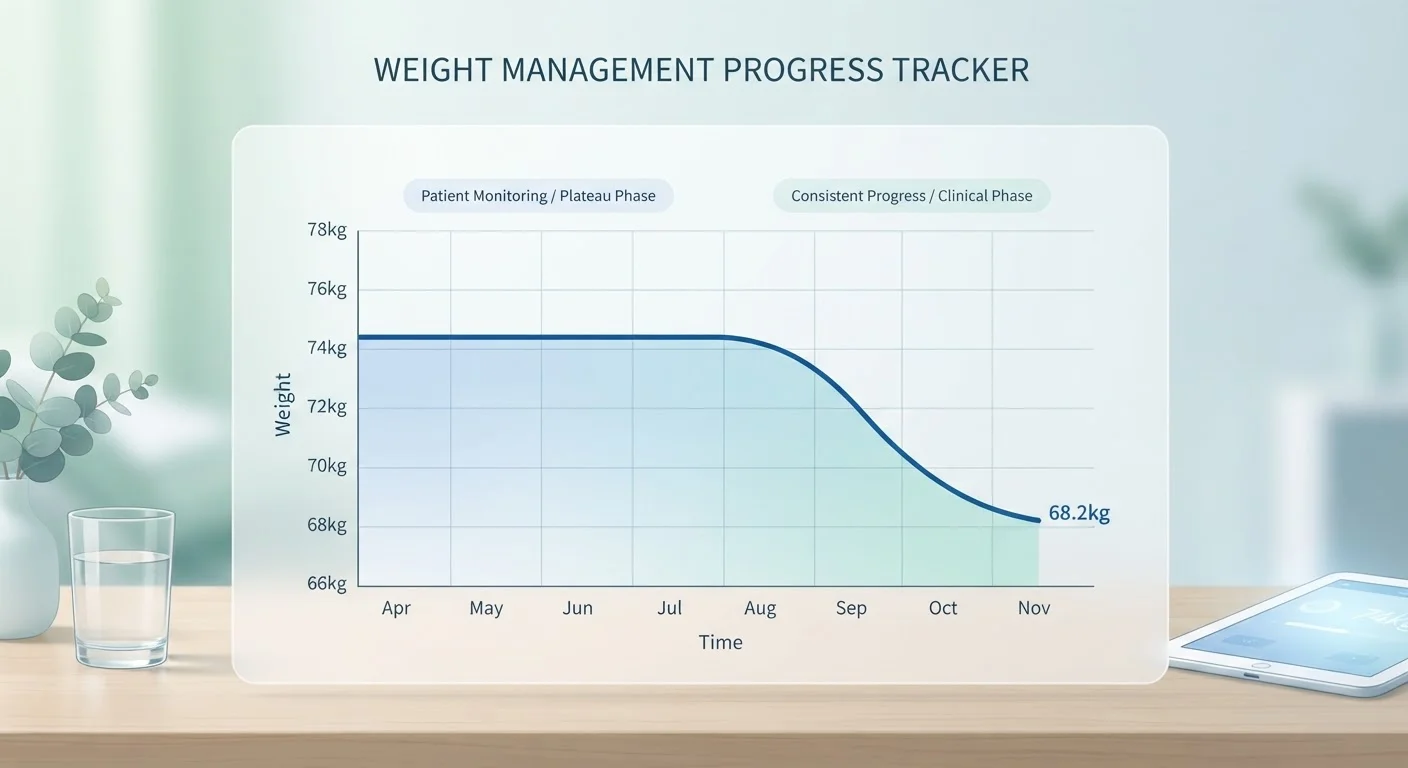
The Physiology Behind the Stall
When the body loses weight, it doesn't simply become a smaller version of itself — it adapts. As fat mass and, to some degree, lean tissue decrease, the total amount of energy the body needs to function each day also falls. Researchers refer to this as metabolic adaptation or adaptive thermogenesis, and it is well-documented in the scientific literature.
This means that the same eating and exercise habits that produced a caloric deficit at a higher weight may no longer create a meaningful deficit once weight has been lost. The gap between energy consumed and energy expended narrows — sometimes to the point where it disappears entirely — and the scale stalls.
Beyond resting metabolic rate, the body also reduces what scientists call non-exercise activity thermogenesis (NEAT) — the energy burned through everyday movement like fidgeting, standing, and walking. Studies suggest this reduction can be significant and largely unconscious, making the energy equation harder to manage without awareness.
Weight Plateaus Vary by Individual
Not all plateaus have the same cause or duration. Factors including age, hormonal status, medication use, underlying health conditions, and starting body composition all influence how and when plateaus occur. Weight management across a lifetime explains how these variables shift at different life stages. When in doubt, a healthcare provider can help identify whether something beyond typical adaptation is at play.
Common Factors That Accelerate a Plateau
Metabolic adaptation is not the only force at work. Several behavioral and physiological factors commonly contribute to a stall:
- Calorie creep: Portion sizes and food choices tend to drift over time. Research consistently shows that people underestimate calorie intake, often substantially. A periodic, honest review of eating patterns — without judgment — can reveal shifts that occurred gradually.
- Reduced activity output: As fitness improves, the body becomes more efficient at the same exercises, burning fewer calories for the same effort. Additionally, structured workouts may unconsciously replace spontaneous movement throughout the day.
- Sleep and stress: Chronic sleep deprivation elevates cortisol and disrupts hunger-regulating hormones like leptin and ghrelin, increasing appetite and promoting fat storage. Stress operates through similar hormonal pathways.
- Muscle loss: If weight loss occurs without adequate protein intake or resistance training, some of what is lost is lean tissue. Because muscle burns more calories at rest than fat, losing muscle reduces overall metabolic rate.
Understanding which of these factors is most relevant to your situation is more productive than concluding that the body is working against you — because in a sense it is, but predictably and for understandable reasons. See also why the scale can mislead during a fitness program for more context on what the number is — and isn't — measuring.
Thoughtful Ways to Respond
The goal is not to force the body past a plateau at any cost, but to respond with evidence-informed adjustments that support long-term health. A few well-supported strategies:
- Reassess intake honestly. A short period of more careful tracking — without making it a permanent practice — can reveal whether calorie creep has eroded the original deficit. Building sustainable eating habits without constant tracking explores practical ways to stay calibrated without obsessive logging.
- Vary physical activity. Introducing new movement patterns, increasing intensity gradually, or adding resistance training can challenge the body in new ways and help preserve lean muscle mass — a key driver of metabolic rate.
- Prioritize sleep and stress management. These are not soft lifestyle factors; they have measurable effects on hormones that regulate appetite, fat storage, and energy balance. Seven to nine hours of quality sleep per night is broadly supported by research for most adults.
- Reframe what success looks like. A plateau is an opportunity to assess whether health markers beyond weight — such as strength, energy, and cardiovascular fitness — have continued to improve. Sometimes the scale has simply caught up with real progress. Thinking patterns that undermine long-term weight management addresses how mental framing shapes the sustainability of any approach.
This article provides general health information and is not a substitute for personalized medical advice. If you are experiencing a prolonged plateau or have concerns about your metabolic health, consult a qualified healthcare provider or registered dietitian.