What the Science Actually Shows About Aging and Metabolism
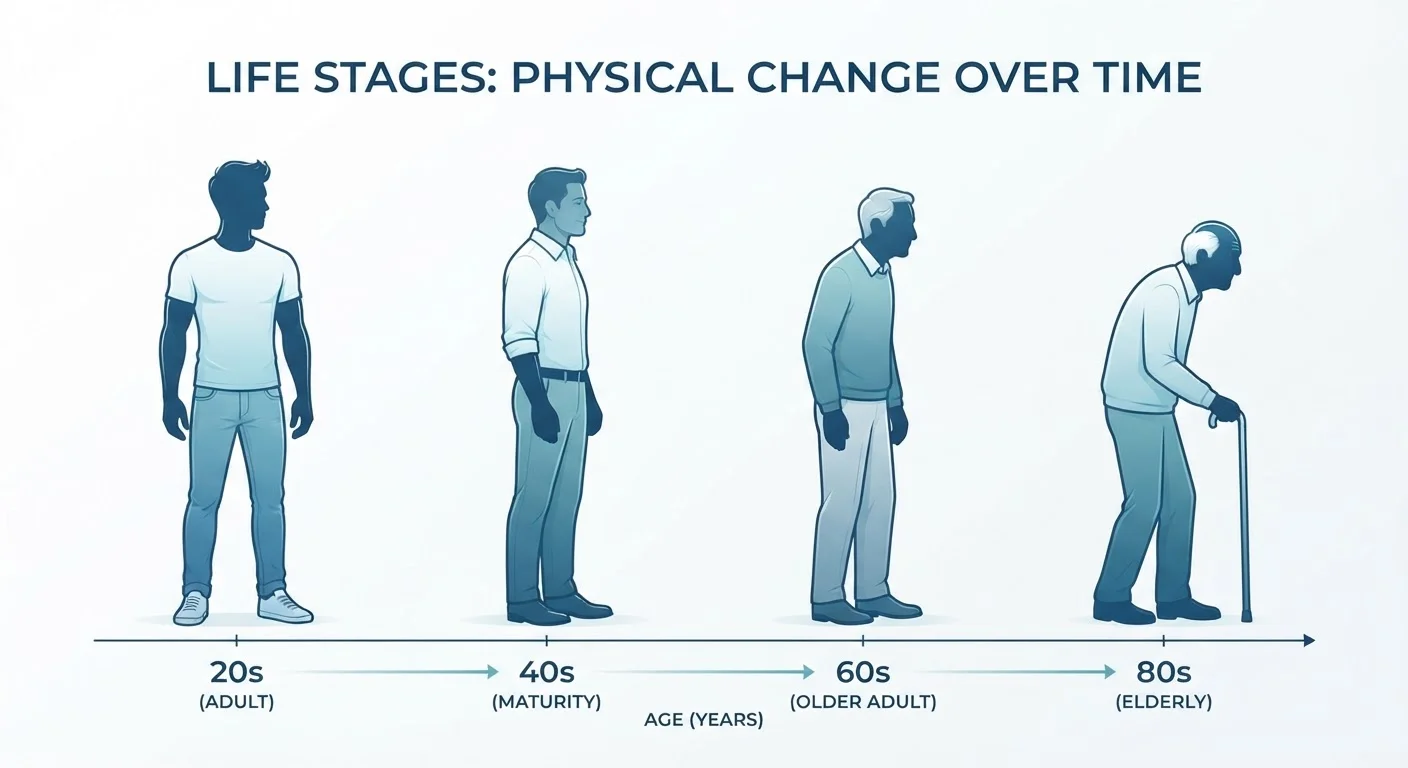
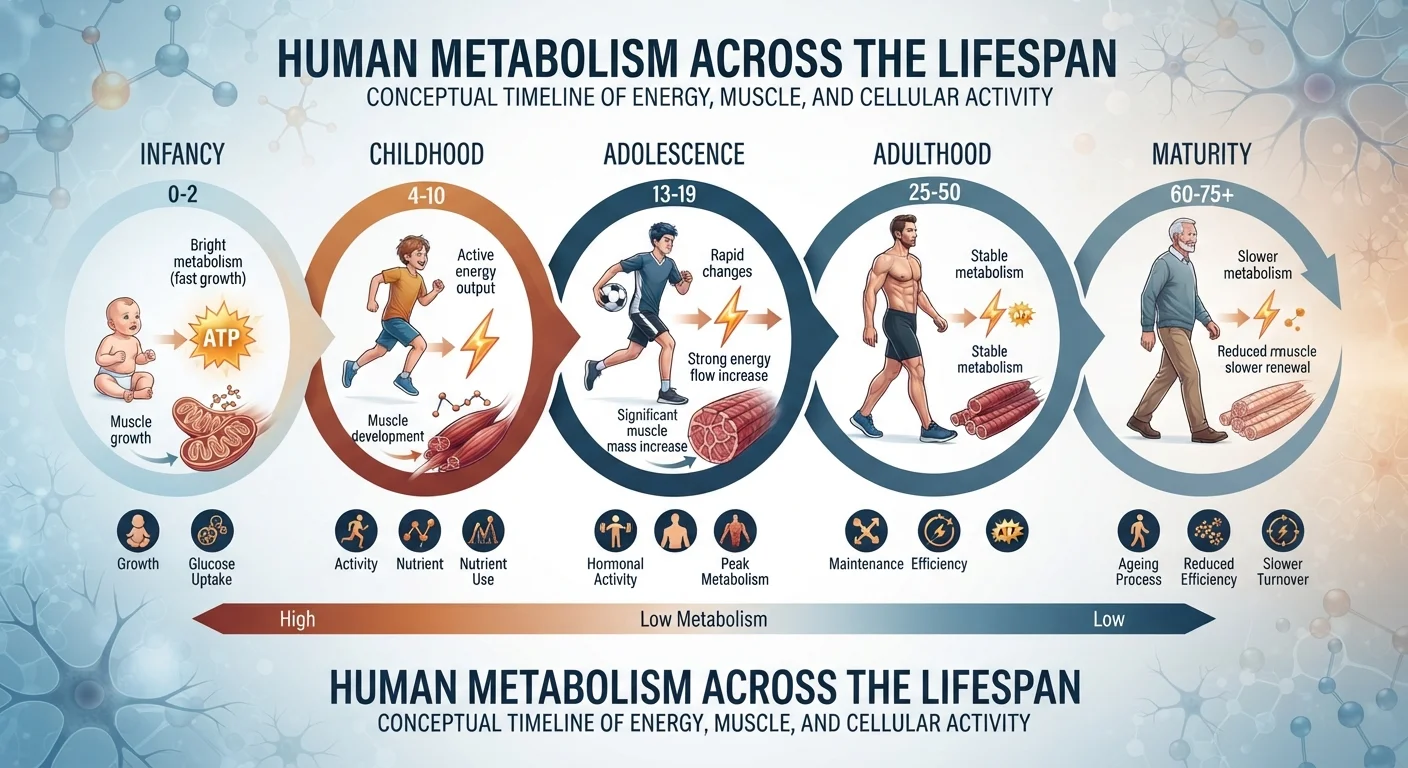
The belief that metabolism sharply declines once you hit your 30s or 40s is one of the most widespread ideas in popular health culture — and one the research complicates considerably. A landmark 2021 study published in Science, drawing on doubly labeled water data from more than 6,400 participants across 29 countries, found that total daily energy expenditure remains remarkably stable between ages 20 and 60. The real decline begins after 60, falling at roughly 0.7% per year in later decades.
This doesn't mean nothing changes in midlife — it means the changes are more nuanced than a blanket "slow metabolism" narrative suggests. Understanding which shifts are genuinely age-driven versus which are lifestyle-dependent matters enormously for making practical, evidence-based decisions. For a deeper look at how weight management evolves across decades, see our guide to weight management across a lifetime.
Myth
Metabolism starts slowing significantly in your 30s, making weight gain nearly unavoidable.
Fact
Total energy expenditure holds relatively steady from age 20 to 60; meaningful metabolic decline begins after 60.
The idea of a dramatic midlife metabolic crash is largely unsupported by current evidence. The 2021 Science study mentioned above found no significant drop in adjusted total daily energy expenditure between young adulthood and age 60. Weight changes in midlife are more strongly associated with declining physical activity and muscle loss than with an intrinsic biological slowdown.
Myth
Aging metabolism is entirely genetic — there's nothing you can do about it.
Fact
Lifestyle factors, particularly exercise and diet, account for a substantial portion of metabolic changes associated with aging.
While genetics do influence baseline metabolic rate, they are far from destiny. Muscle preservation through resistance training, adequate protein intake, and maintaining physical activity levels are all modifiable behaviors with measurable metabolic effects. The distinction between fast and slow metabolism is itself more nuanced than popular culture suggests.
Myth
Menopause and testosterone decline cause dramatic drops in resting metabolic rate.
Fact
Hormonal changes affect body composition, which indirectly impacts metabolism — but their direct effect on RMR is modest for most adults.
Estrogen and testosterone influence where fat is stored and how readily muscle is maintained, which has downstream metabolic effects. However, well-controlled studies show that the hormones themselves do not drastically lower RMR in isolation. Addressing body composition through exercise and nutrition is more evidence-supported than attributing all changes to hormones alone.
Myth
Eating smaller, more frequent meals keeps metabolism elevated as you age.
Fact
Meal frequency has minimal effect on total daily energy expenditure; total calorie and protein intake matters far more.
This myth has been thoroughly examined in clinical research, and the evidence consistently shows that meal timing and frequency have negligible effects on metabolic rate for most people. What does matter is overall dietary quality, protein adequacy to support muscle maintenance, and total energy balance. Believing otherwise can lead to ineffective strategies — a problem explored in our article on metabolism misconceptions that lead people astray.
Myth
Once you're older, cutting calories is the most effective way to counter a slowing metabolism.
Fact
Aggressive calorie restriction can accelerate muscle loss and trigger metabolic adaptation, worsening outcomes over time.
Severe caloric restriction — especially without adequate protein and resistance exercise — tends to cause muscle loss alongside fat loss, which further reduces RMR. In older adults, this can impair functional strength and increase health risks. A balanced approach preserving muscle while maintaining a modest, sustainable energy deficit is better supported by evidence. See also: why calorie math alone doesn't tell the whole story.
The Role of Muscle Mass: The Variable You Can Actually Influence
One of the most important — and modifiable — drivers of metabolic rate is skeletal muscle mass. Muscle tissue is metabolically active, meaning it burns more energy at rest than fat tissue does. Beginning around the fourth decade of life, adults who are sedentary can lose between 3% and 5% of muscle mass per decade, a process called sarcopenia. As muscle decreases, resting metabolic rate (RMR) tends to fall alongside it.
Crucially, this loss is not inevitable at the rate most people experience it. Resistance training — such as weightlifting or bodyweight exercises — has strong evidence supporting its ability to preserve, and in some cases rebuild, muscle mass at virtually any age. Adequate dietary protein also plays a key supportive role. The distinction between biological inevitability and lifestyle-driven change is explored further in our article on how body composition shifts with age.
~0.7%
Annual decline in energy expenditure after age 60
According to a 2021 study published in Science analyzing data from over 6,400 individuals across 29 countries.
3–5%
Muscle mass lost per decade in sedentary adults
Research on sarcopenia estimates this typical rate of decline beginning around the fourth decade of life in physically inactive individuals.
Stable 20–60
Age range of relatively stable total energy expenditure
The same 2021 Science study found adjusted daily energy expenditure did not significantly differ between ages 20 and 60.
Hormones, Activity, and the Real Drivers of Change
Hormonal shifts — declining estrogen in women during menopause, gradually falling testosterone in men, and changes in thyroid function — are often cited as the primary metabolic culprits of aging. Their influence is real but frequently overstated in popular media. Research suggests that hormonal changes contribute to body composition shifts (particularly increased fat storage and decreased muscle mass), which then secondarily affect metabolic rate. The hormones themselves do not dramatically alter RMR in isolation for most healthy adults.
A more direct and underappreciated driver is non-exercise activity thermogenesis (NEAT) — the energy burned through everyday movement like walking, fidgeting, and household tasks. Studies show that NEAT declines meaningfully with age, often due to lifestyle and occupational factors rather than biology alone. When people move less, they burn fewer calories, and over years this compounds significantly. For a comprehensive look at what genuinely shapes energy expenditure, see our overview of factors that influence metabolic rate.
It's also worth noting that the body's response to caloric restriction changes with age. Metabolic adaptation — where the body downregulates energy expenditure in response to reduced intake — can be more pronounced in older adults, making sustainable behavioral strategies preferable to aggressive restriction. Our article on adaptive thermogenesis covers this mechanism in detail.
This article is for general informational purposes only and does not constitute medical advice. Consult a qualified healthcare professional before making changes to your diet, exercise routine, or health management plan.