
How Sleep Affects Appetite Hormones
The connection between sleep and body weight is not a matter of speculation — it is grounded in well-replicated hormonal science. Two hormones sit at the center of this relationship: ghrelin and leptin.
Ghrelin is produced primarily in the stomach and signals hunger to the brain. Leptin is released by fat cells and communicates satiety — the feeling of being full. Under normal conditions, these hormones work in balance. But research consistently shows that even a few nights of shortened sleep drives ghrelin levels up and leptin levels down, effectively pushing the body toward eating more while feeling less satisfied.
A landmark study published in PLOS Medicine analyzed data from over 1,000 participants and found that short sleepers had significantly higher ghrelin and lower leptin than those sleeping adequate hours — differences large enough to translate into meaningful increases in daily caloric intake. For a deeper look at the broader physiological toll of chronic short sleep, see how sleep deprivation affects the body beyond simple fatigue.
55%
Higher obesity risk with short sleep
A large meta-analysis found adults sleeping fewer than 6 hours per night had approximately 55% greater odds of obesity compared to adequate sleepers.
~300 kcal
Extra calories consumed after poor sleep
Research published in the European Journal of Clinical Nutrition found sleep-deprived individuals consumed roughly 385 extra calories the following day on average.
7–9 hrs
Recommended nightly sleep for adults
The American Academy of Sleep Medicine and the Sleep Research Society jointly recommend 7–9 hours of sleep per night for adults to support overall health.
~20%
Reduction in leptin after 2 nights of short sleep
A University of Chicago study found that two nights of sleep restriction (4 hours) reduced leptin levels by approximately 18–20% in healthy adults.
Sleep, Insulin Sensitivity, and Fat Storage
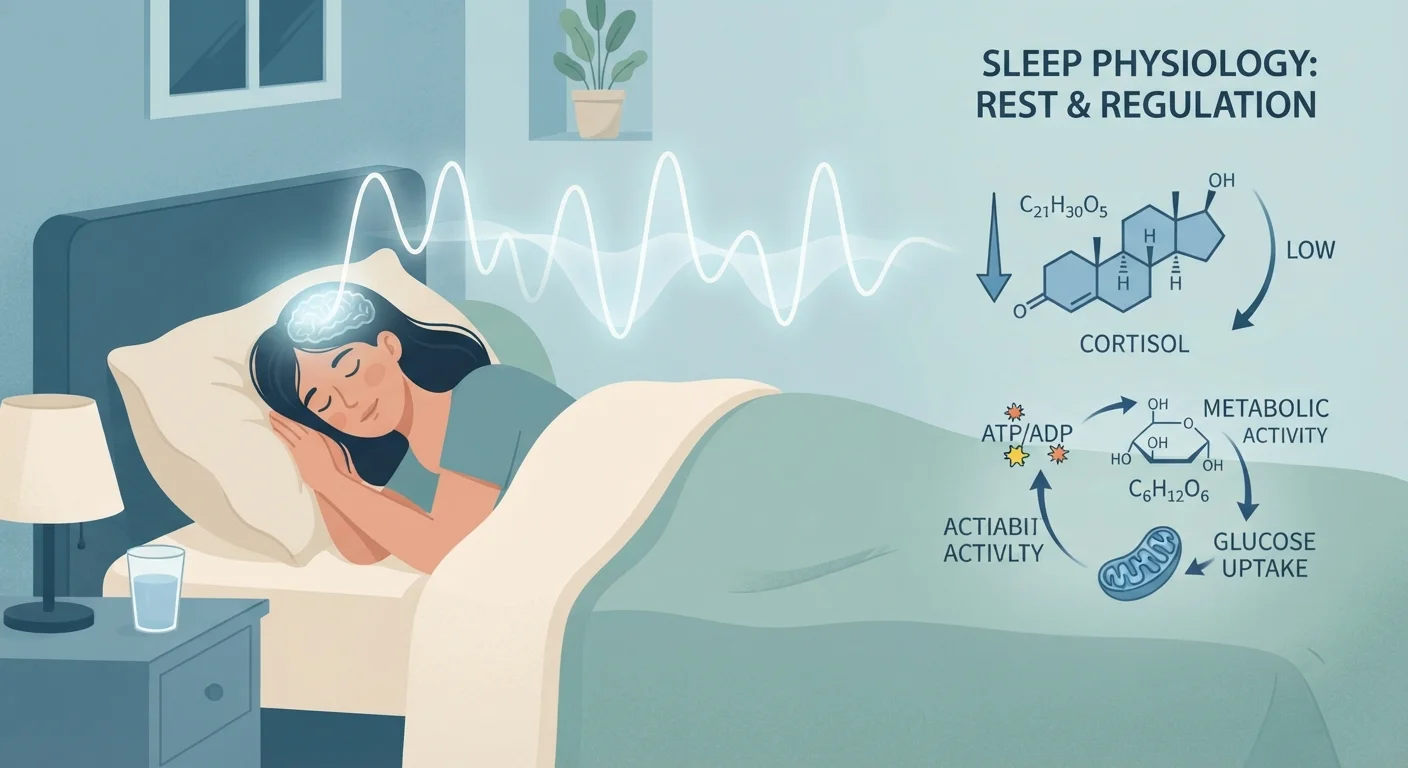
Beyond appetite hormones, sleep loss impairs the body's ability to use insulin effectively. Insulin sensitivity refers to how well cells respond to insulin's signal to absorb glucose from the bloodstream. When sensitivity drops — a state called insulin resistance — the pancreas must produce more insulin to manage blood sugar, and excess glucose is more readily converted to and stored as fat.
Research from the University of Chicago demonstrated that healthy young adults restricted to 5.5 hours of sleep showed significantly reduced insulin sensitivity compared to when they slept 8.5 hours. These effects emerged within days, not months. Over time, repeated insulin dysregulation is associated with increased abdominal fat accumulation and elevated risk of metabolic disease.
This interplay between poor sleep, stress hormones like cortisol, and energy metabolism is explored in more detail in our article on sleep, stress, and metabolism.
The Behavioral Layer: Cravings, Choices, and Energy
Hormonal disruption is only part of the picture. Sleep deprivation also affects the brain regions responsible for decision-making and impulse control. Studies using neuroimaging have shown that sleep-deprived individuals exhibit heightened activity in reward-processing areas of the brain when viewing high-calorie foods, while the prefrontal cortex — which moderates self-regulation — shows reduced activity.
In practical terms, this means a tired person is both more drawn to calorie-dense foods and less equipped to resist them. Research also documents increased total caloric intake on days following short sleep, with a particular shift toward carbohydrate-heavy and fat-rich foods.
Additionally, fatigue reduces motivation for physical activity. A person who slept poorly is less likely to exercise, less able to perform at intensity when they do, and may experience reduced muscle recovery. For more on how sleep shapes body composition specifically, see the role of sleep in body composition.
What Consistent Short Sleep Looks Like Over Time
The metabolic consequences of sleep loss are not limited to acute, single-night effects. Population-level evidence is striking: a meta-analysis spanning dozens of studies found that adults sleeping fewer than 6 hours per night had a significantly higher risk of obesity compared to those sleeping 7–9 hours. Children and adolescents show even stronger associations, underscoring that sleep's role in weight regulation begins early in life.
Importantly, the relationship appears dose-dependent — the shorter the habitual sleep duration, the stronger the association with higher body mass. Even losing just one hour consistently produces measurable effects, as outlined in our coverage of what happens when you regularly lose an hour of sleep.
Evidence-based strategies for improving sleep quality can be found in our Sleep & Recovery hub. Prioritizing sleep is not a passive health choice — it is an active, evidence-backed tool in sustainable weight management.
This article is for general informational and educational purposes only and does not constitute medical advice. If you have concerns about your sleep, weight, or metabolic health, please consult a qualified healthcare professional.