
The Illusion of Coping Just Fine
One of the most deceptive features of chronic partial sleep loss is how manageable it feels. People who routinely sleep six hours instead of seven tend to report feeling "a little tired" — not dramatically impaired. Yet behavioral sleep medicine research tells a different story.
A landmark series of studies led by researchers at the University of Pennsylvania found that individuals restricted to six hours of sleep per night showed progressively worsening performance on tests of sustained attention and working memory across two weeks. Critically, their subjective sense of sleepiness plateaued early — they felt about as tired on day fourteen as on day three, but their measurable impairment had compounded significantly. The brain, it appears, adapts its perception of fatigue even as its function deteriorates.
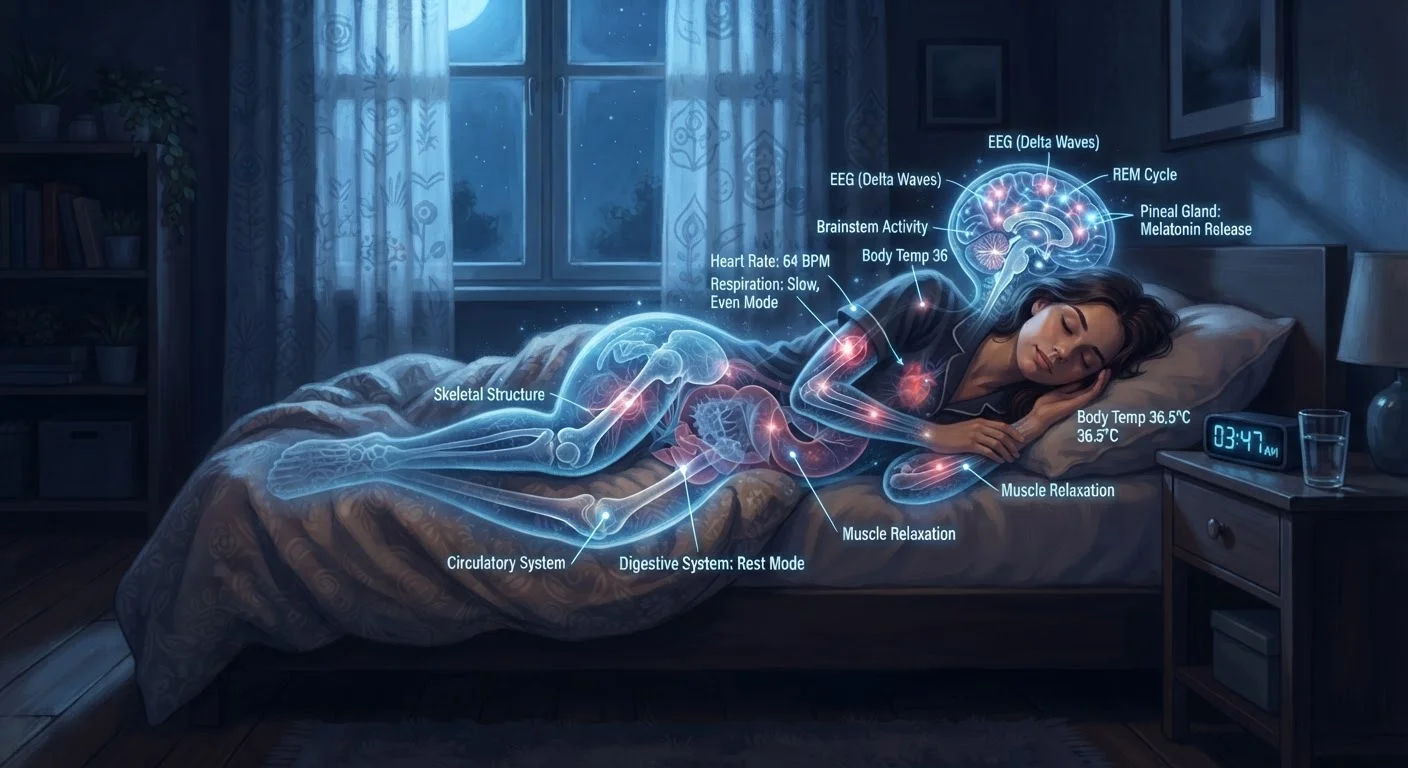
This gap between perceived and actual impairment is one reason one-hour shortfalls go unaddressed. Understanding what is happening beneath the surface can help frame why consistent sleep duration matters — for cognition, hormones, and long-term health alike. To understand why the body is so vulnerable, it helps to understand what actually happens to your body while you sleep each night.
What Changes in the Brain First
The brain's prefrontal cortex — the region governing attention, impulse control, and complex decision-making — is particularly sensitive to sleep shortfall. Within just a few nights of sleeping one hour less than needed, reaction times slow, errors on attention tasks increase, and working memory capacity contracts.
These changes are not trivial in daily life. Driving performance, occupational accuracy, and the quality of judgment calls all reflect subtle but real degradation. Research published in journals such as Sleep and SLEEP has documented that six hours of sleep for ten days produces impairments comparable to 24 hours of total sleep deprivation on some cognitive measures.
~33%
U.S. adults sleeping fewer than 7 hours nightly
According to the CDC, about one in three American adults reports regularly sleeping less than the recommended minimum of seven hours per night.
10 days
Days for six-hour sleep to match one all-nighter cognitively
Research from the University of Pennsylvania found that ten nights of six-hour sleep produced cognitive impairments comparable in some measures to 24 hours without sleep.
4.2x
Higher cold risk with fewer than 6 hours of sleep
A controlled exposure study found adults sleeping under six hours were approximately 4.2 times more likely to develop a cold than those sleeping seven hours or more.
Beyond raw performance, mood regulation begins to shift. Emotional reactivity increases, and the brain's capacity to suppress negative responses to stress is reduced — a pattern linked to changes in how the amygdala and prefrontal cortex communicate during insufficient sleep.
Hormonal and Metabolic Consequences
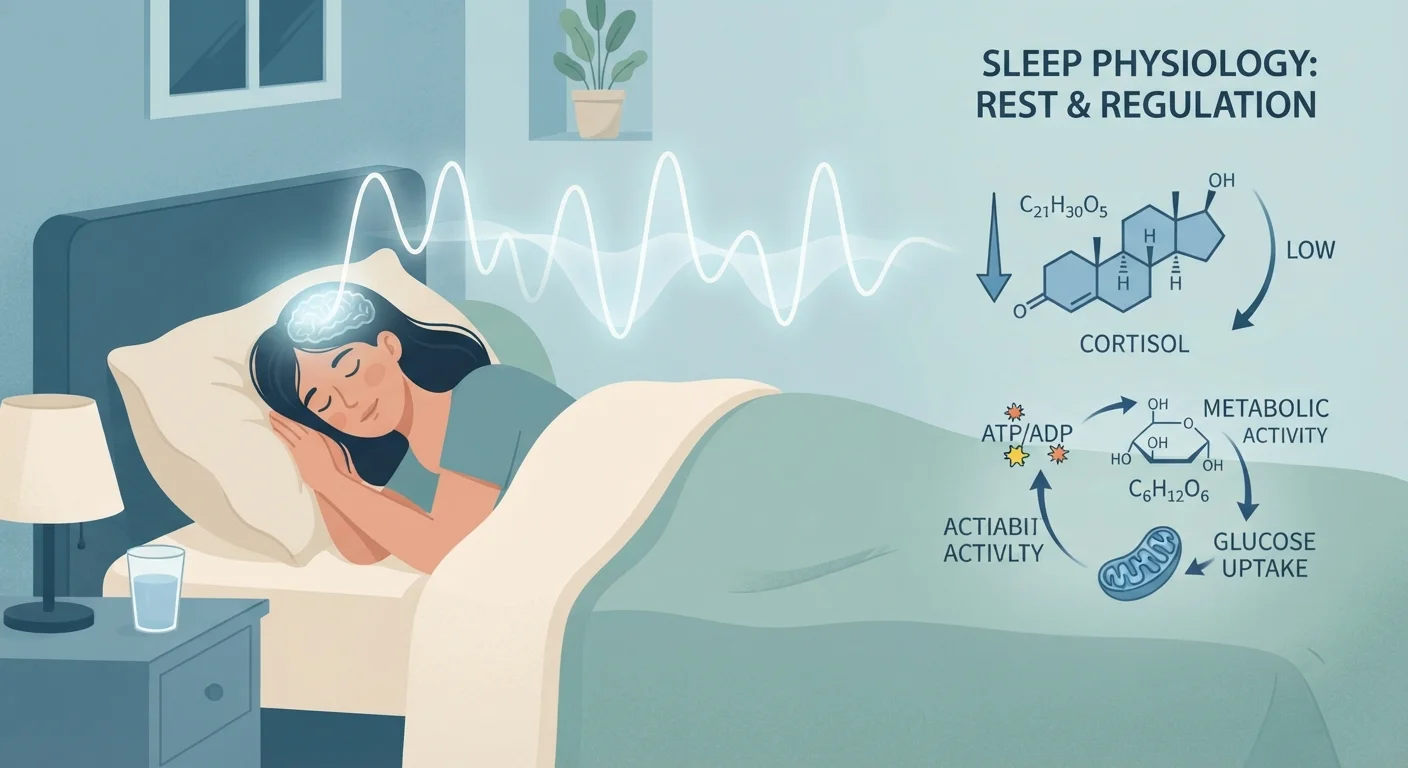
Sleep is not passive recovery — it is a period of active hormonal regulation. Disrupting it by even an hour triggers measurable shifts in several key systems.
Cortisol: The stress hormone cortisol normally follows a daily rhythm, peaking in the morning and declining through the day. Partial sleep loss can blunt this curve, keeping cortisol elevated into the evening and amplifying stress reactivity. For more on this connection, see how sleep, stress, and metabolism interact.
Ghrelin and leptin: These two appetite-regulating hormones are reliably disrupted by short sleep. Ghrelin — which signals hunger — tends to rise, while leptin — which signals fullness — tends to fall. This hormonal combination can increase caloric intake and preference for energy-dense foods. Research exploring these mechanisms is detailed in discussions of how sleep influences weight regulation.
Insulin sensitivity: Even a week of modest sleep restriction has been associated with reduced insulin sensitivity in healthy adults in controlled studies, suggesting metabolic consequences that could be relevant to longer-term metabolic health.
Cardiovascular and Immune Strain
The cardiovascular system is among the body systems most consistently linked to sleep duration in large epidemiological studies. Adults who regularly sleep fewer than seven hours show higher rates of hypertension, elevated inflammatory markers such as C-reactive protein, and — in longer follow-up studies — higher rates of coronary events.
The mechanisms are not fully resolved, but proposed pathways include heightened sympathetic nervous system activation (keeping the body in a low-grade alert state), elevated inflammatory signaling, and disrupted blood pressure dipping that normally occurs during deep sleep. For a broader look at these long-term associations, the connection between chronic sleep loss and long-term health offers relevant context.
Immune function is also affected. Sleep is when the body produces and releases cytokines — proteins that coordinate immune responses. Consistent partial deprivation reduces cytokine production and has been associated with increased susceptibility to common infections in experimental studies. One controlled trial found that adults sleeping fewer than seven hours were significantly more likely to develop a cold after deliberate viral exposure compared with those sleeping seven or more hours.
This article is for general informational and educational purposes only and is not a substitute for professional medical advice, diagnosis, or treatment. If you have concerns about your sleep or health, consult a qualified healthcare provider.