The Biological Overlap Between Sleep, Stress, and Energy Regulation
Sleep and stress are not independent variables when it comes to metabolism — they share overlapping hormonal pathways that together shape how the body manages energy. Understanding this overlap helps explain why research consistently finds associations between disrupted sleep or chronic stress and changes in metabolic function.
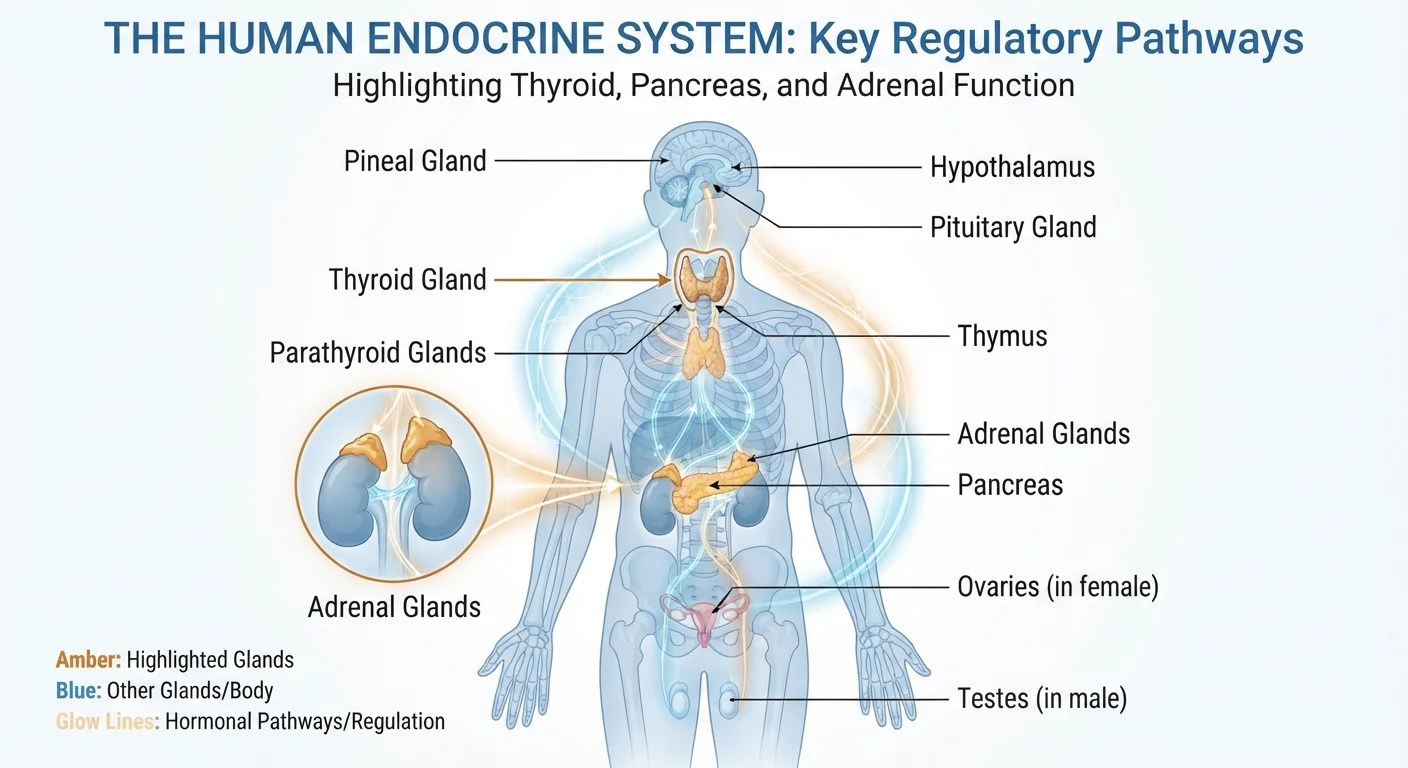
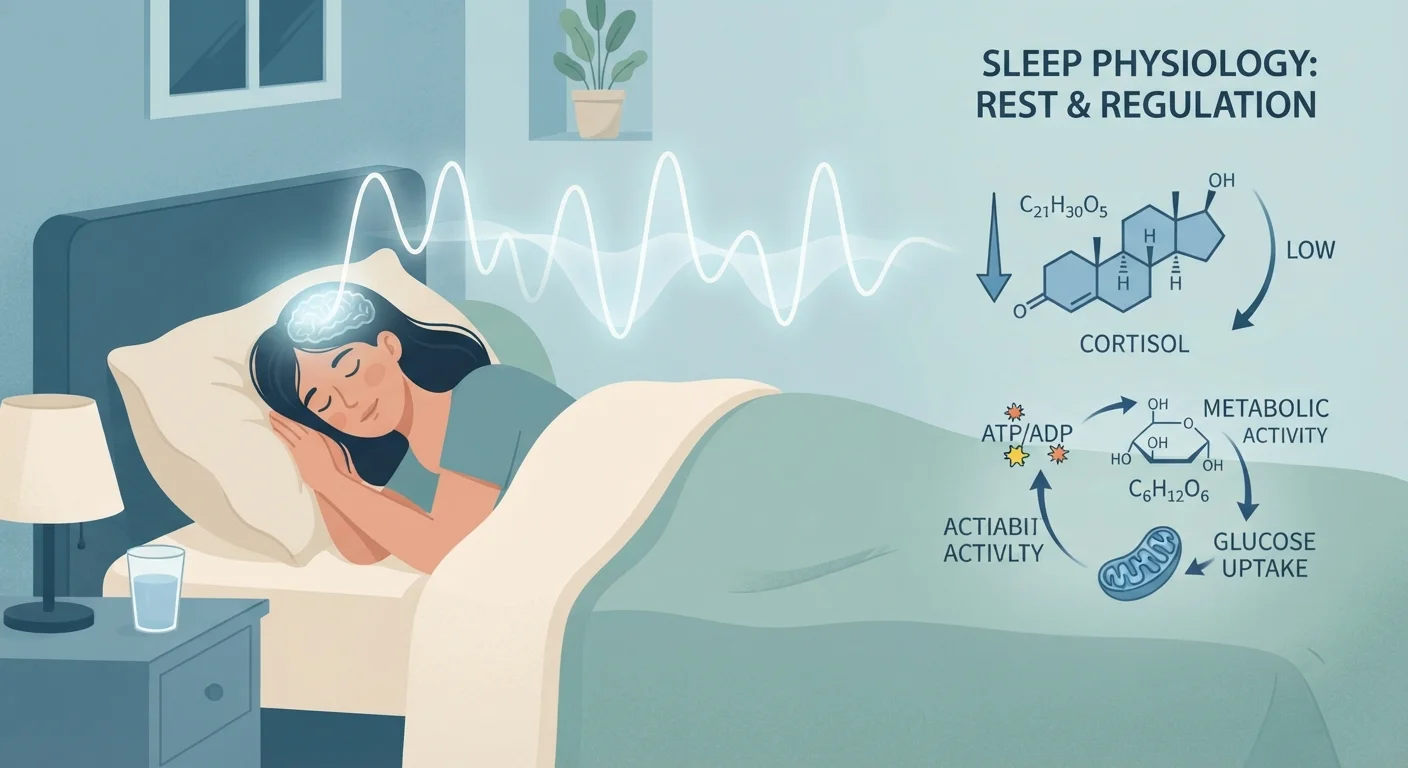
The hypothalamic-pituitary-adrenal (HPA) axis — the body's primary stress-response system — is also involved in regulating sleep architecture. When this system is chronically activated, it elevates cortisol, which can suppress slow-wave (deep) sleep. Less deep sleep, in turn, appears to reduce the body's ability to restore insulin sensitivity overnight. For a broader look at how cortisol interacts with other metabolic hormones, see how thyroid, insulin, and cortisol affect metabolism.
This bidirectional relationship means that addressing only one factor — say, stress management while ignoring sleep quality — may produce limited results. The systems are genuinely intertwined.
~30%
Increase in ghrelin with sleep restriction
Research published in peer-reviewed sleep journals has found ghrelin levels rise by approximately 28–30% when adults sleep fewer than six hours per night compared to eight-hour sleep conditions.
18%
Reduction in leptin with short sleep
Studies have reported leptin — the hormone signaling fullness — drops by roughly 18% under conditions of restricted sleep, contributing to increased appetite and caloric intake.
1 in 3
U.S. adults sleeping less than 7 hours
According to the CDC, about one in three American adults regularly sleep fewer than the recommended seven hours per night, putting a large share of the population at potential metabolic risk.
What Sleep Deprivation Does to Appetite Hormones
One of the most replicated findings in sleep research is the effect of restricted sleep on appetite-regulating hormones. Studies have consistently shown that even modest sleep restriction — typically defined as fewer than six hours per night — is associated with increased levels of ghrelin (a hunger-promoting hormone) and decreased levels of leptin (a satiety-signaling hormone).
The practical consequence is increased caloric drive: people who are sleep-deprived tend to feel hungrier, particularly for energy-dense foods, and report lower satisfaction after eating. This is not a willpower failure — it reflects genuine hormonal signaling changes. Research published in peer-reviewed journals has found that sleep-restricted adults consume meaningfully more calories during the waking hours compared to well-rested controls.
For a deeper look at how these appetite shifts connect to body weight over time, the role of sleep in weight regulation provides further context. And if you're interested in how sleep affects body composition more broadly, see what research suggests about sleep and body composition.
Chronic Stress, Cortisol, and Insulin Sensitivity
Cortisol is often described as the body's primary stress hormone, and its metabolic role is significant. In the short term, cortisol raises blood glucose by signaling the liver to release stored sugar — a useful response during acute physical threat. The problem arises when stress is chronic and cortisol remains persistently elevated.
Under sustained high-cortisol conditions, cells can become less responsive to insulin, the hormone responsible for shuttling glucose into tissues for energy use. This state — reduced insulin sensitivity — means the pancreas must produce more insulin to achieve the same effect. Over time, this pattern is associated with higher fasting blood glucose and, in some research, with preferential fat storage around the abdomen.
It is worth noting that cortisol's effects on metabolism are dose- and duration-dependent. Intermittent, manageable stress does not appear to produce the same metabolic consequences as sustained, unrelieved chronic stress. The relationship between stress, eating behavior, and blood sugar is explored further in what evidence says about food, mood, and cortisol.
Separating Myth from Evidence
A common myth is that stress or poor sleep will dramatically "break" your metabolism in a lasting way. Current evidence does not support this framing. What research does show is that chronic sleep loss and elevated stress create conditions that make energy balance harder to maintain — primarily through appetite dysregulation and reduced insulin sensitivity — rather than by fundamentally altering how many calories the body burns at rest.
Another oversimplification worth correcting: not all stress is metabolically harmful. Brief, manageable stress (sometimes called eustress) is a normal part of physiological functioning. The metabolic associations documented in research are largely tied to chronic, unmanaged stress states. Similarly, an occasional night of poor sleep has far less impact than months of consistently insufficient rest. For context on the broader health implications of long-term sleep loss, chronic sleep loss and long-term health is a useful companion read.
Metabolism is also genuinely influenced by several other factors — genetics, body composition, age, and physical activity among them. Sleep and stress are real contributors, but they operate within a larger system. Factors that genuinely influence metabolic rate provides a fuller picture of those interactions.
This article is for general informational and educational purposes only and does not constitute medical advice. If you have concerns about your sleep, stress levels, or metabolic health, please consult a qualified healthcare professional.