
The Four Sleep Stages at a Glance
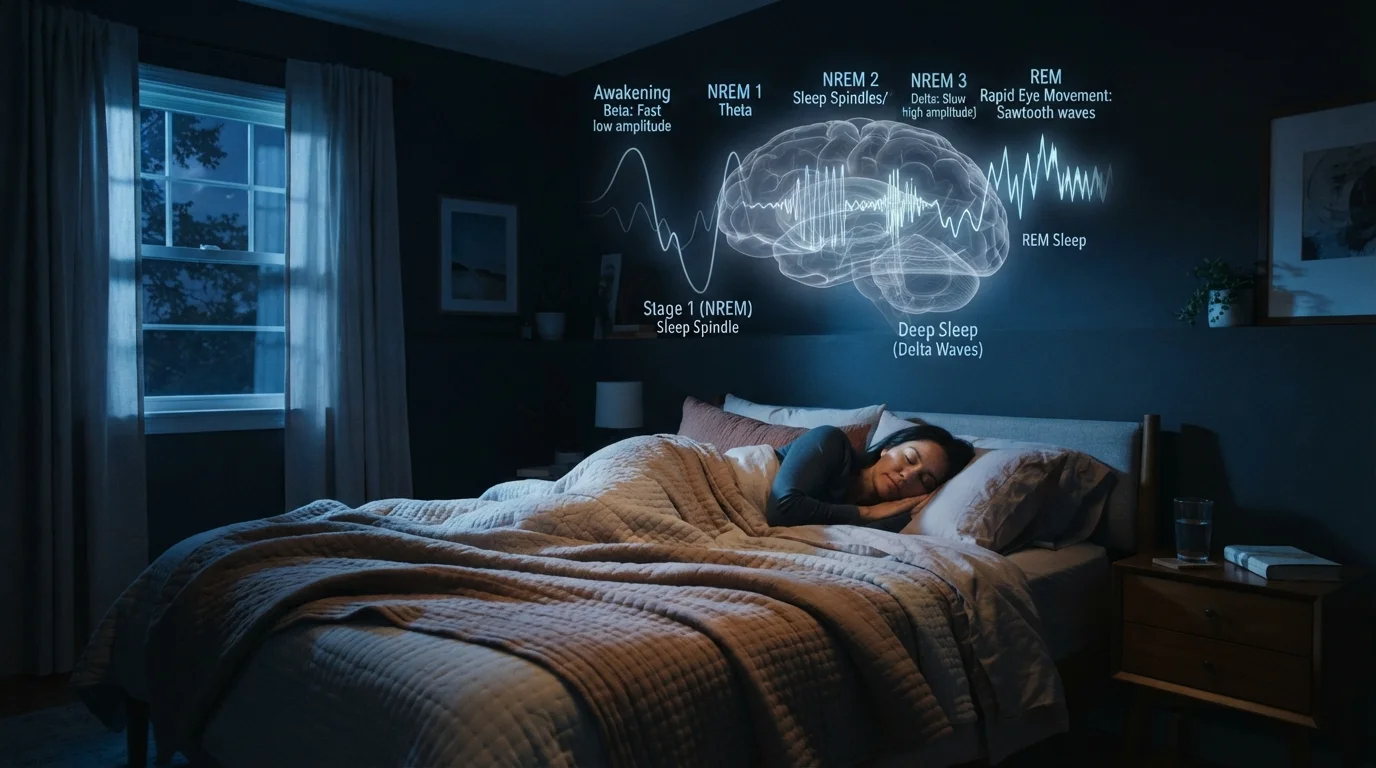
Every night, your brain moves through a structured sequence of sleep stages that together form a complete sleep cycle lasting roughly 90 minutes. Most adults complete four to six of these cycles per night. Understanding what each stage does helps explain why both the quantity and quality of sleep matter. For a deeper look at the broader biology, see our Sleep Science hub.
| Number of Sleep Stages | 4 (N1, N2, N3, REM) (American Academy of Sleep Medicine) |
| Average Cycle Length | ~90 minutes (National Sleep Foundation) |
| Cycles Per Night (Typical Adult) | 4–6 cycles (National Sleep Foundation) |
| Largest Stage by Time | N2 (~45–55% of total sleep) (American Academy of Sleep Medicine) |
| When Deep Sleep Peaks | First half of the night (Sleep Research Society) |
| When REM Sleep Peaks | Second half of the night (Sleep Research Society) |
Sleep is divided into two broad categories: NREM (non-rapid eye movement) sleep and REM (rapid eye movement) sleep. NREM itself contains three distinct stages — N1, N2, and N3 — which progress from light to very deep sleep before the cycle shifts into REM.
Stage by Stage: What Each Phase Does
N1 — Light Sleep (Stage 1)
N1 is the transition from wakefulness to sleep, typically lasting just one to seven minutes. Muscle activity slows, eye movements are minimal, and you can be awakened easily. Brain waves shift from the alert beta pattern to slower alpha and theta waves. This stage accounts for only about 5% of total sleep time.
N2 — Stable Light Sleep (Stage 2)
N2 makes up the largest share of a night's sleep — roughly 45–55%. Body temperature drops, heart rate slows, and the brain produces brief bursts of activity called sleep spindles and K-complexes. Research suggests these features play a role in memory consolidation and filtering out sensory stimuli so sleep is maintained.
N3 — Deep Sleep (Slow-Wave Sleep)
N3 is the most physically restorative stage. Growth hormone release peaks, tissues repair, and the immune system is reinforced. Brain waves slow dramatically into delta waves. Deep sleep is hardest to wake from and is most concentrated in the first half of the night. Insufficient N3 is associated with feeling unrefreshed even after a full night in bed.
REM Sleep
REM sleep is when most vivid dreaming occurs. The brain is highly active — nearly as active as during wakefulness — while the body's voluntary muscles are temporarily paralyzed. REM periods grow longer with each cycle, dominating the second half of the night. This stage is closely linked to emotional processing, problem-solving, and long-term memory storage. To understand how REM and NREM interact across a full night, the architecture of sleep cycles is key.
Why Cycling Through All Stages Matters
No single stage is optional. Skipping or cutting short any part of the cycle carries measurable costs. Consistently losing deep sleep impairs physical recovery and immune function. Losing REM sleep can affect mood regulation and cognitive flexibility. Even N2 — often overlooked — contributes meaningfully to learning and memory.
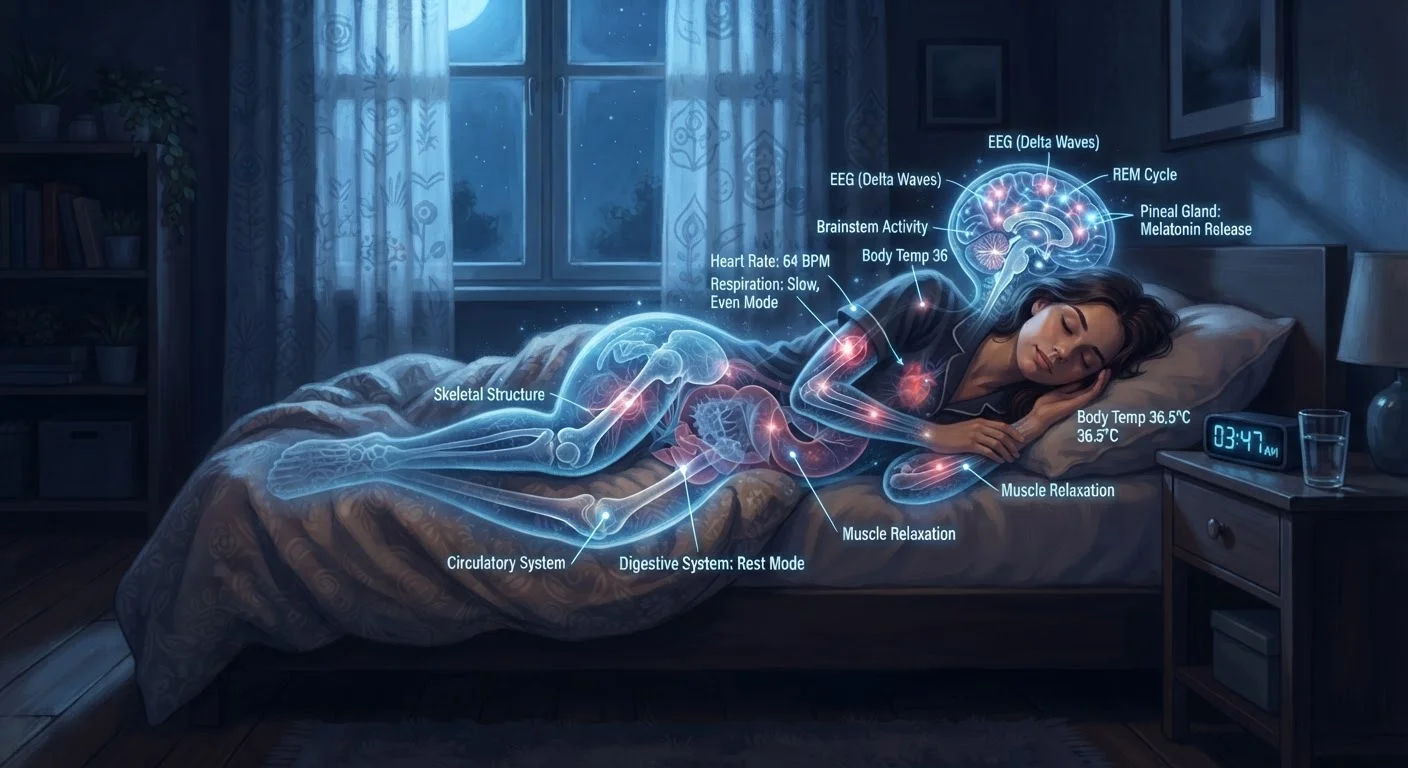
Alcohol, irregular sleep schedules, and certain medications can suppress REM or deep sleep even when total sleep time appears adequate. This is one reason why sleep architecture — the balance of stages — matters alongside total hours. For more on what your brain and body accomplish during this time, see what actually happens to your body while you sleep.
If you consistently feel unrefreshed, struggle to stay asleep, or wake frequently, a disrupted stage pattern may be a factor. Learn how these patterns relate to specific conditions in our guide to sleep disorders explained.
Your sleep environment also shapes how well you cycle through these stages. Factors like room temperature and light exposure influence how readily your brain enters and sustains deep and REM sleep. See how temperature, sound, and light affect rest for practical guidance.
This article is for general informational purposes only and is not a substitute for professional medical advice. If you have concerns about your sleep health, consult a qualified healthcare provider.