Why Your Bedroom Environment Matters
Most adults focus on what time they go to bed or how many hours they sleep — but the physical conditions of the sleep environment have a direct, measurable effect on sleep quality. Temperature, noise, and light don't just influence comfort; they interact with the biological systems that regulate sleep itself. Understanding what each variable does gives you a concrete starting point for improvement.
For a broader look at how environmental and behavioral factors combine, see evidence-based sleep hygiene habits. This reference article focuses specifically on the three most studied environmental factors.
| Optimal Bedroom Temperature (general adult range) | 65–68°F (18–20°C) (Commonly cited range in sleep medicine literature; individual variation applies) |
| Primary circadian light cue | Blue-spectrum visible light (Via intrinsically photosensitive retinal ganglion cells (ipRGCs)) |
| Noise level associated with sleep disruption | ~40 dB and above (WHO Environmental Noise Guidelines for the European Region, 2018) |
| Evening melatonin rise (typical) | 1–2 hours before natural sleep onset (Varies by individual chronotype) |
| Most disruptive noise type | Irregular or unpredictable sounds (Compared to steady background noise at equivalent volume) |
Temperature: The Body's Sleep Thermostat
Core body temperature follows a circadian rhythm — it rises during waking hours and begins to fall in the evening, a drop that helps trigger sleep onset. A bedroom that is too warm can interfere with this natural cooling process, making it harder to fall asleep and reducing time spent in deep, slow-wave sleep.
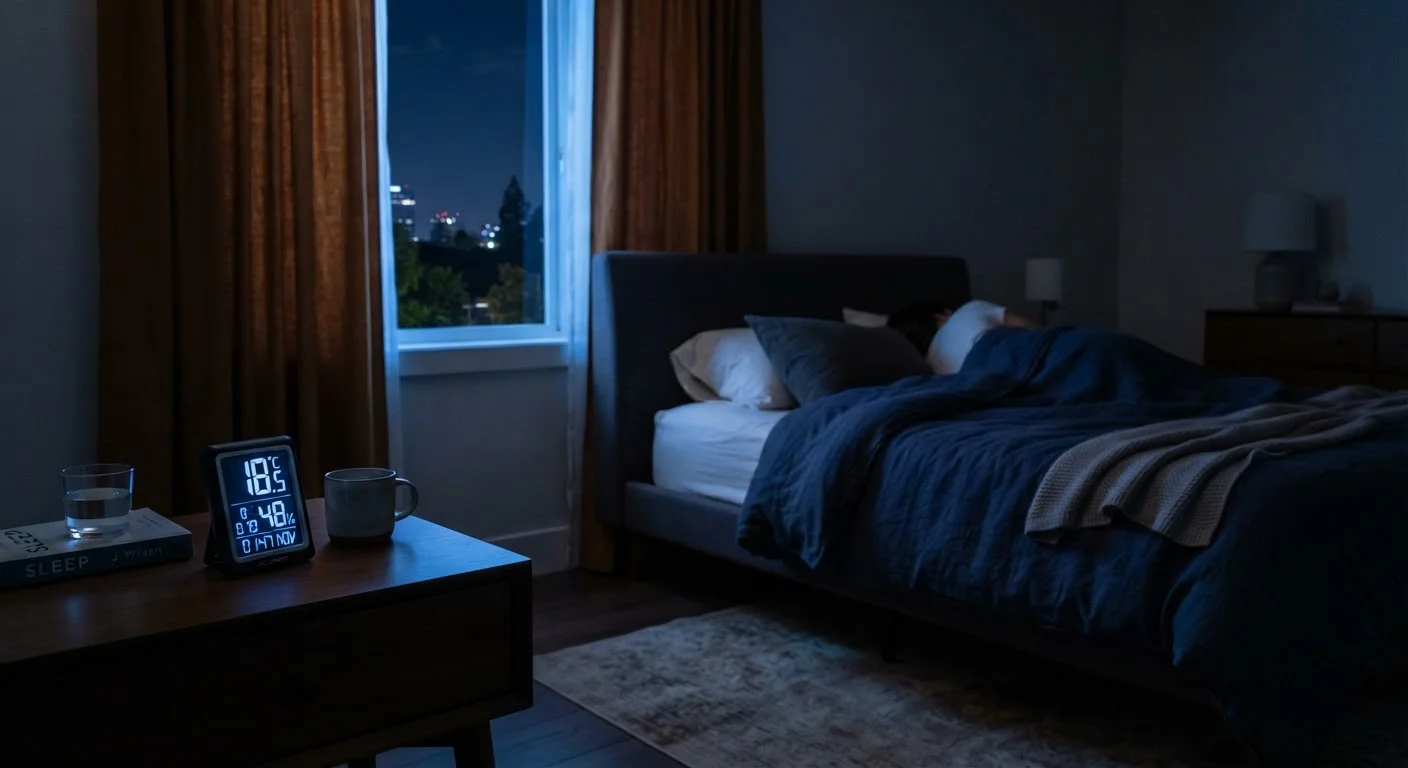
Research in sleep medicine generally associates cooler bedroom temperatures — roughly in the range of 65–68°F (18–20°C) — with better sleep for most adults, though individual comfort varies. The mechanism is well understood: peripheral blood vessels dilate to release heat from the body's core, and a cool ambient environment supports that process more effectively than a warm one.
Sleeping in an excessively hot room is associated with more nighttime awakenings and reduced REM sleep. For more on how REM and deep sleep stages are affected, see how sleep stages work. Special populations — including infants, older adults, and those with certain medical conditions — may have different thermoregulatory needs; consult a healthcare professional for personalized guidance.
Light: The Circadian System's Primary Signal
Light is the most powerful external cue for the human circadian clock. Specialized cells in the retina detect light and send signals to the suprachiasmatic nucleus (SCN) in the brain, which governs the release of melatonin — the hormone that promotes sleepiness. Exposure to bright light, particularly blue-spectrum wavelengths, in the evening suppresses melatonin production and delays the biological drive to sleep.
Even low-level light exposure during sleep has been linked in research to more frequent arousals and lighter sleep architecture. Practical implications include:
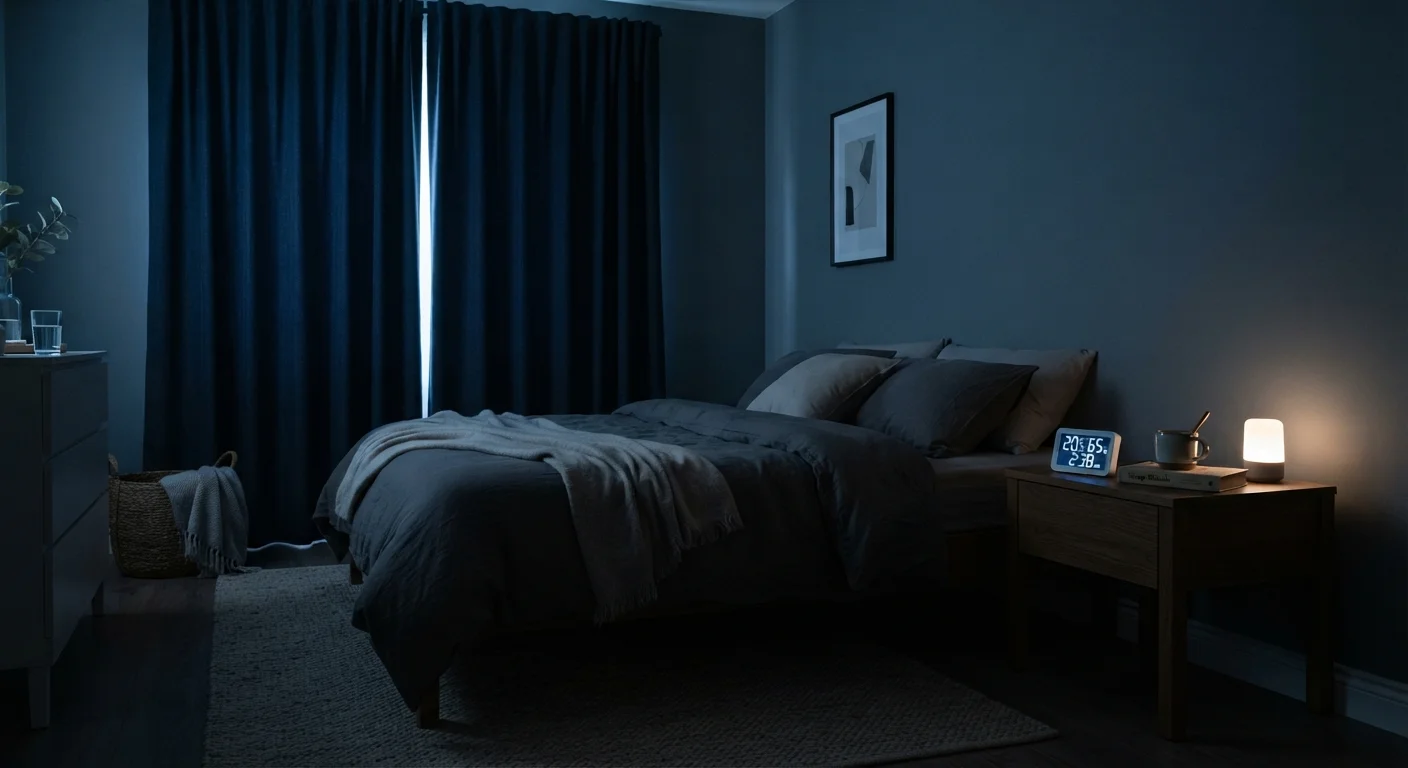
- Blackout curtains or an eye mask to block ambient streetlight and early morning sunrise
- Dimming overhead lights in the hour or two before bed to allow melatonin to rise naturally
- Reducing screen brightness or using blue-light filtering settings on devices in the evening
Conversely, morning light exposure — getting outdoors or near a bright window shortly after waking — helps anchor the circadian rhythm and makes it easier to feel alert during the day and sleepy at the appropriate time at night. This bidirectional relationship is explored further in how environment shapes sleep biology.
Sound: Noise as a Sleep Disruptor and Potential Aid
The sleeping brain continues to process sound. Even when a person does not fully awaken, noise — particularly sudden or irregular sounds — can shift sleep from deeper stages to lighter ones, elevating cortisol and heart rate in ways that erode sleep quality over time. Traffic, a partner's snoring, or intermittent household sounds are among the most common culprits reported by people with difficulty staying asleep.
Key findings from sleep research on noise include:
- Irregular, unpredictable sounds cause more disruption than consistent background noise at the same decibel level
- Nighttime noise events as low as 40 decibels (roughly a quiet conversation) can trigger measurable physiological responses during sleep
- Older adults tend to be more susceptible to noise-related sleep disruption than younger adults
Some people find that steady, low-level background sound — often called white noise, pink noise, or brown noise — can mask disruptive environmental sounds. Research on this is promising but not conclusive; individual responses vary. Earplugs are another low-tech option, though they are not appropriate for everyone (for example, caregivers who need to hear children or alarms).
If you want to audit your entire sleep setting for these and other factors, the pre-sleep room audit checklist offers a structured walkthrough.
This article is for general informational purposes only and is not a substitute for professional medical advice, diagnosis, or treatment. If you have persistent sleep difficulties, speak with a qualified healthcare provider.