Why Your Bedroom Conditions Matter More Than You Might Think
Sleep isn't just a behavioral habit — it's a finely tuned biological process. Your brain and body go through predictable cycles of light sleep, deep sleep, and REM sleep throughout the night, each stage serving distinct restorative functions. What happens in your bedroom directly influences whether those cycles are completed or interrupted.
The science is reasonably clear: environmental conditions like temperature, light, and noise aren't just comfort factors. They interact with core biological mechanisms — your circadian rhythm, hormonal signaling, and arousal thresholds — in ways that shape how restorative your sleep actually is. For a deeper look at how these biological processes work, see how environment shapes sleep biology.
The encouraging part is that the bedroom is something most people can actually control. Unlike stress levels or genetics, your physical sleep environment is highly adjustable — often without significant cost or disruption to your routine.
Temperature: The Most Consistently Studied Environmental Factor
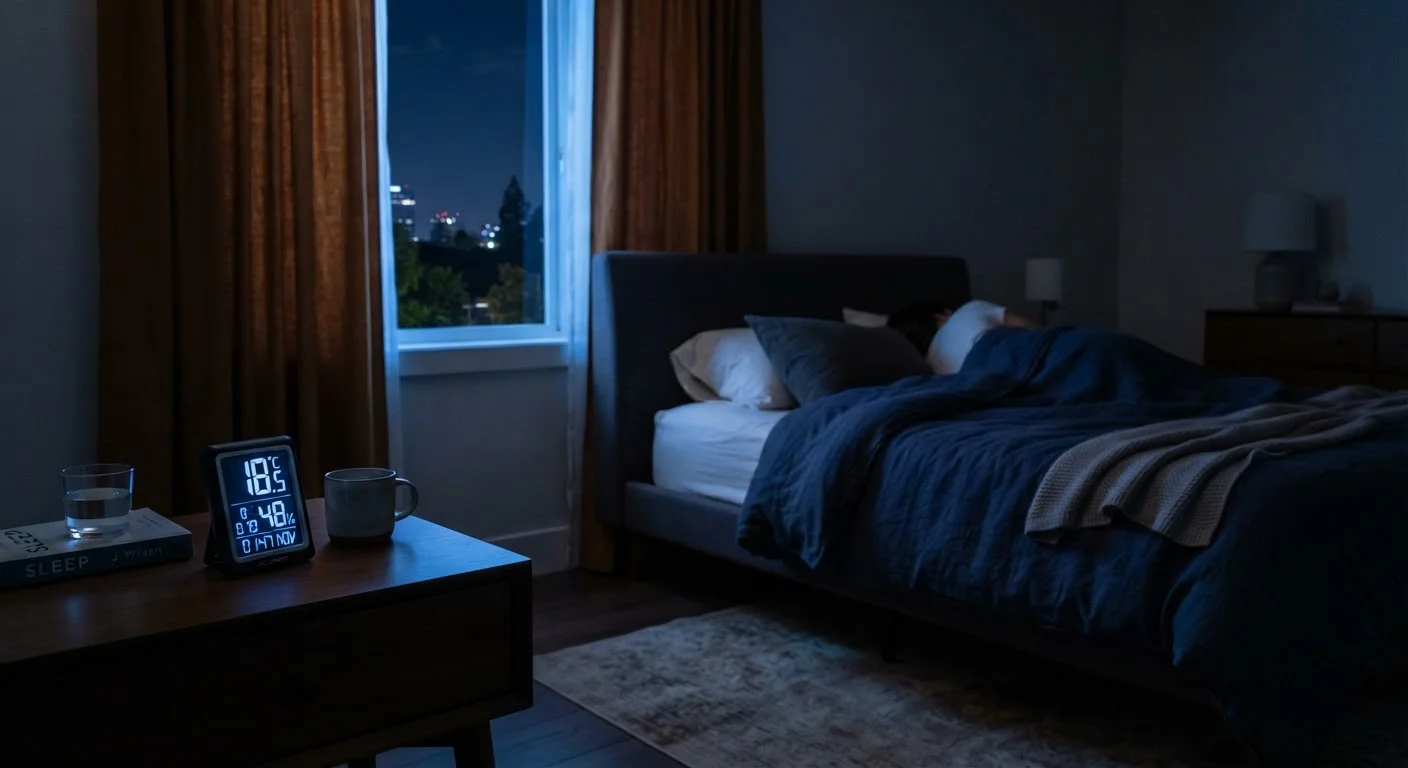
Your core body temperature naturally drops as you approach sleep — a process driven by your circadian rhythm. A cooler bedroom supports this drop; a warm one works against it. Research consistently points to a bedroom temperature in the low-to-mid 60s°F as broadly conducive to sleep for most adults, though individual preferences vary.
Overheating during the night is one of the more common causes of nighttime awakenings that people may not immediately connect to temperature. If you frequently wake up and struggle to fall back asleep, room temperature is worth examining before assuming a more complex cause.
65°F
Commonly cited optimal sleep temperature range midpoint
Sleep researchers frequently reference the 60–67°F (15–19°C) range as broadly supportive of adult sleep onset and maintenance, though individual variation applies.
~30%
Adults reporting frequent nighttime awakenings
According to the American Sleep Association, a significant proportion of American adults report difficulty staying asleep, a problem often linked to controllable environmental factors.
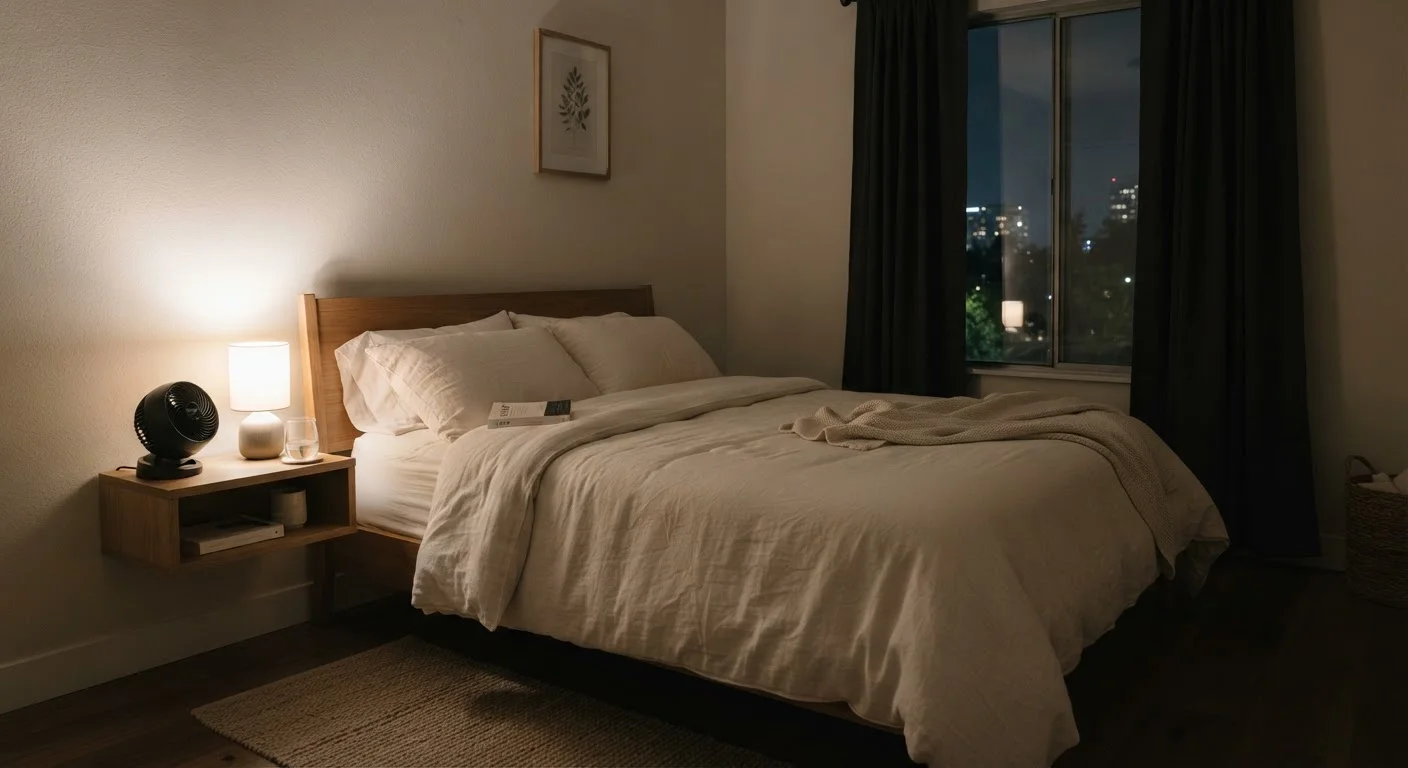
Strategies worth trying include adjusting your thermostat before bed, using a fan for air circulation, or layering bedding so you can easily regulate warmth. Breathable bedding materials can also make a meaningful difference — more on that below.
Light: The Signal Your Brain Is Always Watching
Light is the primary cue your brain uses to calibrate its internal clock. The pineal gland releases melatonin — the hormone associated with sleepiness — when light levels fall. Artificial light at night, whether from overhead fixtures, screens, or streetlights filtering through windows, can delay this process and push back your natural sleep window.
Blue-wavelength light (common in LED screens and many modern light bulbs) appears to be particularly effective at suppressing melatonin compared to warmer-toned light, though even low-level exposure of any kind can have an effect for sensitive individuals.
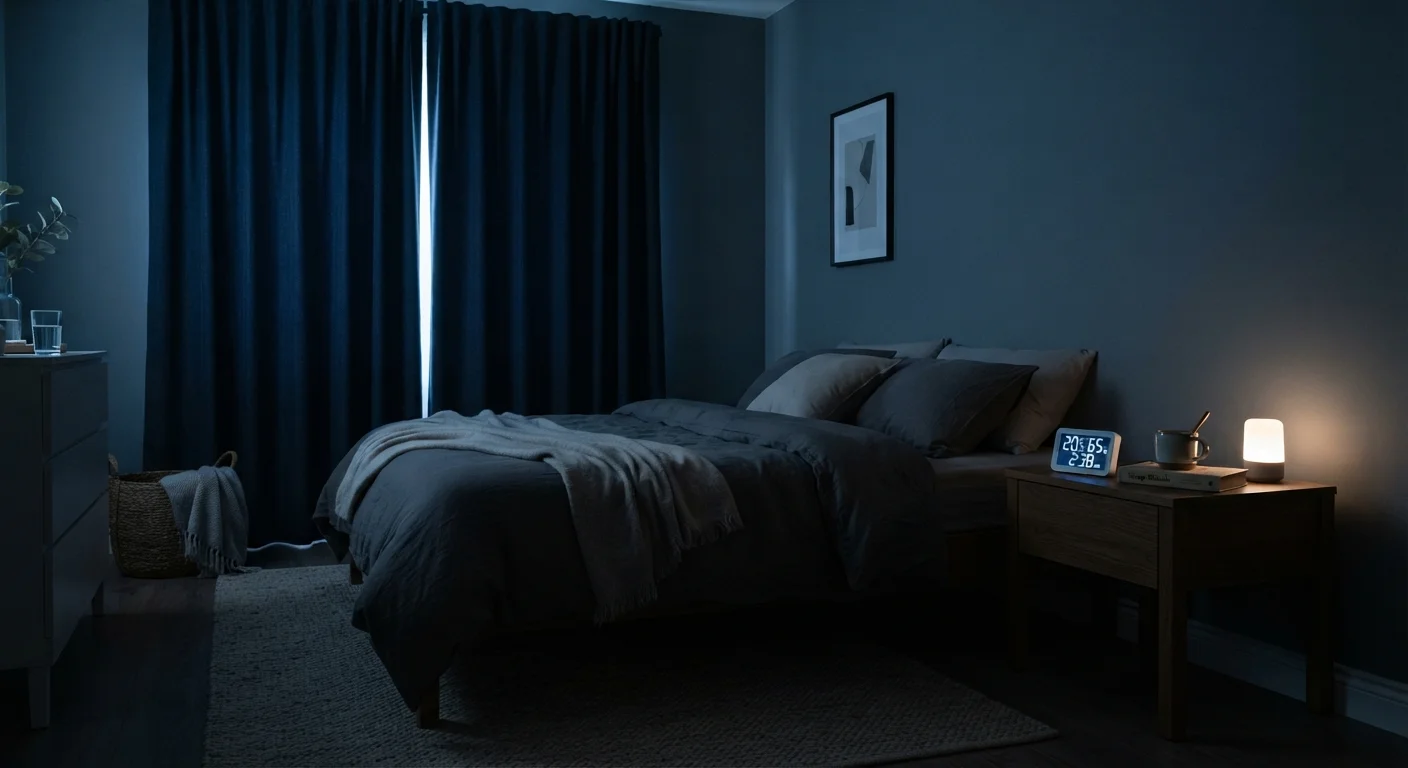
Practical steps include dimming lights in the hour before bed, using warmer-toned bulbs in bedside lamps, and blocking outside light with blackout curtains or a sleep mask. The goal isn't total sensory deprivation — it's reducing the light inputs that signal your brain to stay alert. For broader context on sleep hygiene beyond just environment, see what sleep hygiene really covers.
Noise: Intermittent Sounds Are More Disruptive Than Loud Ones
It's not necessarily volume that disrupts sleep most — it's unpredictability. Research on environmental noise and sleep has found that sudden or variable sounds (traffic, a partner moving, notifications) are more likely to cause partial arousals than steady background noise at a similar average volume. These arousals may not fully wake you, but they can reduce time spent in deeper, more restorative sleep stages.
Sound masking — using a white noise machine, fan, or similar device to create a consistent auditory backdrop — can help by making intermittent sounds less jarring by contrast. This approach has some research support, particularly for people in urban environments or shared households. Earplugs are another practical option, though comfort and safety (being able to hear alarms) should be considered.
For a fuller breakdown of how each environmental variable affects sleep stages, this reference on temperature, sound, and light covers the key distinctions in detail.
Bedding, Mattress, and Physical Comfort
Bedding serves a practical thermoregulatory function — it helps your body maintain a stable temperature while you sleep. Materials that trap heat or moisture can contribute to overheating, while breathable fabrics allow better airflow and temperature regulation throughout the night.
Mattress comfort is more subjective, but physical discomfort that causes positional shifting or pain-related awakenings will reduce sleep continuity regardless of other environmental factors. If your mattress is causing you to wake frequently or leaves you with pain upon rising, it's worth discussing with a healthcare provider to rule out musculoskeletal contributors.
While there's no universal prescription for bedding or mattress type, the general principle is consistent: physical comfort supports sleep, and chronic discomfort undermines it. Assessing your current setup is a straightforward step in any sleep improvement effort. You can use the pre-sleep room audit checklist to systematically review these and other environmental factors.
This article provides general health information for educational purposes only and is not a substitute for professional medical advice. If you are experiencing persistent sleep difficulties, consult a qualified healthcare provider.