
Why a Whole-Person View Matters
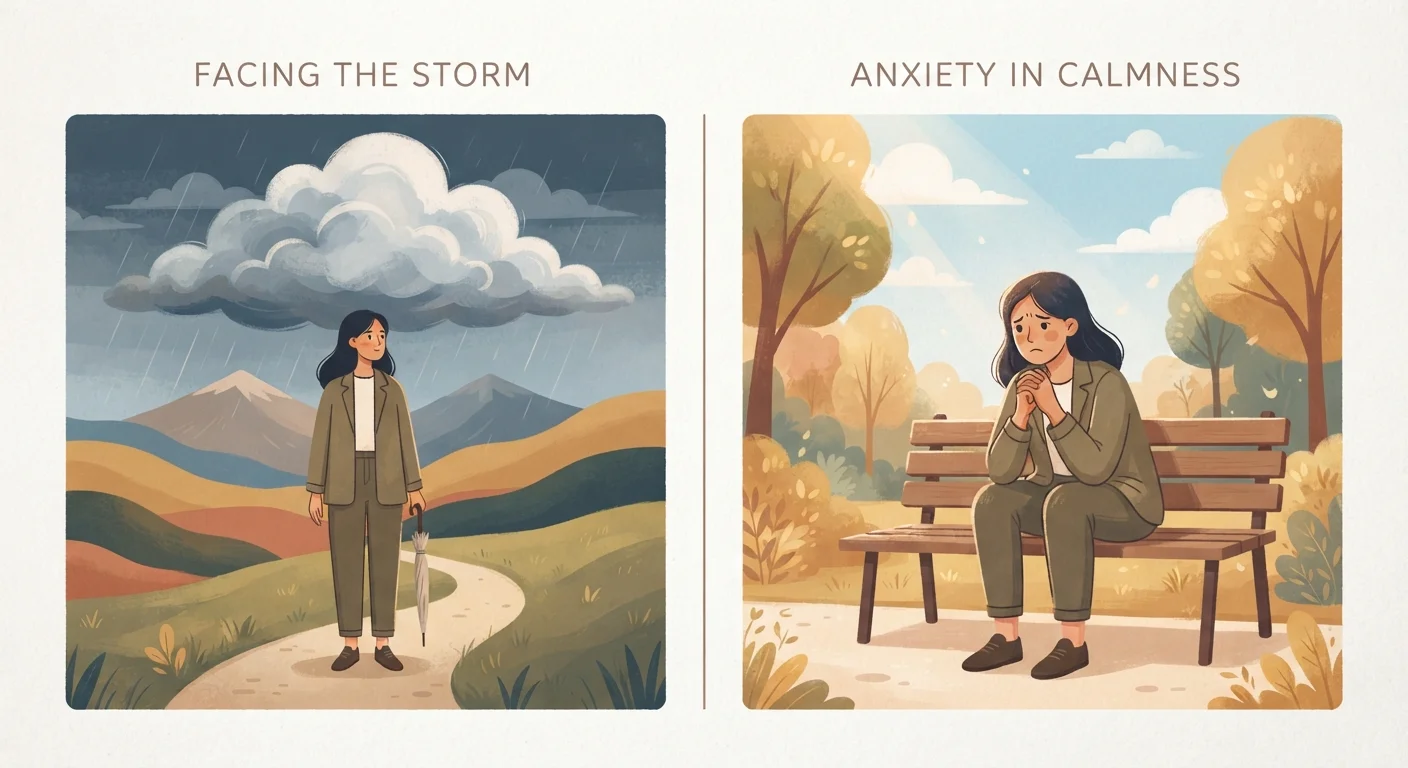
Most people experience stress and anxiety as an uncomfortable blur — a tight chest, racing thoughts, dread about tomorrow. It is tempting to treat these feelings as purely mental events, but decades of research point to a richer picture: stress and anxiety emerge from an ongoing, bidirectional conversation among your psychology, your physiology, and the world around you.
The difference between stress and anxiety matters here. Stress is typically a response to an identifiable external pressure; anxiety persists even when the immediate trigger is gone. Both, however, recruit the same body-mind system — and both respond to whole-person care. Understanding each layer helps you choose the right tool at the right moment, rather than applying a one-size-fits-all fix.
The Mind: Thoughts, Beliefs, and Emotional Patterns
Your interpretations of events shape your stress experience at least as powerfully as the events themselves. Cognitive distortions — habitual thinking errors such as catastrophizing (assuming the worst outcome), all-or-nothing thinking, or mind-reading (assuming you know how others perceive you) — amplify anxiety well beyond what a situation warrants.
Research consistently finds that targeting these patterns is effective. Cognitive Behavioral Therapy (CBT), for example, works by helping people identify and restructure unhelpful thought patterns. Mindfulness-Based Stress Reduction (MBSR) takes a complementary angle: rather than changing thought content, it cultivates the ability to observe thoughts without being swept away by them. Both approaches have strong evidence bases. The comparison between CBT and MBSR can help you understand which framework might suit your situation best.
When you notice anxious thoughts spiraling, try naming the cognitive distortion — for example, 'That's catastrophizing.' Labeling the pattern creates a small but meaningful pause between the thought and your reaction.
Research in cognitive neuroscience suggests that affect labeling — putting feelings and thought patterns into words — reduces activity in the amygdala, the brain's threat-detection center, helping to dampen the emotional intensity of the experience.
Build 'transition rituals' between work and personal time: a short walk, a few minutes of stretching, or even changing clothes. These cues help your nervous system register that the demand period is over.
The stress response stays activated when the brain receives no clear signal that a threat has passed. Deliberate behavioral boundaries act as that signal, supporting recovery and reducing carry-over anxiety into evening hours.
Emotional regulation skills — such as labeling feelings, tolerating uncertainty, and practicing self-compassion — also buffer against anxious spiraling. These are learnable skills, not fixed personality traits.
The Body: Physical Signals and the Stress Response
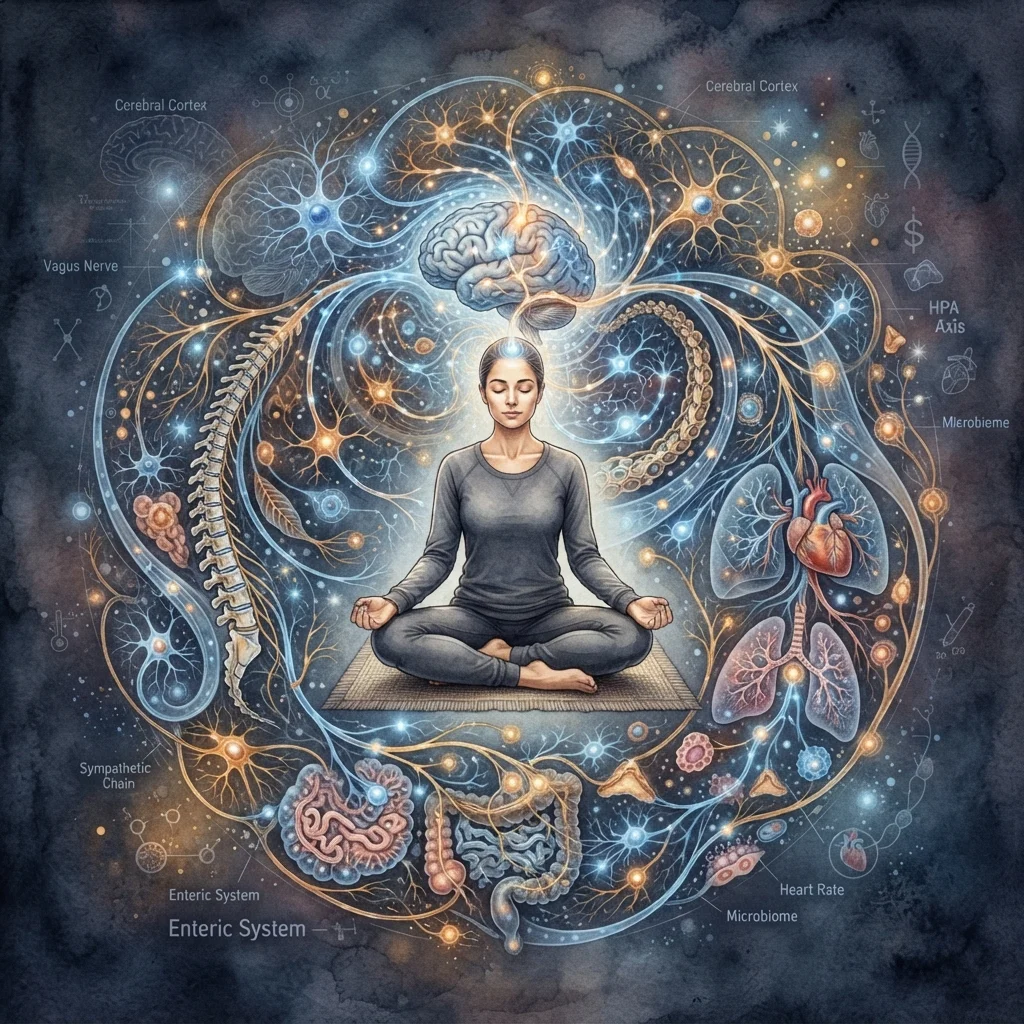
When your brain perceives a threat, it triggers the hypothalamic-pituitary-adrenal (HPA) axis — a cascade that releases cortisol and adrenaline, priming the body to fight or flee. Heart rate climbs, muscles tense, digestion slows. This is adaptive in short bursts. The problem arises when the system stays activated chronically, contributing to disrupted sleep, inflammation, and a heightened baseline of anxiety. For a deeper look at the physiology, see what stress actually does to your body and brain.
The body is also a resource, not just a target. Slow, diaphragmatic breathing directly activates the parasympathetic nervous system — the body's built-in calming mechanism. Regular physical activity is one of the most replicated stress-reduction interventions in the literature, shown to reduce cortisol reactivity and improve mood. Sleep quality has a reciprocal relationship with anxiety: poor sleep heightens emotional reactivity, which in turn disrupts sleep further. Nutrition plays a supporting role too — the relationship between food, mood, and cortisol is an active area of research. Emotions are not abstract — they register physically. Understanding how feelings show up in the body can help you catch the early warning signs of escalating stress before it peaks.
The Environment: Social, Digital, and Physical Contexts
No one lives in a vacuum. Social connection is one of the most powerful buffers against stress: strong relationships are associated with lower cortisol responses and faster physiological recovery after stressful events. Conversely, loneliness and chronic interpersonal conflict are independent risk factors for anxiety disorders.
Digital environments deserve specific attention. High volumes of news consumption, social comparison on social media, and always-on work culture all maintain the nervous system in a low-grade alert state. Managing workplace stress often requires structural changes — clearer boundaries, deliberate recovery time, and realistic expectations — not just individual coping strategies.
Physical spaces also matter. Research in environmental psychology suggests that exposure to natural settings lowers self-reported stress and measurable cortisol. Clutter, noise, and poor lighting have the opposite effect. Making even modest adjustments to your immediate environment — more natural light, less background noise, brief time outdoors — can shift your baseline arousal downward.
Bringing It Together: An Integrated Approach
A whole-person strategy does not require doing everything at once — that itself would be stressful. Instead, think of the mind, body, and environment as three levers. Progress on any one lever tends to ease the load on the others. Someone who starts sleeping more consistently may find their anxious thoughts feel more manageable. Someone who addresses a toxic work dynamic may discover that their physical tension decreases without any other intervention.
Evidence-based habits compound over time. The practices that build long-term stress resilience — consistent sleep schedules, regular movement, social connection, purposeful downtime — are not glamorous, but the research behind them is robust. Start with the layer that feels most accessible, track what shifts, and build from there.
When to Seek Professional Support
General wellness strategies support everyday wellbeing, but they are not substitutes for professional care when anxiety is persistent, disabling, or causing significant distress. If stress or anxiety is interfering with your work, relationships, sleep, or physical health on most days, a qualified healthcare or mental health professional can offer an accurate assessment and a personalized plan.
This article provides general health information and is not intended as medical advice. Please consult a licensed healthcare professional for guidance specific to your situation, symptoms, or any medication or treatment decisions.
This article is for informational purposes only and is not a substitute for professional medical or mental health advice, diagnosis, or treatment. Always consult a qualified healthcare professional with questions about your health.