
Why Home Cooking Has Such a Strong Impact on Diet Quality
Decades of nutrition research point to a consistent finding: people who cook at home regularly consume fewer calories, less sodium, and less saturated fat than those who rely primarily on restaurant meals or ultra-processed convenience foods. A frequently cited analysis published in Public Health Nutrition found that home cooks consumed roughly 140 fewer calories per meal on average compared to those eating out most often.
The mechanism isn't mysterious. When you prepare your own food, you control the ingredients, the portion sizes, and the cooking methods. That control compounds over time. The goal of this article isn't to tell you to cook every meal from scratch — it's to help you build a realistic, durable habit that genuinely fits your life. For a deeper look at the behavior science behind habit formation, see evidence-based principles for building habits that stick.
Best Practices for Making Home Cooking a Lasting Habit
The following practices are grounded in nutrition research and behavior science. They're designed to lower the barriers that cause most people to abandon home cooking after a few weeks.
Start with a target of two to three home-cooked meals per week, not seven.
Behavior research consistently shows that habits are more durable when the initial commitment feels achievable. Aiming for every night immediately creates a gap between expectation and reality, which often leads to abandoning the habit entirely. Building frequency gradually produces more consistent long-term results.
Design your kitchen environment to make cooking the path of least resistance.
Environmental cues heavily influence behavior. A cluttered stove, buried utensils, or a refrigerator with no ready ingredients all increase the friction cost of cooking. Reducing that friction — even slightly — makes it easier to follow through when motivation is low.
Embrace a core rotation of five to eight reliable, simple recipes.
Decision fatigue is real. Having to choose what to cook every evening draws on the same mental energy depleted by a full workday. A rotating repertoire of familiar recipes eliminates that friction and allows you to cook competently without sustained effort.
Batch-cook one or two components on a less busy day to use throughout the week.
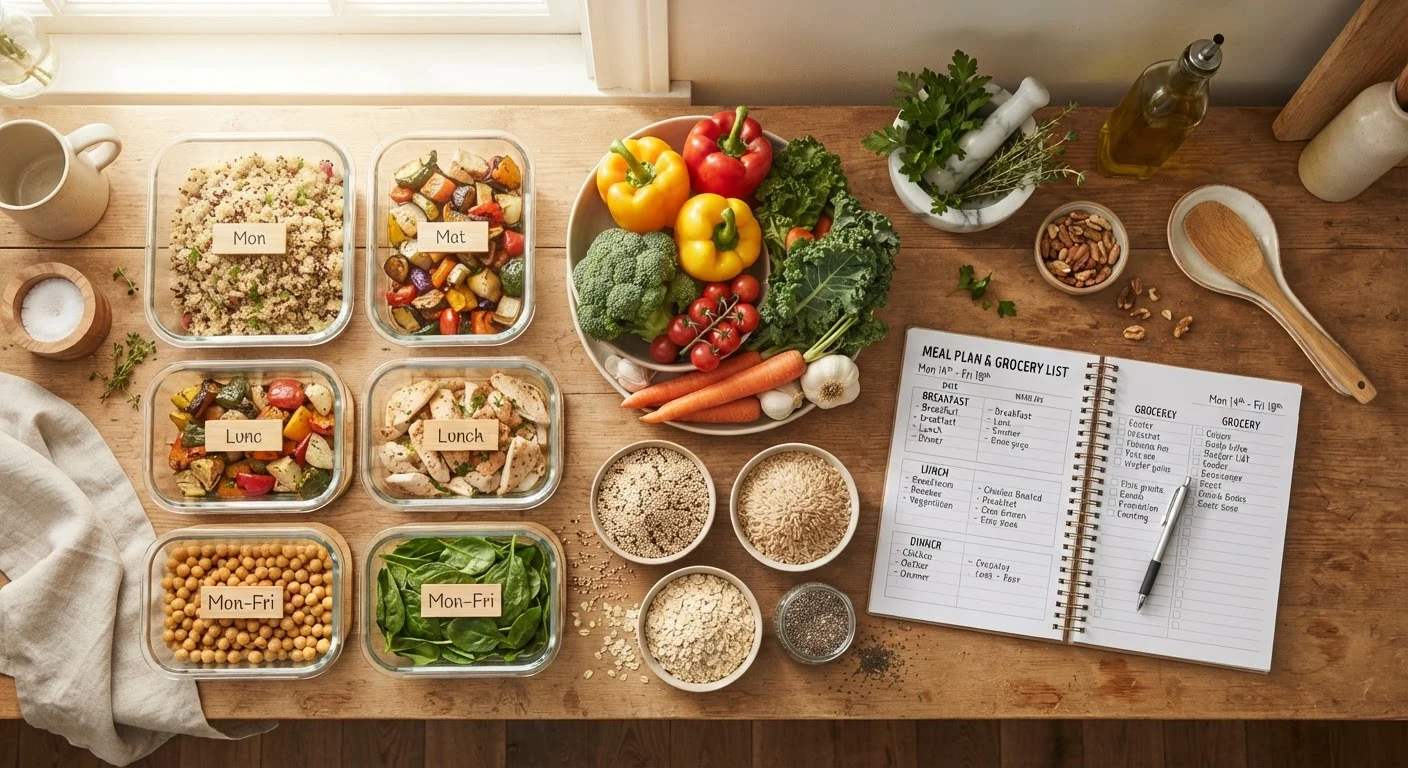
Full meal prep isn't necessary — component prep is often more practical. Having cooked grains, roasted vegetables, or a protein ready in the refrigerator dramatically shortens weeknight cooking time and reduces the temptation to order out.
Build a pantry foundation that makes improvised meals possible on short notice.
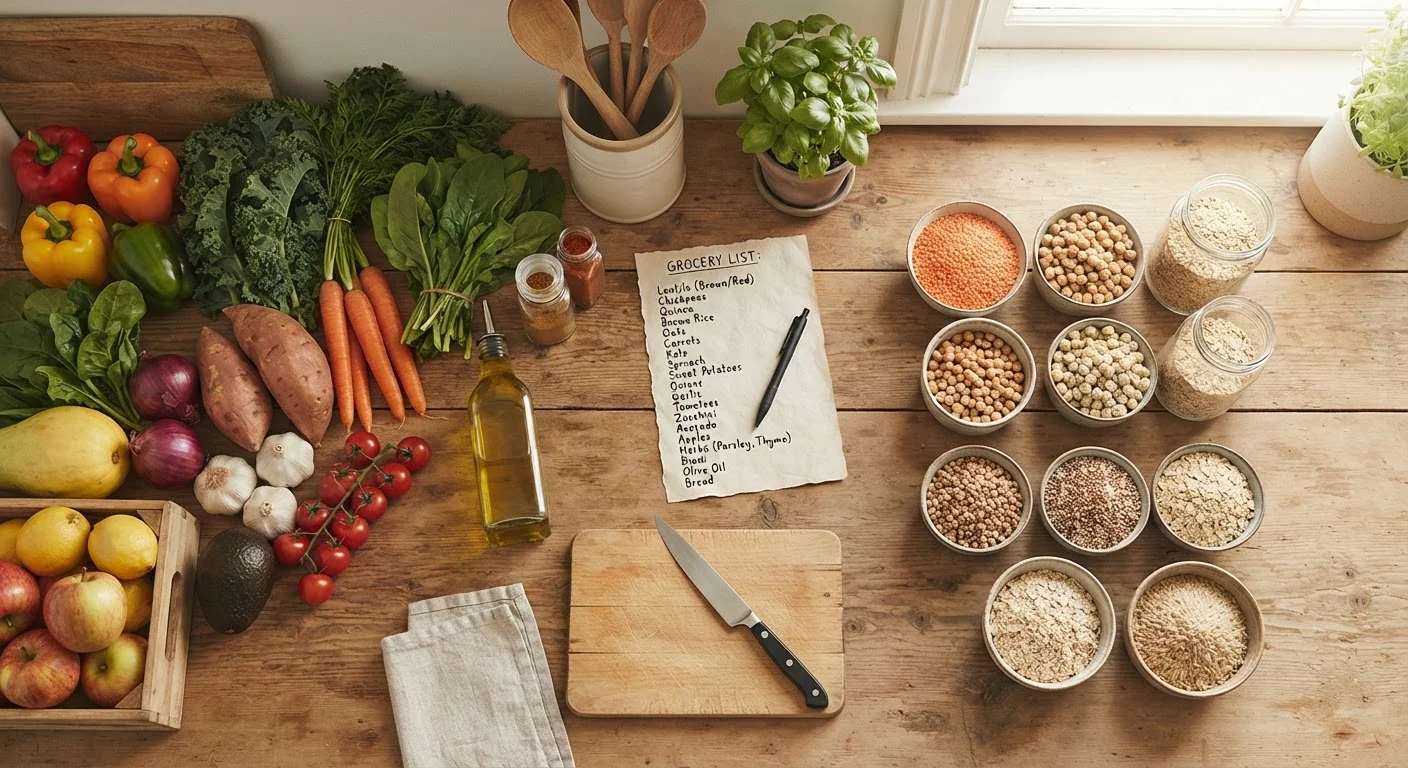
A well-stocked pantry functions as nutritional insurance. When the day goes longer than planned or a grocery trip doesn't happen, canned beans, whole-grain pasta, canned tomatoes, and olive oil can become a complete, balanced meal without a trip to the store.
This article is for general informational and educational purposes only and is not a substitute for professional medical or dietary advice. Consult a qualified healthcare provider or registered dietitian for personalized guidance.
Quick Actions You Can Take This Week
You don't need a complete kitchen overhaul to get started. The following actions are small, concrete, and immediately achievable — each one reduces a real barrier to cooking more consistently. If busy schedules are a recurring obstacle, strategies for eating well when your schedule doesn't cooperate can help you adapt these ideas further.
Once you've started cooking more regularly, pairing that habit with a structured grocery routine makes a significant difference. Building a weekly grocery routine walks through a practical checklist for keeping your kitchen stocked in a way that makes cooking the easiest default option.