Why Busy Schedules Undermine Eating Habits
For most working Americans, the challenge isn't knowing that vegetables are good or that fast food is frequent. It's the gap between what we intend to eat and what actually happens when a meeting runs long, a child needs pickup, or the commute eats another hour. Research consistently links higher time pressure with lower diet quality — more convenience foods, fewer vegetables, and irregular meal timing.
What matters is closing that gap not with willpower, but with structure. The goal of this guide is to build habits that make nutritious choices the easier option, even on difficult days. For a deeper look at how these habits compound over time, see our guide to sustainable healthy eating.
Environment Shapes Behavior More Than Motivation
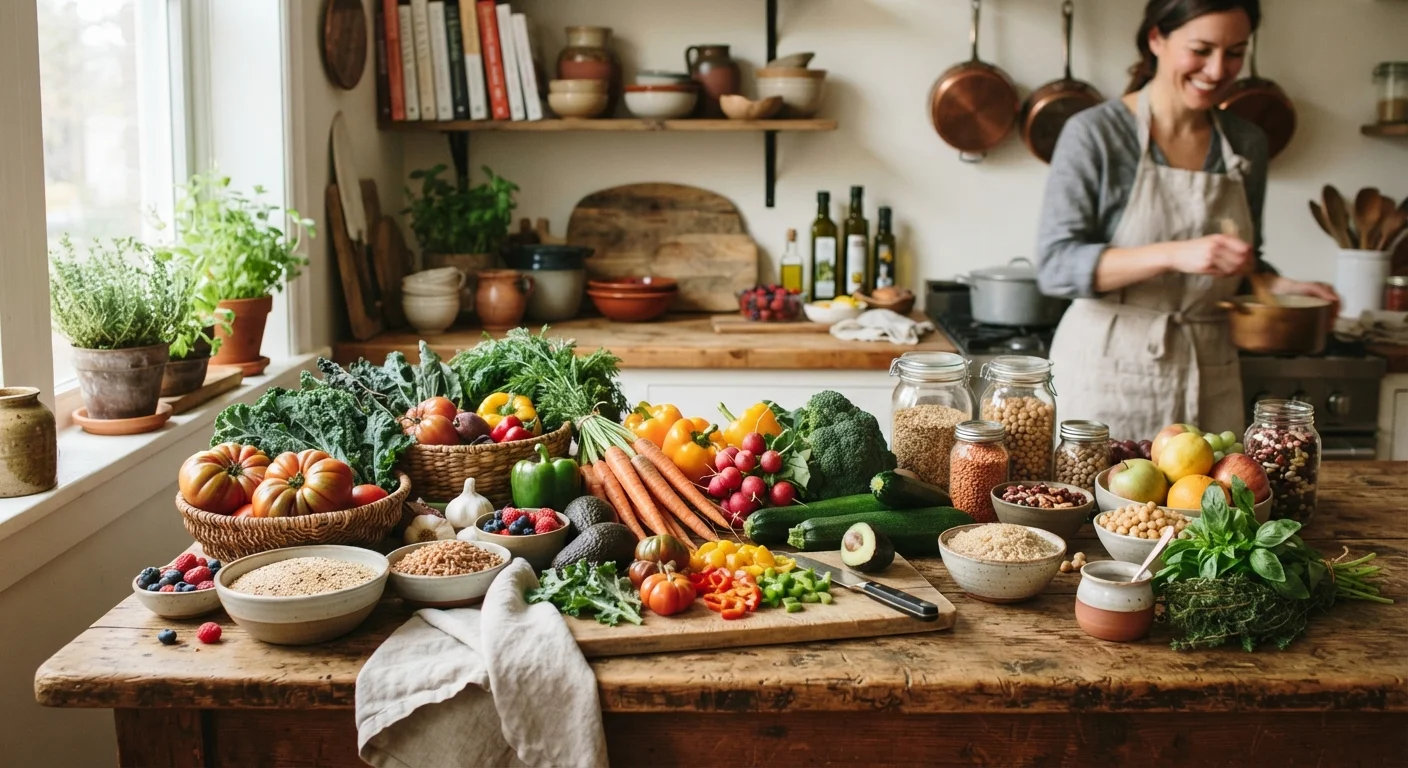
Studies on eating behavior consistently show that what's visible and accessible in your kitchen strongly predicts what you eat. Placing fruit on the counter, prepped vegetables at eye level in the fridge, and keeping less nutritious items less visible are low-effort changes that can meaningfully influence daily choices. Design your environment before you need willpower.
What You'll Need Before You Start
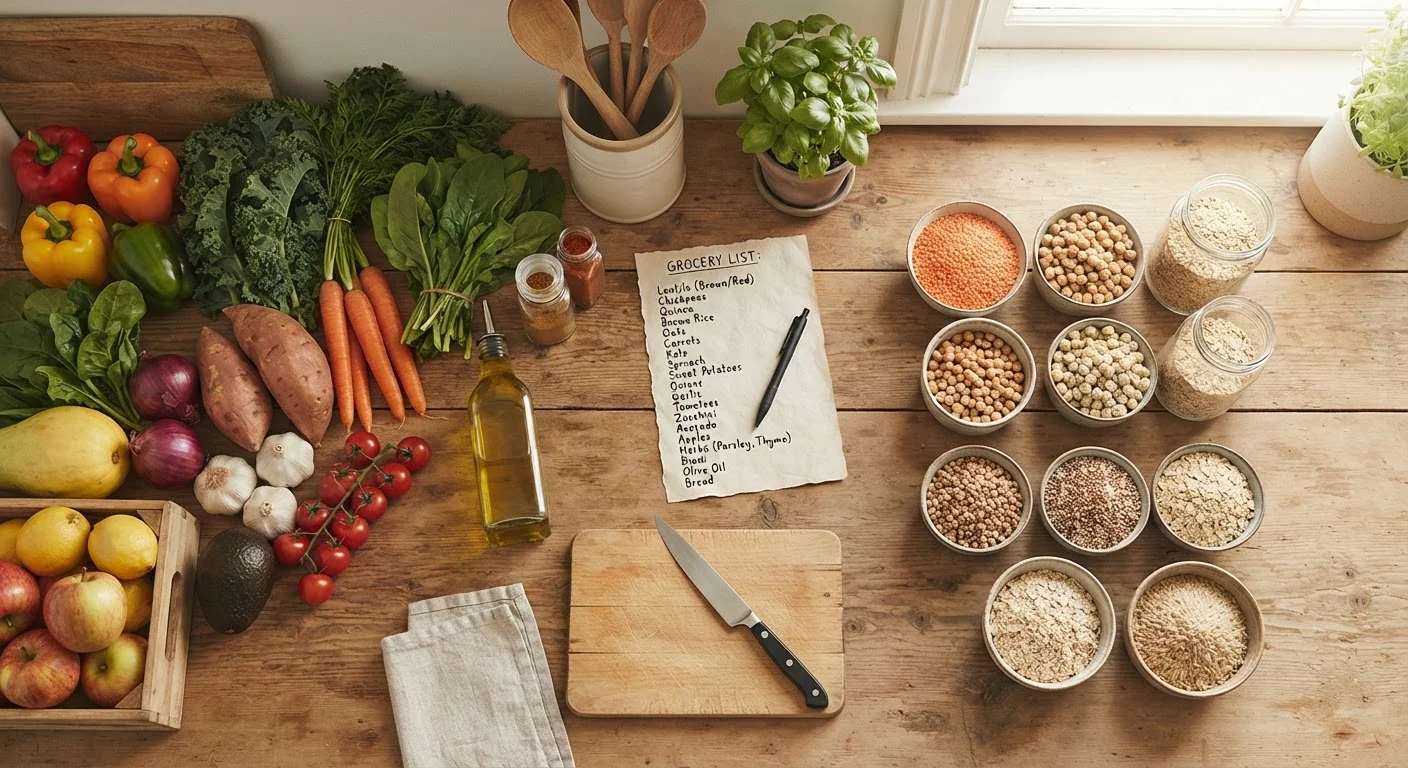
Getting your environment in order is half the work. Before implementing the steps below, gather the basics:
What you will need
If stocking your kitchen feels like a project in itself, our article on building a weekly grocery routine offers a practical checklist to make it straightforward.
Step-by-Step: Building Eating Habits That Survive a Packed Schedule
Anchor Your Week with One Prep Session
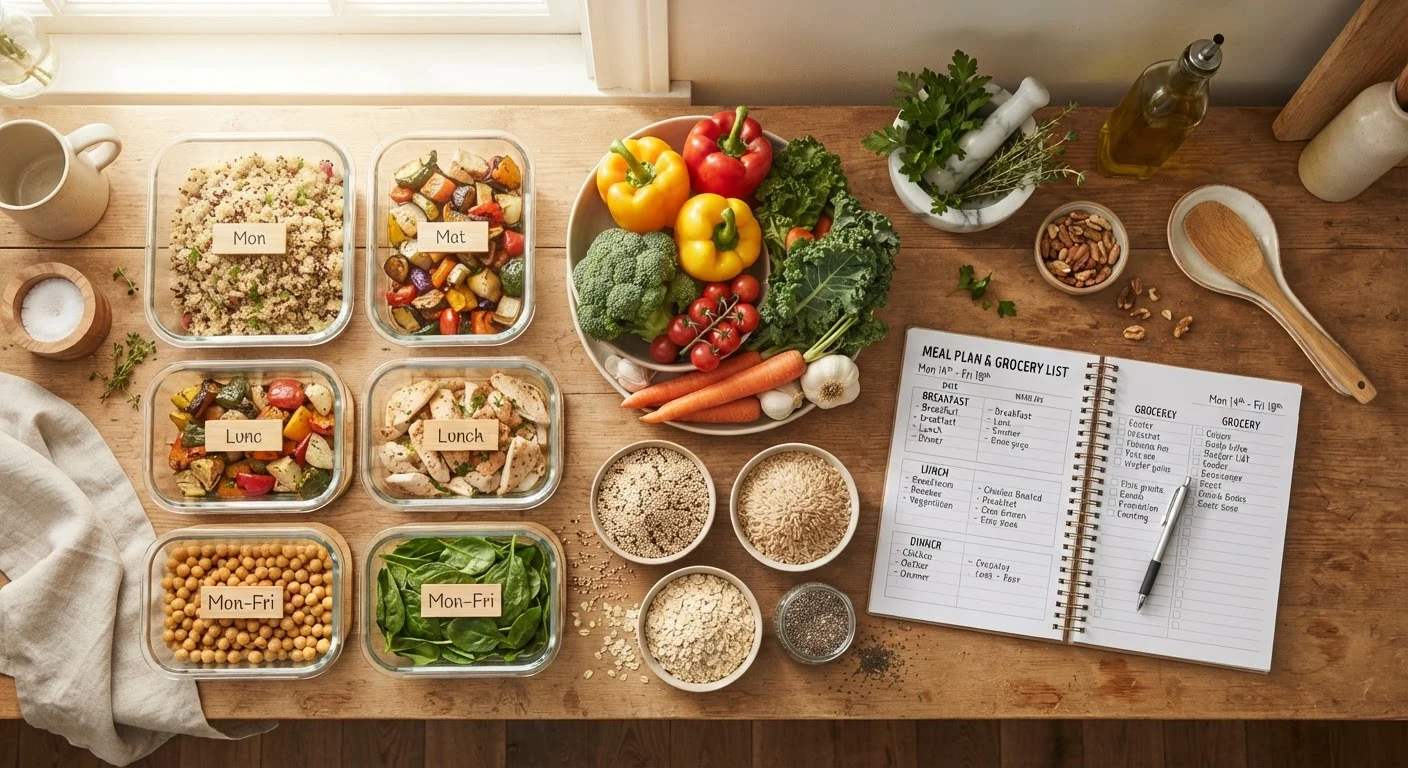
Choose one consistent time each week — Sunday afternoon, Saturday morning, or any lower-pressure window — to prepare two or three foundational foods. This doesn't mean cooking every meal in advance. It means reducing the number of decisions you need to make under stress.
Good candidates for batch prep include: a cooked whole grain (brown rice, farro, oats), a protein source (hard-boiled eggs, baked chicken thighs, canned beans rinsed and portioned), and washed and cut raw vegetables. These three components alone can be assembled into dozens of combinations throughout the week.
Build a Short List of Portable, Nutrient-Dense Defaults
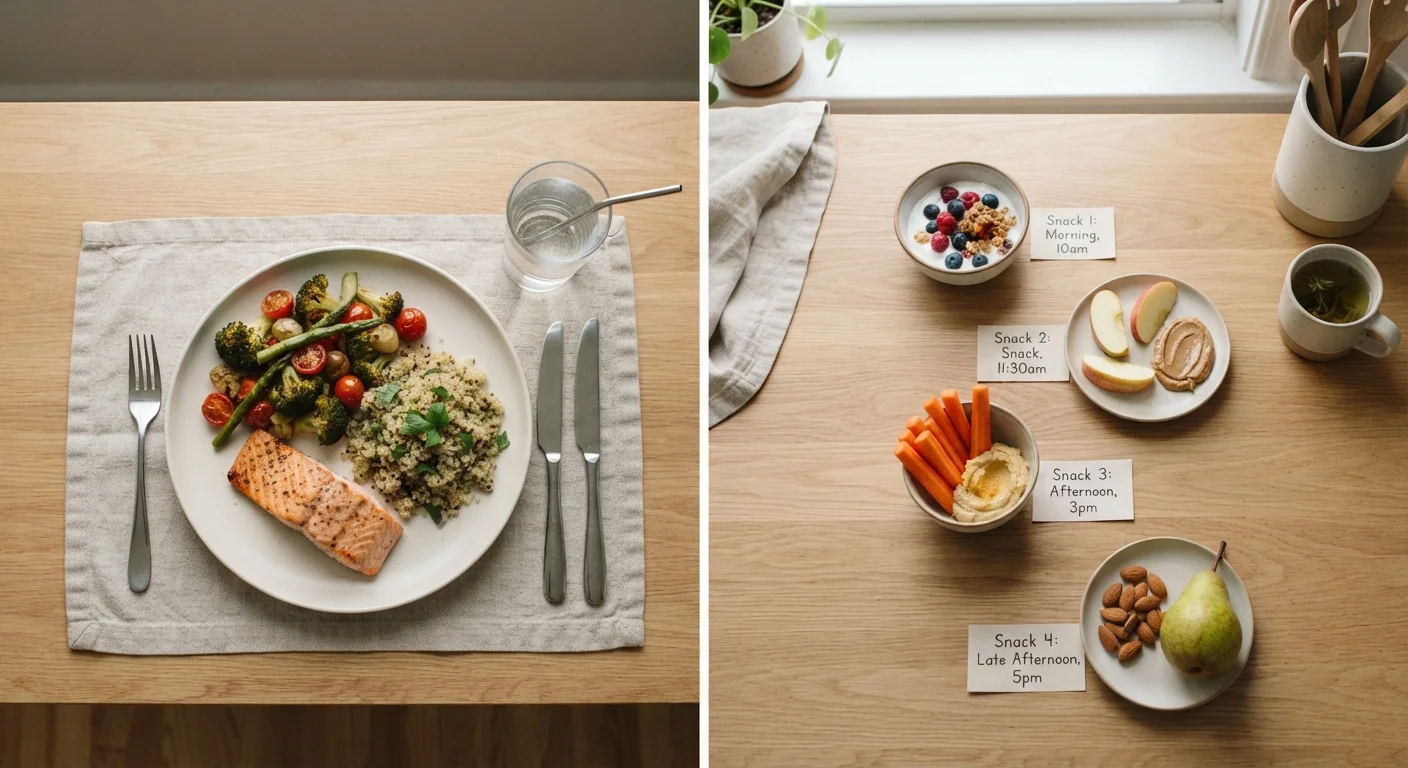
Identify five to seven foods or simple combinations that travel well, require no refrigeration or minimal prep, and provide meaningful nutrition. These become your fallback on the days when preparation doesn't happen.
Examples with good nutritional profiles include: whole fruit (apples, bananas), individual nut butter packets with whole-grain crackers, roasted chickpeas, low-sugar Greek yogurt cups, string cheese with fruit, or trail mix made from nuts and dried fruit without added sugars. Keep these on hand at home, in your bag, and at your desk if possible.
Protect at Least One Structured Meal Per Day
On the most chaotic days, aiming for three balanced meals can feel unrealistic. A more resilient target is protecting at least one structured, intentional meal — usually breakfast or dinner — where you sit down and eat something with adequate protein, fiber, and a vegetable or fruit component.
This anchor meal serves as a nutritional floor. Research on dietary patterns suggests that consistent meal structure, even partial, supports better overall intake compared to fully unplanned eating. See midday habits that support afternoon energy for complementary strategies during the workday.
Use Your Grocery Routine as a System, Not a Chore
An inconsistent or reactive approach to grocery shopping — buying random items when you happen to remember — is one of the biggest structural barriers to eating well under pressure. A reliable weekly or biweekly routine, even a short one, removes the guesswork.
Keep a running list updated throughout the week (a notes app works well) so that your shopping trip is efficient and targeted. Stock your kitchen with versatile ingredients that serve multiple meals: eggs, canned fish, legumes, frozen vegetables, and whole grains all offer high nutritional value with minimal spoilage risk.
Adjust Expectations Without Abandoning Standards
Perfectionism is one of the most common obstacles to consistent healthy eating. If Tuesday is a disaster — coffee for breakfast, a drive-through lunch, and cereal for dinner — that is information, not failure. The question is what Wednesday looks like.
Eating well over time is a pattern, not a performance. Build flexibility into your approach by distinguishing between your default habits (what you do most of the time) and your contingency habits (what you do when plans fall apart). Both are worth designing deliberately. For broader context on maintaining healthy habits when routines break down, see adapting your daily routine when life gets disrupted.
Keep in mind that meal timing and structure can be adapted to your schedule — there's no single correct pattern.
Eating Out and On the Go
Even with solid preparation habits, restaurant meals and convenience stops are part of real life. The goal isn't avoidance — it's approaching them with a few reliable defaults. Prioritize options with a protein source, a vegetable or fruit, and a minimally processed carbohydrate when available. Portion sizes at most restaurants exceed typical needs, so sharing or boxing half before eating is a practical strategy, not a sacrifice.
For more guidance on navigating menus without derailing your habits, see eating out without abandoning your nutrition goals. If you're managing these choices for a family, nutrition for busy families addresses how to make one approach work for multiple people.
This article is for general informational and educational purposes only and is not a substitute for professional medical or dietary advice. Consult a qualified healthcare provider or registered dietitian for guidance specific to your health needs.