Why Restaurant Meals Present a Real Challenge
Americans eat out frequently — the USDA reports that food away from home accounts for a significant share of daily calorie intake for many households. Restaurant environments are designed to encourage larger orders, richer dishes, and faster eating, all of which work against mindful, balanced nutrition. Portions tend to run large, sodium is often high, and vegetables can be scarce or heavily dressed.
The good news: you don't need to avoid restaurants or order with rigid perfectionism to maintain healthy habits. What research consistently supports is that sustainable nutrition depends on overall dietary patterns, not individual meals. A single restaurant dinner rarely defines your health — how you navigate dining out as a regular habit does. For more on building that kind of durable foundation, see our guide to eating well when your schedule doesn't cooperate.
What you will need
Step-by-Step: Navigating the Menu With Your Goals Intact
The following steps are designed to be practical and repeatable — habits you can use whether you're at a sit-down restaurant, a fast-casual counter, or a family gathering.
Look at the Menu Before You Arrive
Most chain and mid-scale restaurants post their menus online. Spending two to three minutes reviewing options in advance removes the pressure of deciding under social conditions, when appetite and environment push toward heavier choices. Identify one or two realistic options that include a lean protein, some vegetables, and a reasonable carbohydrate portion.
Anchor Your Order Around Protein and Vegetables
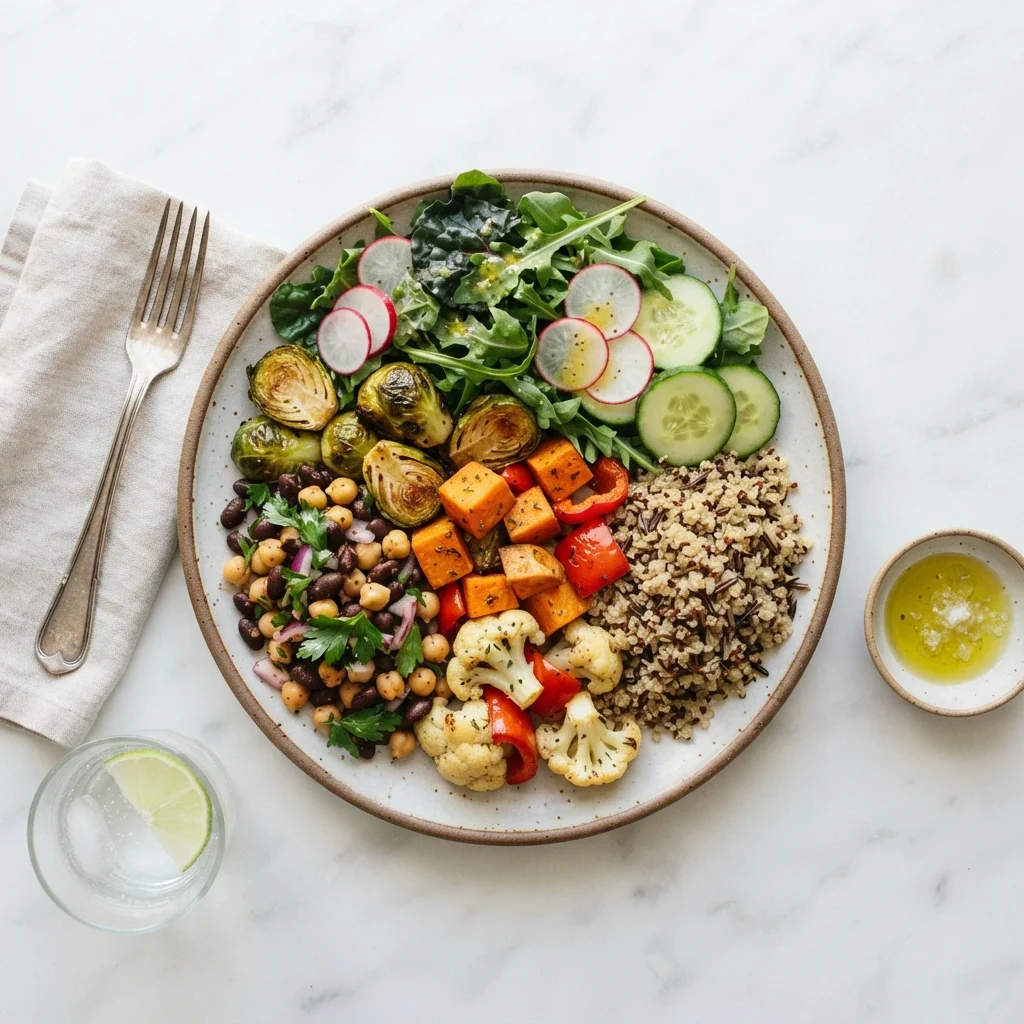
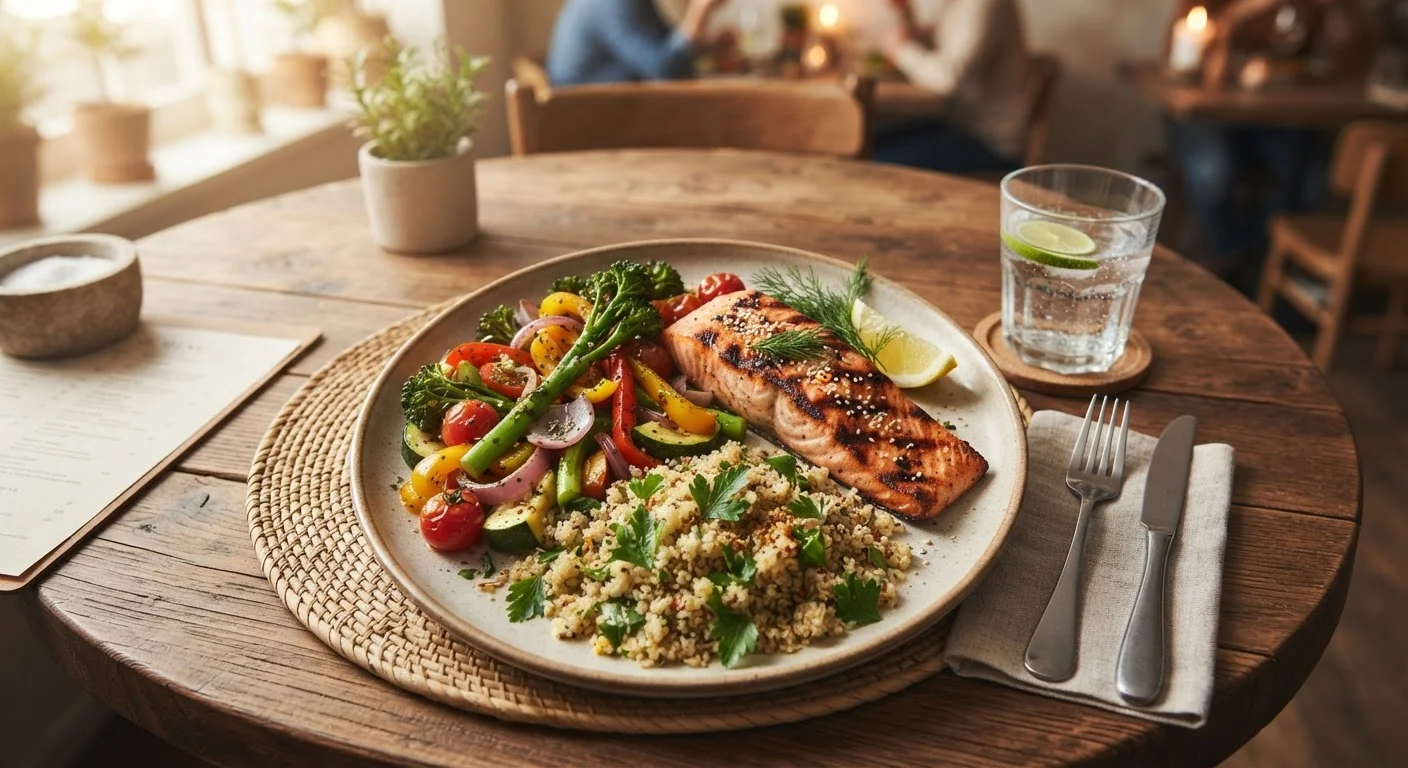
Use the structure of a balanced plate as your guide: roughly half the plate as vegetables or salad, a quarter as lean protein (grilled chicken, fish, legumes, or lean beef), and a quarter as grains or starchy sides. When ordering, choose this structure intentionally rather than building around a starch or entrée add-ons.
Make One or Two Simple Modifications
You don't need an elaborate custom order. Effective modifications are usually small: ask for sauce or dressing on the side, request steamed or roasted vegetables instead of fries, or ask that butter be used lightly in preparation. Most restaurants accommodate basic requests without issue. Framing your request simply and politely is all that's needed.
Manage Portions Proactively
Restaurant portions frequently exceed standard serving sizes. A practical strategy: when your meal arrives, mentally divide it and plan to eat a reasonable portion now. You can ask for a to-go container at the start of the meal and set aside the excess before you begin eating — this removes the visual cue to continue past fullness. Shared plates or half-portions, where offered, are also effective options.
Eat Slowly and Check In With Hunger
Pause midway through your meal and assess how hungry you still feel on a simple scale. Many people find they're satisfied well before finishing a full restaurant portion. Eating at a measured pace, engaging in conversation, and putting down utensils between bites all support better awareness of fullness. This isn't a rigid rule — it's a habit that builds over time with practice.
Balance the Rest of the Day Without Overcompensating
If you ate a heavier restaurant meal at lunch, aim for a lighter, vegetable-forward dinner — not as punishment, but as a natural counterbalance. Avoid skipping meals or drastically restricting intake to "make up" for a restaurant visit. Extreme compensation can trigger overeating later and disrupts your overall eating pattern more than the original meal did.
Scan for These Menu Keywords
Words like grilled, steamed, roasted, baked, or poached typically indicate lower-fat preparation. Terms like crispy, battered, pan-fried, smothered, or loaded usually signal added calories from fat or sodium. You don't need to avoid these dishes entirely — just factor them into your overall order structure.
Common Pitfalls and How to Handle Them
Even with good intentions, a few patterns tend to undermine restaurant nutrition goals repeatedly.
- The "I already ordered badly, so the whole day is ruined" trap. One less-than-ideal meal has minimal long-term impact. What matters more is building eating habits that support a healthy weight without constant tracking — not perfection at every meal.
- Eating too quickly. Fast eating overrides satiety signals. Slowing your pace — putting down your fork between bites — gives your body time to register fullness. Research supports that it takes roughly 20 minutes for fullness cues to reach the brain.
- Underestimating liquid calories. Sweetened beverages, alcoholic drinks, and creamy soups add calories without meaningful nutritional benefit. Water, sparkling water, or unsweetened drinks are straightforward substitutions.
- Skipping vegetables entirely. Many restaurant menus offer side salads, steamed vegetables, or bean-based sides that can substantially improve meal nutrient density without much effort. For a practical framework, see building a more nutrient-dense plate without overhauling your diet.
Sodium Is Often the Hidden Issue
Restaurant meals — including seemingly healthy options — are frequently very high in sodium. The Dietary Guidelines for Americans recommend limiting sodium to 2,300 mg per day, but a single restaurant entrée can exceed that on its own. If you manage blood pressure, heart health, or kidney conditions, sodium at restaurants deserves particular attention. Consult your healthcare provider or a registered dietitian for personalized guidance on sodium intake.
This article is for general informational and educational purposes only and is not a substitute for professional medical or dietary advice. If you have specific health conditions, dietary restrictions, or concerns about your nutrition, consult a registered dietitian or qualified healthcare professional.