
The Foundation: Why Proportions Matter More Than Rules
For decades, Americans were handed food pyramids, exchange lists, and calorie charts — detailed systems that, for many people, created more confusion than clarity. Today, nutrition science points toward a simpler framework: the proportion of food groups on your plate is one of the most reliable predictors of overall diet quality.
The USDA's MyPlate model translates this into a visual that's easy to apply at any meal. The core idea is that roughly half your plate should be vegetables and fruits, about a quarter lean protein, and the remaining quarter whole grains or starchy foods. A small serving of dairy or a calcium-rich alternative often complements the meal.
Understanding what goes into each section — and why — gives you a foundation far more flexible than any rigid diet plan. To understand how macronutrients power this framework at a biological level, see how macronutrients work from digestion to daily energy.
Breaking Down Each Section of the Plate
Vegetables and Fruits (half the plate): Non-starchy vegetables — leafy greens, broccoli, peppers, zucchini — should dominate this portion. They're high in fiber, vitamins, and minerals while supporting satiety without adding excess calories. Fruits contribute natural sugars alongside important antioxidants and should complement rather than crowd out vegetables.
Lean Protein (one quarter): Protein supports muscle maintenance, immune function, and keeps hunger at bay longer than refined carbohydrates alone. Good sources include poultry, fish, eggs, beans, lentils, and tofu. Varying protein sources across the week is a practical way to widen your micronutrient intake.
Whole Grains (one quarter): Whole grains — brown rice, quinoa, whole-wheat bread, oats — provide fiber and B vitamins that refined grains largely lack. They digest more slowly, which helps maintain steadier blood sugar levels compared to their refined counterparts.
Healthy Fats (a supporting role): Fats don't occupy their own section on the plate, but they matter. Olive oil used in cooking, avocado sliced over a salad, or a handful of walnuts alongside a meal all contribute to nutrient absorption and long-term cardiovascular health. The goal isn't fat avoidance — it's choosing unsaturated fats over saturated ones where possible.
9 in 10
Americans eat insufficient vegetables
According to CDC data, roughly 90% of Americans do not meet federal vegetable intake recommendations on a daily basis.
~50%
Calories from ultra-processed foods
Research published in peer-reviewed nutrition journals estimates that ultra-processed foods account for close to half of total daily calorie intake for many American adults.
3x
Higher fiber from whole vs. refined grains
Whole grains typically contain roughly three times more dietary fiber per serving than their refined counterparts, based on USDA nutrient database comparisons.
Making a Balanced Plate Work in Real American Life
The challenge for most people isn't understanding the concept — it's applying it when life is busy, budgets are tight, and meals are sometimes eaten in a car or at a desk. A few practical shifts can bring the balanced plate off the poster and onto the table.
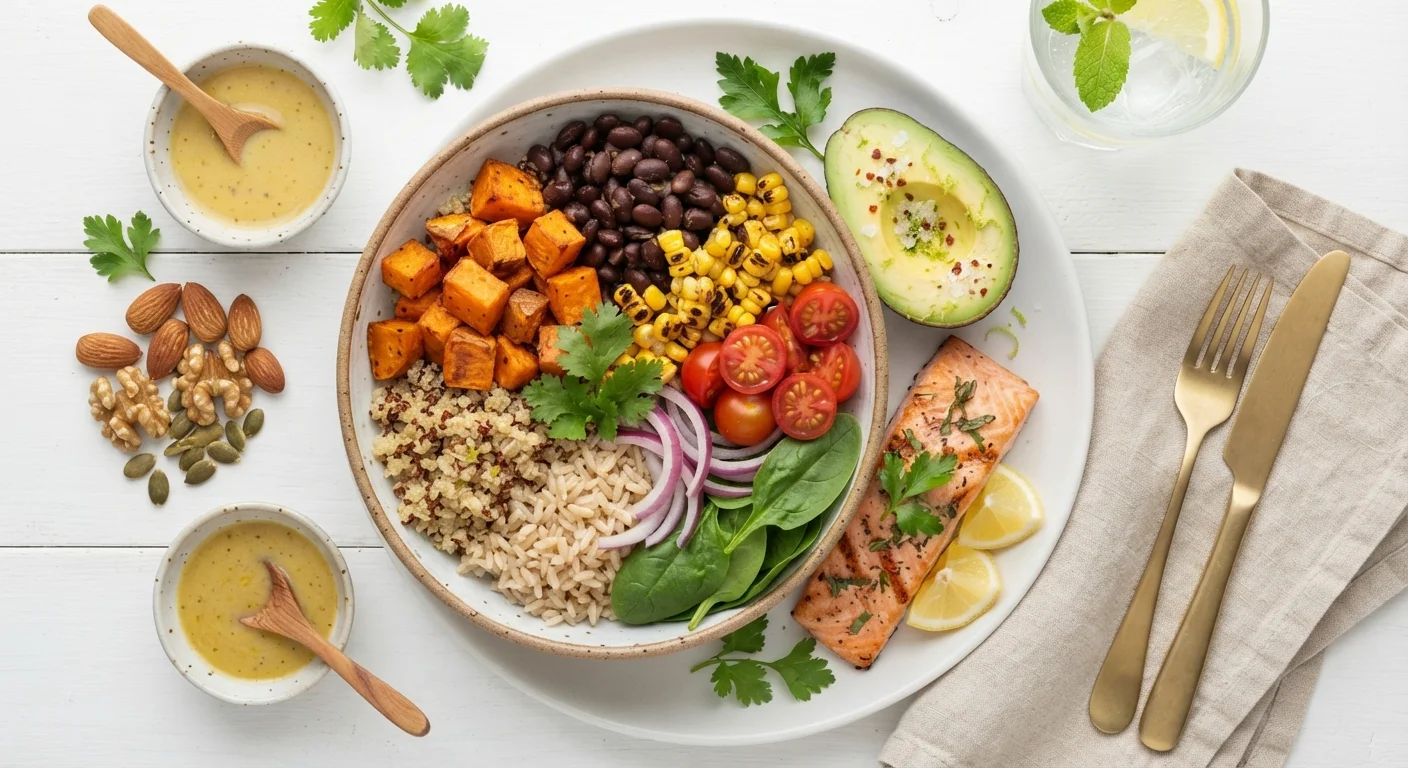
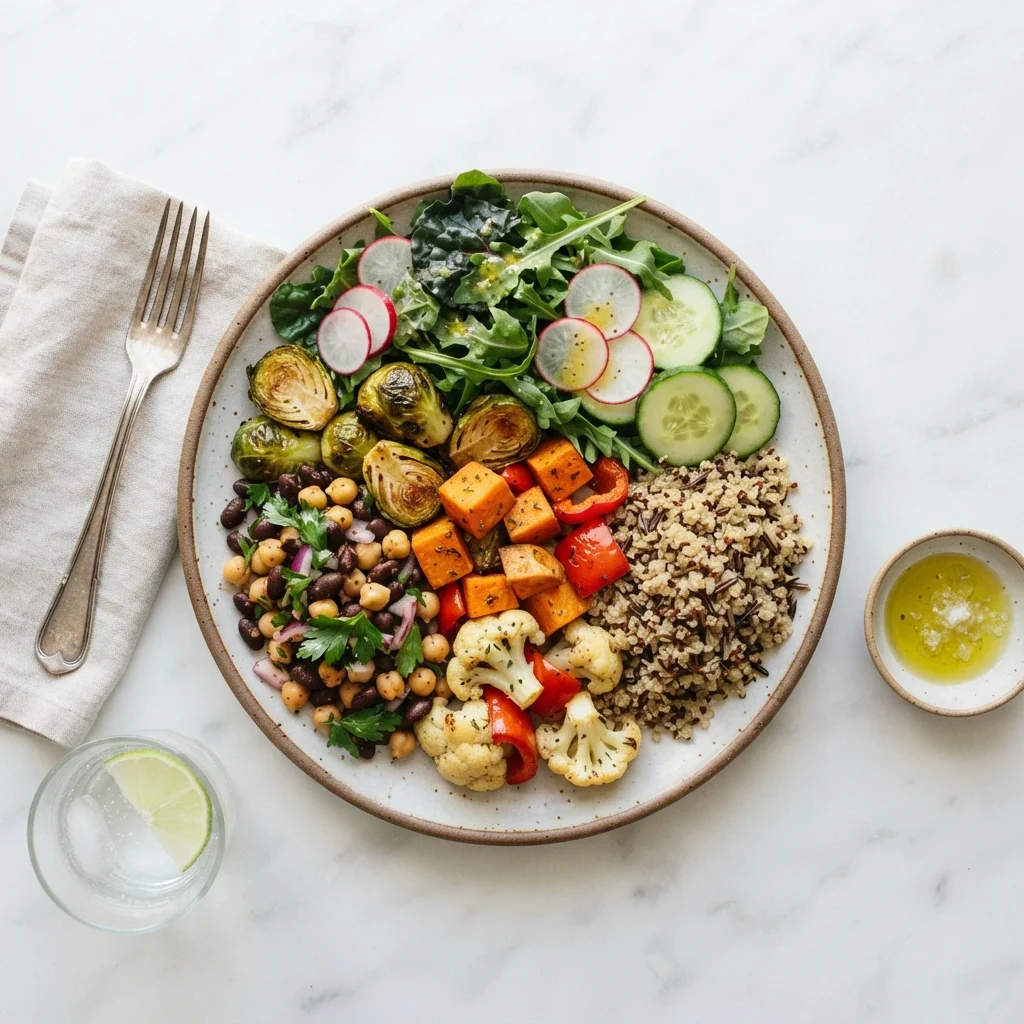
Use the plate method without a plate. A grain bowl, a burrito wrap, a stir-fry over rice — all of these can reflect balanced proportions even if they don't look like a divided dinner plate. Think about the proportions of ingredients rather than their physical arrangement.
Prep one element ahead of time. Cooking a batch of grains or washing vegetables on the weekend reduces friction on weeknights when decisions are harder. A ready protein source — rotisserie chicken, canned beans, hard-boiled eggs — can anchor a balanced meal in minutes.
Apply the same thinking when eating out. Restaurant portions are often oversized, particularly for grains and protein. Scanning a menu for vegetable-forward options or requesting a side salad instead of fries are small adjustments that move the meal closer to balance. For more on this, see eating out without abandoning your nutrition goals.
If you want to go a step further, building a more nutrient-dense plate outlines practical swaps that improve vitamin and mineral intake without a full diet overhaul.
This article is for general informational and educational purposes only and is not a substitute for professional medical or nutritional advice. Please consult a qualified healthcare provider or registered dietitian for guidance tailored to your individual health needs.