The Math Behind the Threshold
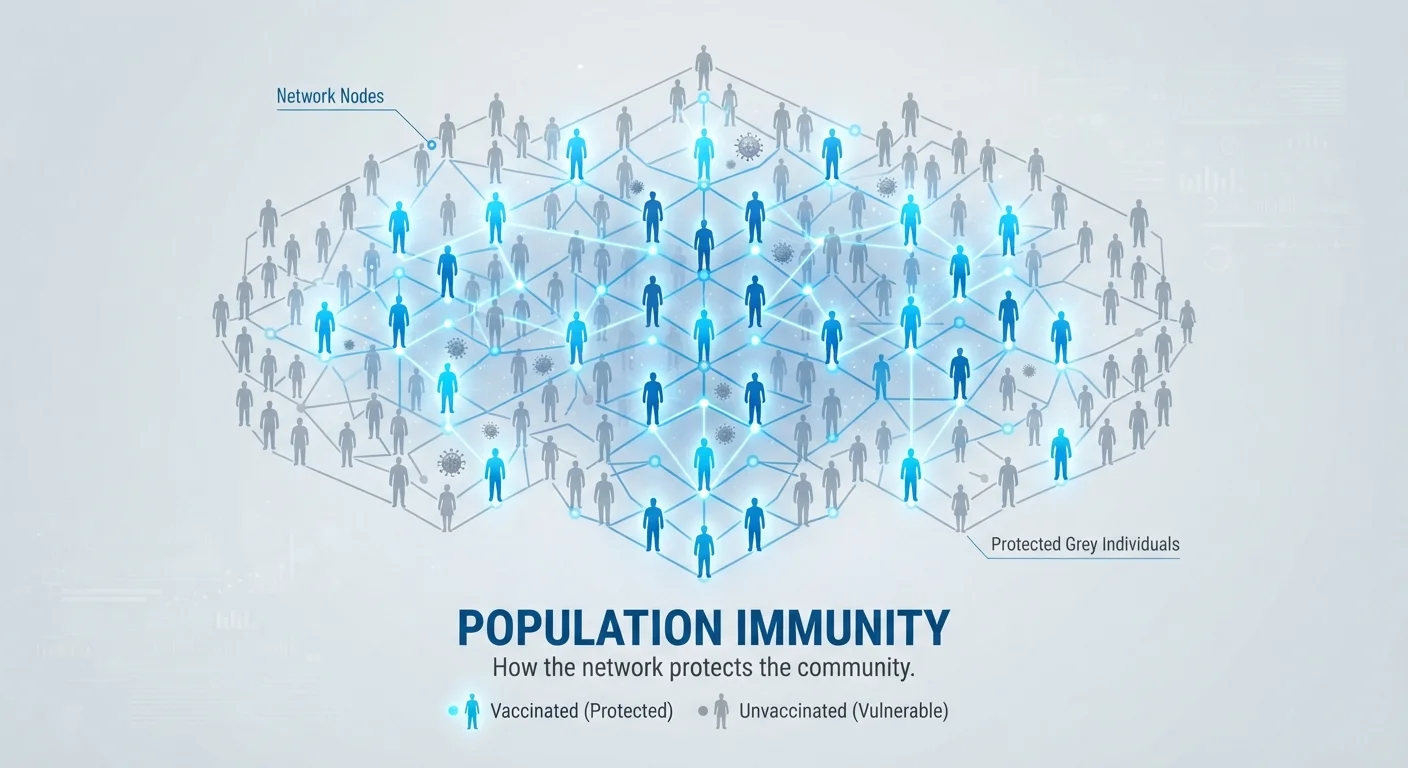
Herd immunity is not a single fixed number — it is a moving target determined by how contagious a specific disease is. Epidemiologists use the basic reproduction number, written as R₀ (pronounced "R-naught"), to describe how many people one infected person will, on average, infect in a fully susceptible population. The higher the R₀, the more contagious the disease, and the higher the share of the population that must be immune to interrupt transmission.
Measles, one of the most contagious diseases known, has an R₀ estimated between 12 and 18. This means roughly 95% of a population must be immune to prevent sustained spread. Polio, by contrast, has a lower R₀ and requires roughly 80–85% coverage. COVID-19's threshold has been debated as new variants emerged with higher transmission rates, illustrating how thresholds can shift as pathogens evolve.
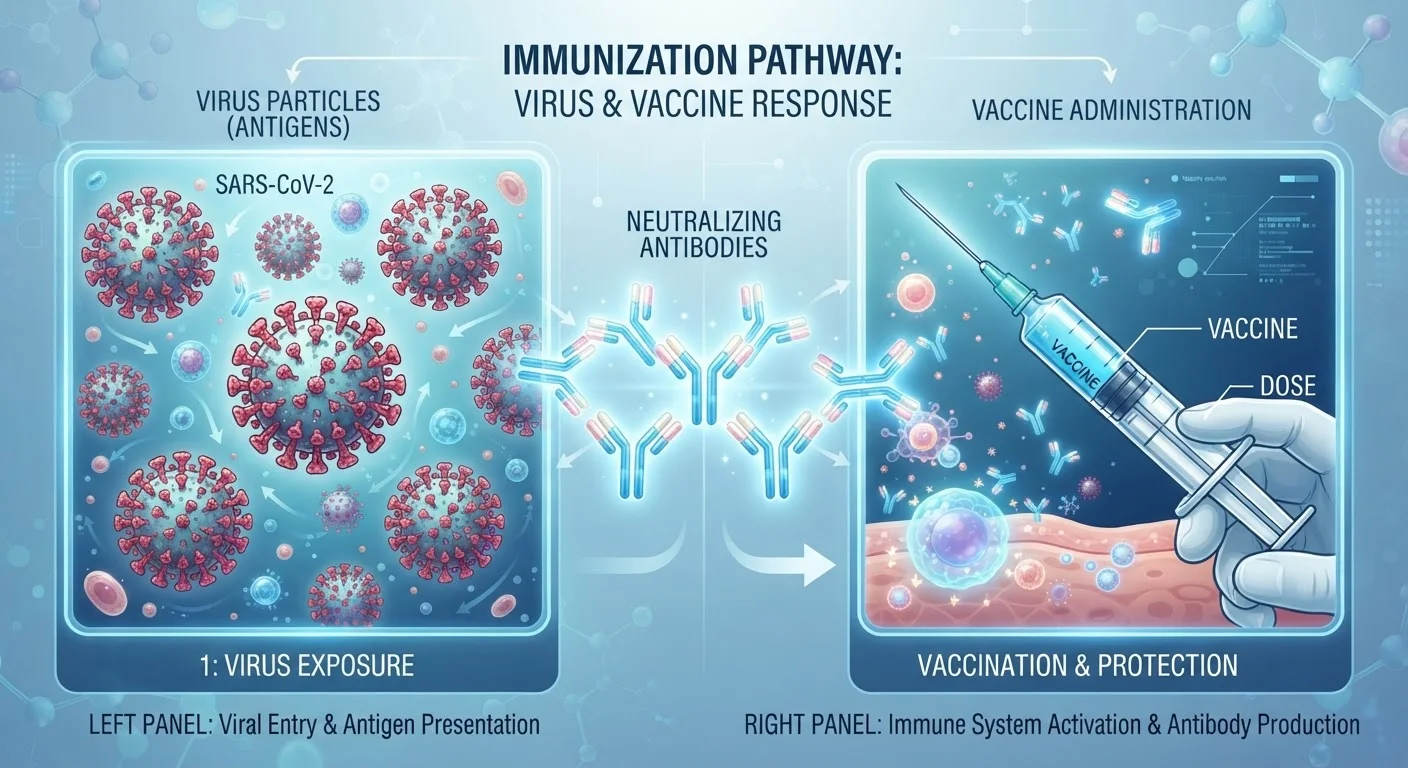
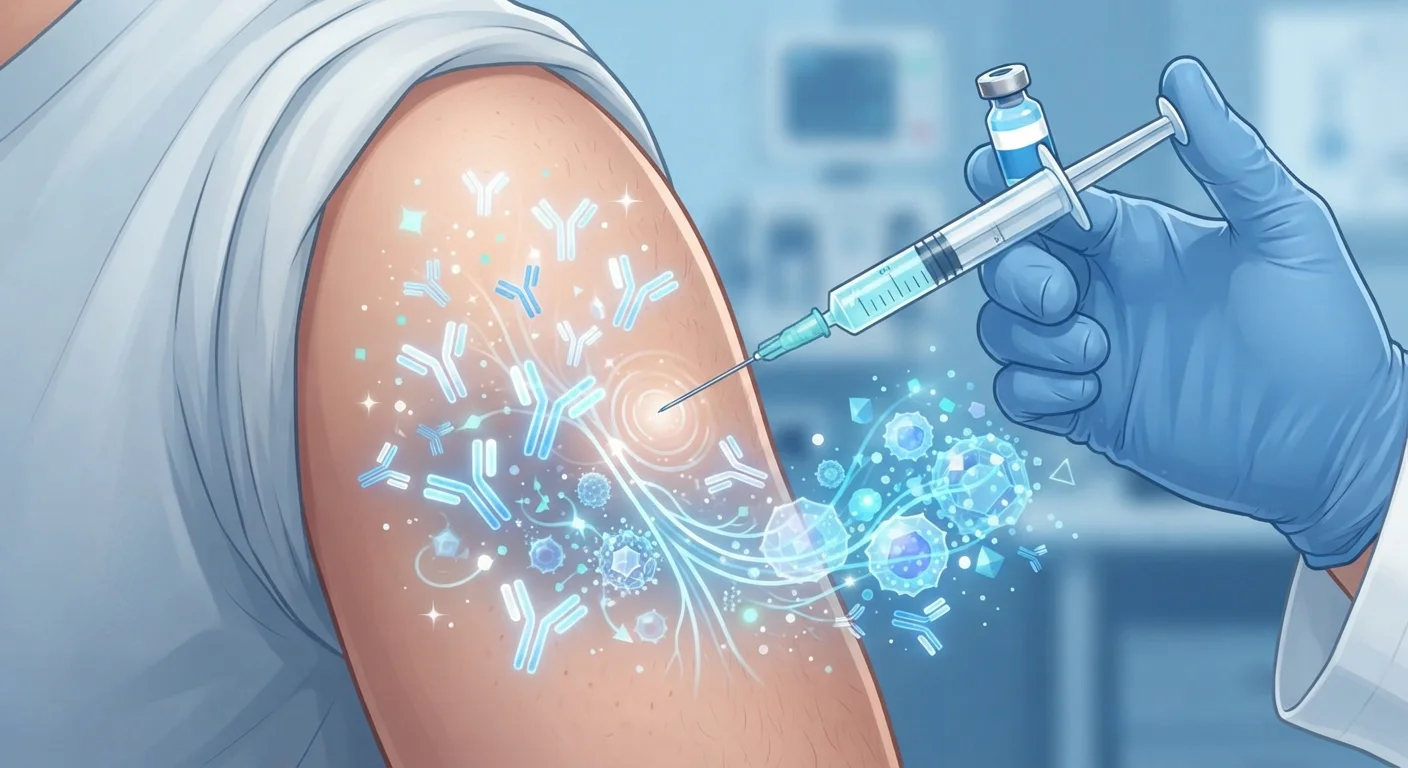
To understand what happens in the body when a vaccine generates that immunity, see how your immune system responds to a vaccine.
Why Geography and Clustering Matter
National vaccination coverage statistics can mask serious local vulnerabilities. Herd immunity functions at the community level — not the country level. When unvaccinated individuals are clustered geographically, such as in specific neighborhoods or social networks, pockets of susceptibility form even when overall national rates look adequate.
This clustering effect explains why measles outbreaks can occur in highly vaccinated countries. A single imported case can ignite an outbreak if it lands in a community where vaccination rates have fallen below threshold, regardless of the national average.
95%
Herd immunity threshold for measles
According to the CDC, approximately 95% of a population must be immune to measles to interrupt sustained community transmission.
80–85%
Estimated coverage needed for polio
The WHO estimates that polio requires roughly 80–85% population immunity to prevent widespread transmission in most settings.
12–18
Measles R₀ (basic reproduction number)
Measles is among the most contagious diseases ever studied, with each infected person capable of infecting up to 18 susceptible individuals in an unvaccinated population.
Public health officials monitor local vaccination rates and outbreak data precisely because national figures alone do not tell the whole story. School-level and county-level coverage data are often more actionable indicators of true community protection.
Limitations: Who Herd Immunity Cannot Fully Protect
Herd immunity is a powerful but imperfect shield. It is designed primarily to protect people who genuinely cannot be vaccinated — newborns too young to receive certain vaccines, individuals with severe allergies to vaccine components, and those whose immune systems cannot safely receive live-attenuated vaccines.
However, people with weakened or compromised immune systems present a more complex picture. Even when vaccinated, immunocompromised individuals may not develop a robust protective response, leaving them more vulnerable even within a well-vaccinated community. For this group, the surrounding community's vaccination status is critically important, but it cannot substitute for individualized medical care. Vaccination considerations for immunocompromised individuals involve a different calculus that requires close consultation with a healthcare provider.
Additionally, vaccines with waning immunity — or diseases that mutate rapidly, like influenza — mean that even previously immune individuals can become susceptible again, continuously reshaping the community's effective coverage level.
Vaccination vs. Infection: The Safer Path to Population Immunity
A persistent misconception frames natural infection as an equivalent or preferable alternative to vaccination for building population immunity. From a pure immunology standpoint, infection can generate immune memory — but the cost is exposure to the disease itself, with all its associated risks of serious illness, long-term complications, and death.
Vaccination achieves population-level protection by training the immune system without causing disease. It allows communities to approach or reach herd immunity thresholds without the harm that would accompany mass infection. The scientific consensus — reflected in guidance from organizations including the CDC and WHO — is that vaccination is the preferred strategy for building durable, safe population immunity.
It is also worth noting that immunity acquired through infection is not uniformly stronger or longer-lasting than vaccine-induced immunity. The comparison depends heavily on the specific disease. Natural immunity versus vaccine-induced immunity is a nuanced topic with disease-specific answers, not a blanket rule in either direction.
This article is for general informational and educational purposes only and is not a substitute for professional medical advice. Always consult a qualified healthcare provider with questions about vaccinations or your personal health situation.