Why Sleep Changes as Adults Age
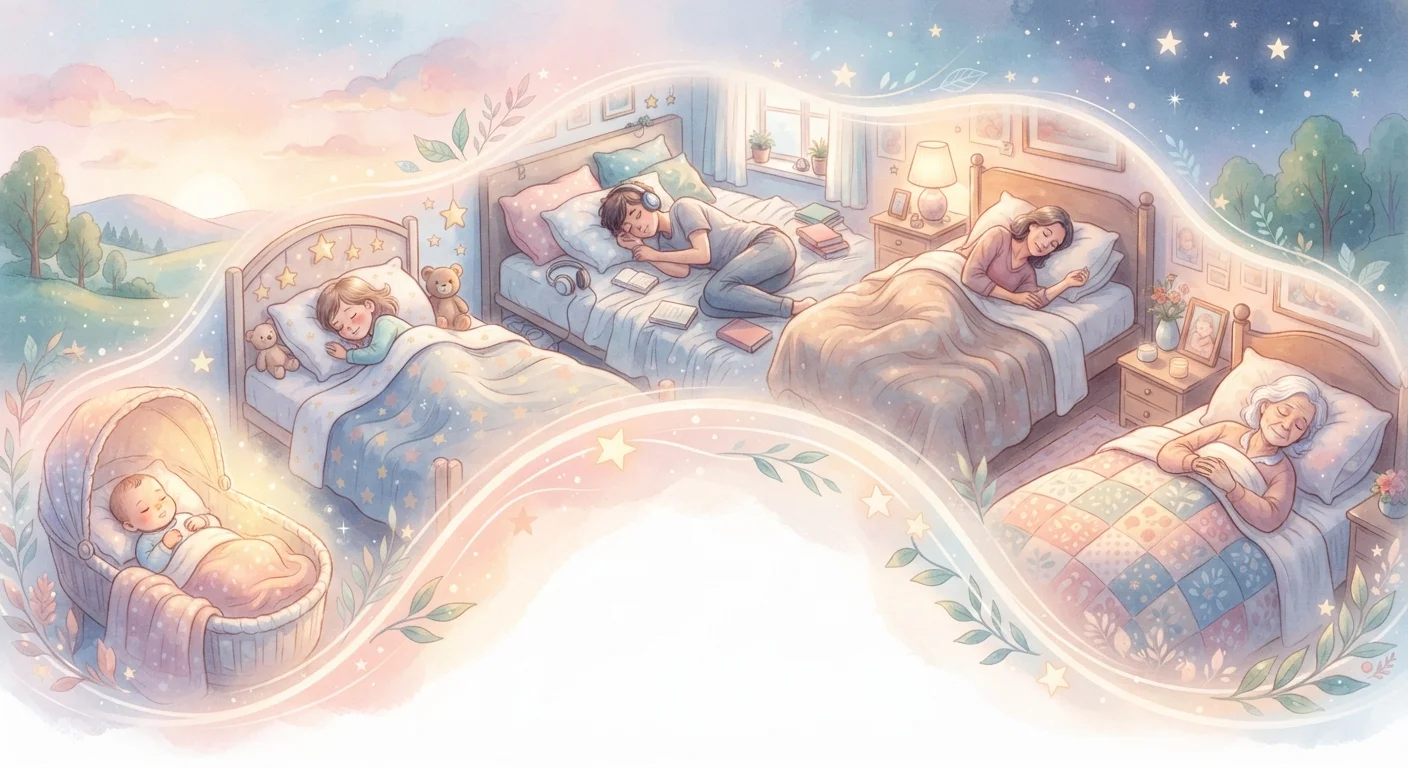
Sleep is not a fixed biological constant. From your twenties through your seventies and beyond, the architecture of sleep — how you enter it, how long you spend in each stage, and when your body naturally wants it — shifts in ways that are well documented in sleep science research.
These changes are not signs of disorder. They are normal features of aging biology. The challenge is knowing which shifts are expected, which habits can soften their impact, and when a change warrants a conversation with a healthcare provider.
For a broader look at total sleep requirements across the full lifespan, see how much sleep your brain and body truly need at every age. This reference guide focuses specifically on adult patterns — what changes, decade by decade, and what that means for everyday decisions.
| Recommended adult sleep duration | 7–9 hours per night (American Academy of Sleep Medicine / Sleep Research Society) |
| When slow-wave sleep begins declining | Gradually from the mid-30s onward (Sleep architecture research, multiple longitudinal studies) |
| Circadian shift in older adults | Earlier sleep and wake times (phase advance) (National Institute on Aging) |
| Common sleep disruptor in midlife women | Menopausal symptoms (hot flashes, night sweats) (North American Menopause Society) |
| Sleep efficiency in older adults | Tends to decrease with age (Journal of Clinical Sleep Medicine, population studies) |
| Social jetlag peak | Most pronounced in adults in their 20s (Roenneberg et al., circadian rhythm research) |
Decade-by-Decade: What Research Shows
20s and Early 30s
Adults in their twenties typically have robust slow-wave (deep) sleep and a late-shifted circadian rhythm — a biological preference for staying up and waking later. Total sleep need is generally 7–9 hours per night, per guidance from major sleep medicine organizations. This decade often brings lifestyle pressures — early work schedules, social late nights — that create a mismatch between biological rhythm and daily demands, a pattern sometimes called social jetlag.
Late 30s and 40s
Slow-wave sleep begins a gradual, measurable decline through middle adulthood. Sleep becomes somewhat lighter and more fragmented, and many adults report waking more easily than they did in their twenties. Hormonal shifts — including changes in estrogen, progesterone, and testosterone — can begin influencing sleep quality during this period, particularly for women approaching perimenopause. Chronic stress and irregular schedules compound these biological shifts.
How and when you eat can also influence sleep quality. Healthy eating habits change across adulthood, and some of those changes — like meal timing and caffeine patterns — have direct downstream effects on sleep.
50s and 60s
The circadian rhythm advances — meaning sleep timing often shifts earlier. Many adults in this age range find themselves drowsy earlier in the evening and waking earlier in the morning than they did decades before. This is a normal circadian change, not insomnia. Sleep efficiency (time asleep relative to time in bed) tends to decrease, and nighttime awakenings become more common. For women, menopause-related symptoms including hot flashes are a well-established driver of disrupted sleep in this decade. For more, see sleep disorders most commonly affecting American adults.
70s and Beyond
Older adults often experience the most significant sleep architecture changes: substantially reduced slow-wave sleep, more frequent nighttime awakenings, and an earlier sleep-wake cycle. Napping becomes more common and can serve a restorative function, though frequent napping combined with poor nighttime sleep may warrant clinical evaluation. Chronic health conditions, medications, and reduced physical activity all interact with sleep at this stage.
Regular movement matters here. Physical activity needs shift significantly with age, and research consistently links adequate daily movement with better sleep quality across older adult populations.
When Changes Cross Into Concern
Not every sleep shift is a normal part of aging. Certain patterns — regardless of age — suggest it is worth speaking with a healthcare provider:
- Loud snoring, gasping, or witnessed breathing pauses during sleep (possible signs of sleep apnea)
- An overwhelming urge to move the legs at rest, especially at night (restless legs syndrome)
- Persistent difficulty falling or staying asleep that impairs daytime functioning for more than a few weeks
- Excessive daytime sleepiness that cannot be explained by short nighttime sleep
- Acting out dreams physically during sleep
These are not normal aging phenomena, and effective, evidence-based treatments exist for most of them. The full picture on sleep — habits, biology, environment, and when to get help is a comprehensive resource covering both behavioral strategies and clinical red flags.
Slow-wave sleep
The deepest stage of non-REM sleep, characterized by slow brain waves. It is the most physically restorative phase of sleep and declines with age.
Circadian rhythm
The internal biological clock that regulates the timing of sleep, wakefulness, and many other physiological processes on a roughly 24-hour cycle.
Sleep efficiency
The proportion of time in bed actually spent asleep. A sleep efficiency above roughly 85% is generally considered healthy in adults.
Social jetlag
A mismatch between a person's biological sleep timing and the social or work schedule they must follow, common in young adults with late circadian preferences.
Phase advance
A shift in the circadian rhythm toward earlier sleep and wake times, commonly seen in older adults as a normal age-related change.
Sleep architecture
The structural organization of a full night's sleep, including the sequence and duration of REM and non-REM sleep stages across sleep cycles.
This article is for general informational and educational purposes only and is not a substitute for professional medical advice, diagnosis, or treatment. Always consult a qualified healthcare provider with any questions about your sleep health or a medical condition.