The Stress-Sleep Connection: What's Happening in Your Body
When the brain perceives a threat — whether it's a predator or an unresolved work deadline — it activates the hypothalamic-pituitary-adrenal (HPA) axis, triggering the release of stress hormones including cortisol and adrenaline. These chemicals are designed to sharpen attention, quicken the heart, and prepare muscles for action. They are profoundly effective at keeping you awake.
The problem is that the brain does not reliably distinguish between a genuine emergency and a perceived one. Worry about tomorrow's meeting activates similar physiological pathways as an actual physical threat. As a result, the body enters a state of heightened arousal at exactly the moment sleep requires the opposite: declining core body temperature, slowing heart rate, and a shift toward parasympathetic nervous system dominance.
Cortisol, which normally peaks in the early morning to promote wakefulness, can remain elevated in the evening under chronic stress. This suppresses the natural nighttime rise of melatonin — the hormone that signals darkness and sleep readiness to the brain. The result is a body that is biochemically primed for alertness long past the hour you hoped to be asleep.
To understand more about how this hormonal cycle sustains itself, see Sleep and Stress: Why the Relationship Runs Both Ways.
Rumination: The Cognitive Engine of Sleeplessness
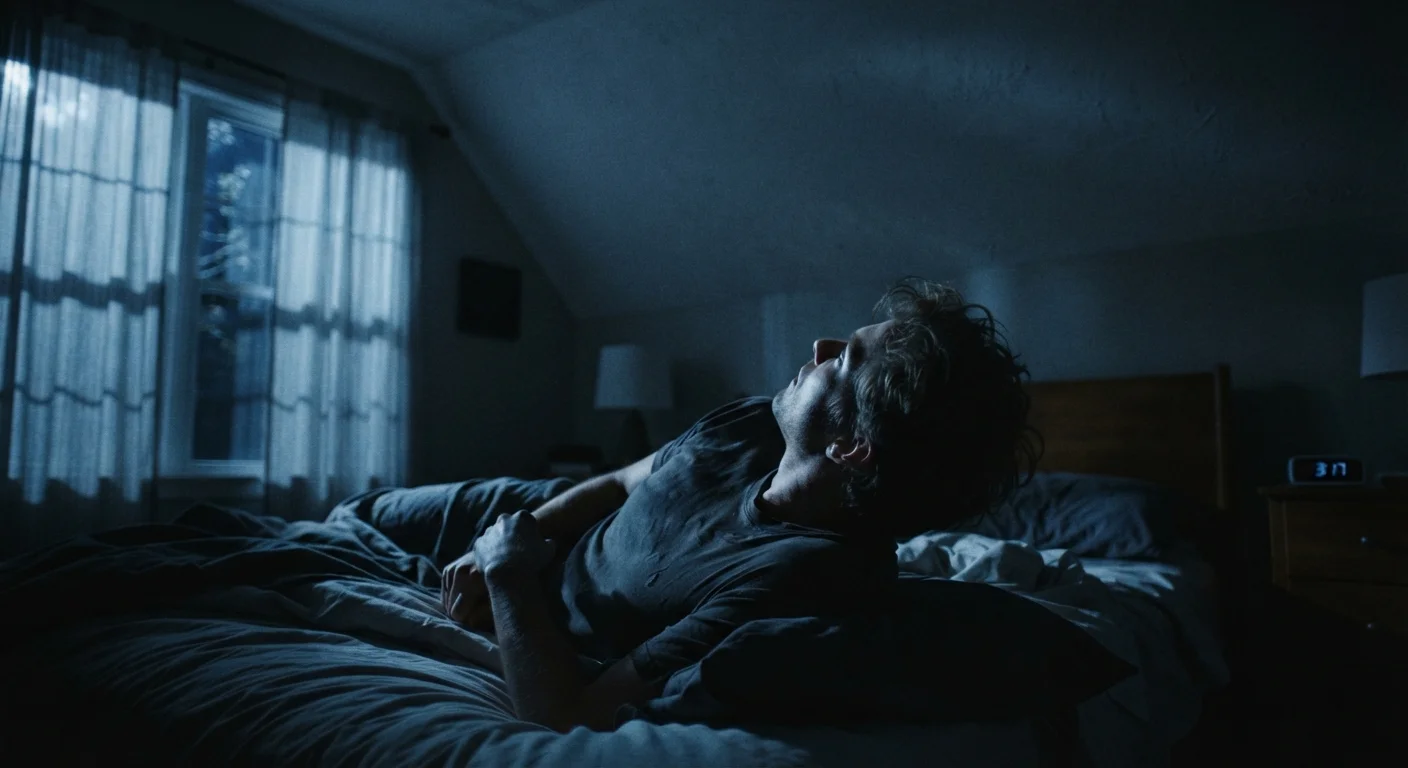
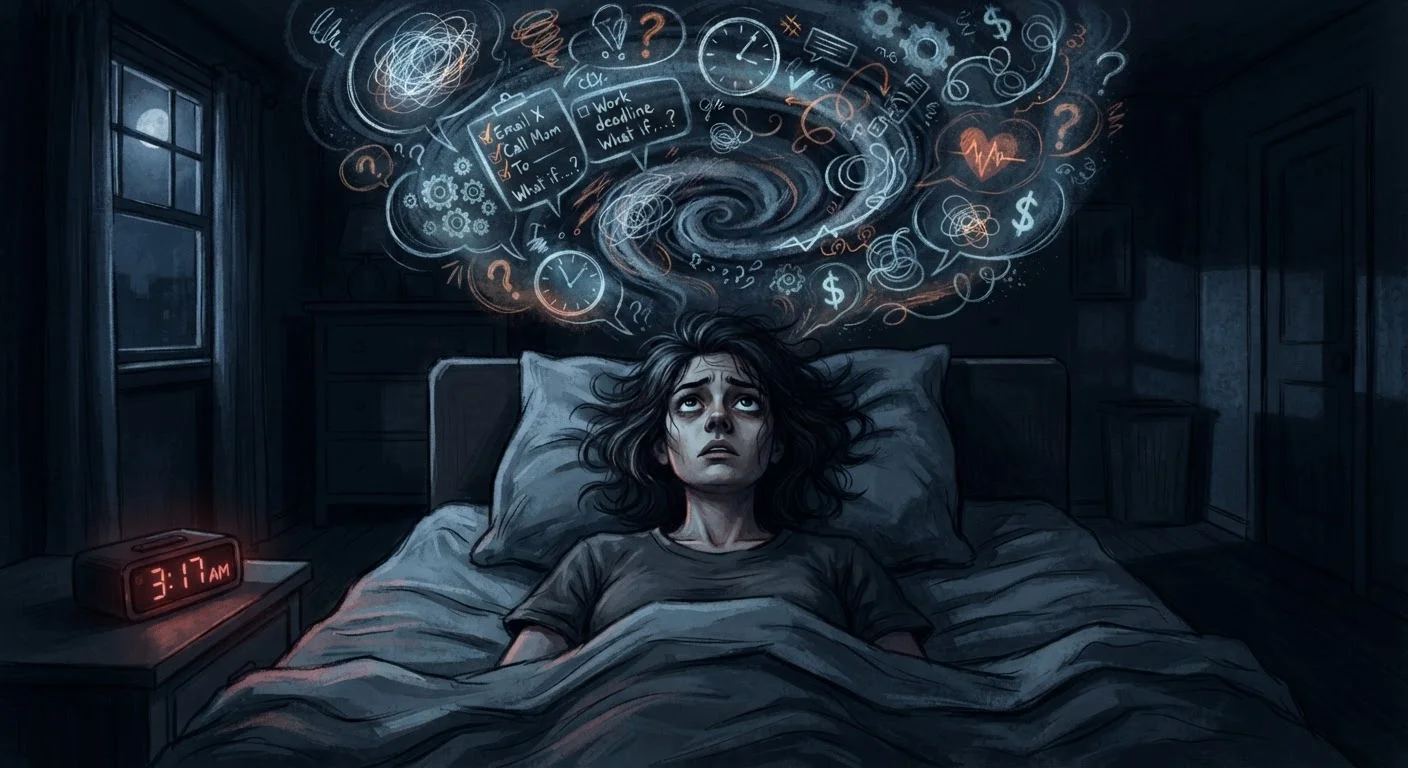
Beyond hormones, there is a purely cognitive dimension to anxiety-disrupted sleep: rumination. Rumination refers to repetitive, involuntary focus on negative thoughts, worries, or problems — mental loops that replay the same concerns without arriving at resolution.
Research in sleep science consistently identifies pre-sleep cognitive arousal as one of the strongest predictors of sleep onset difficulty. When you lie down and your mind immediately begins rehearsing a difficult conversation, cataloging tomorrow's tasks, or replaying past mistakes, the brain is engaged in active problem-solving mode. That mode is neurologically incompatible with the progressive disengagement that sleep requires.
“Sleep is not a passive process. What we think and feel in the hour before bed shapes the neurological conditions under which sleep either arrives or doesn't. The racing mind is not a character flaw — it's a brain doing what stress-response systems evolved to do.”
— Sleep Health Editorial Team, Health and Sleep Science Editors
Rumination is particularly disruptive because it carries emotional charge. Neutral thoughts may drift and fade; anxious thoughts tend to demand attention and escalate. Studies using experience-sampling methods have found that people who ruminate more during the day are significantly more likely to report trouble initiating sleep at night.
The content of rumination matters too. Future-oriented worry (anticipating bad outcomes) and past-oriented rumination (replaying regrets) both interfere with sleep, though they engage somewhat different cognitive networks. Either pattern keeps the prefrontal cortex — the brain's executive center — active when it needs to begin stepping back.
The Feedback Loop: How One Bad Night Fuels the Next
Anxiety disrupts sleep — but the disruption itself becomes a new source of anxiety. After several difficult nights, many people begin to fear bedtime itself. They watch the clock, calculate how many hours remain before they must wake up, and lie in bed trying to sleep, which is cognitively counterproductive. Sleep cannot be forced; the effort of trying tends to increase arousal rather than reduce it.
This learned association between the bedroom and wakefulness is a well-documented phenomenon. The bed, originally a neutral cue, becomes conditioned to trigger alertness through repeated pairing with lying awake and worrying. Sleep researchers call this conditioned arousal, and it is one reason why insomnia can persist long after the original stressor has passed.
Sleep deprivation itself compounds the problem. Even partial sleep loss impairs the prefrontal cortex's ability to regulate the amygdala — the brain's threat-detection center — making emotional reactions more intense and anxious thinking harder to manage the following day. The cycle sustains itself. For a deeper look at this dynamic, Why Poor Sleep and Mental Health Feed Each Other explores the research in detail.
~30–35%
Adults reporting insomnia symptoms
Population-level estimates from sleep epidemiology research consistently place the prevalence of insomnia symptoms at roughly 30–35% of adults, with stress and anxiety among the most commonly cited contributing factors.
2x
Elevated insomnia risk with anxiety disorders
Research published in peer-reviewed sleep journals indicates that individuals with diagnosable anxiety disorders face approximately twice the risk of developing chronic insomnia compared to those without anxiety.
~26 min
Average extra time to fall asleep under stress
Laboratory and diary-based studies suggest that high pre-sleep cognitive arousal is associated with meaningfully longer sleep onset latency — often exceeding 20 minutes beyond baseline — compared to low-arousal nights.
Evidence-Based Strategies for Calming the Racing Mind
Understanding the mechanisms behind anxiety-driven sleeplessness points toward effective interventions. Several approaches have meaningful research support:
- Cognitive Behavioral Therapy for Insomnia (CBT-I): Widely considered the most effective non-pharmacological treatment for chronic insomnia, CBT-I directly targets both the cognitive patterns (such as catastrophic thinking about sleep) and behavioral habits (such as excessive time in bed) that perpetuate the cycle.
- Scheduled worry time: Setting aside a defined period earlier in the day to write down worries and potential solutions can help prevent anxious thoughts from flooding the mind at bedtime. This technique works partly by giving rumination a legitimate, bounded outlet.
- Stimulus control: Using the bed only for sleep — not work, screens, or extended lying-awake periods — helps rebuild the association between bed and sleepiness rather than bed and arousal.
- Relaxation techniques: Diaphragmatic breathing, progressive muscle relaxation, and mindfulness-based approaches have demonstrated effectiveness in reducing pre-sleep physiological arousal.
It's also worth examining evening habits that might be amplifying arousal without your awareness. Nighttime Habits That Quietly Undermine Your Sleep covers patterns that are easy to overlook but meaningfully affect sleep quality.
Try a 'Brain Dump' Before Bed
Spend 10 minutes before your target bedtime writing down everything on your mind — worries, tasks, unresolved thoughts — in a notebook kept away from your bed. This simple habit offloads cognitive material from active working memory, giving your brain permission to disengage. It works best when practiced consistently rather than only on nights you feel anxious.
This article is for general informational and educational purposes only and does not constitute medical advice. If you are experiencing significant sleep problems or anxiety symptoms, please consult a qualified healthcare professional for personalized guidance.