The Two-Way Street Between Sleep and Mental Health
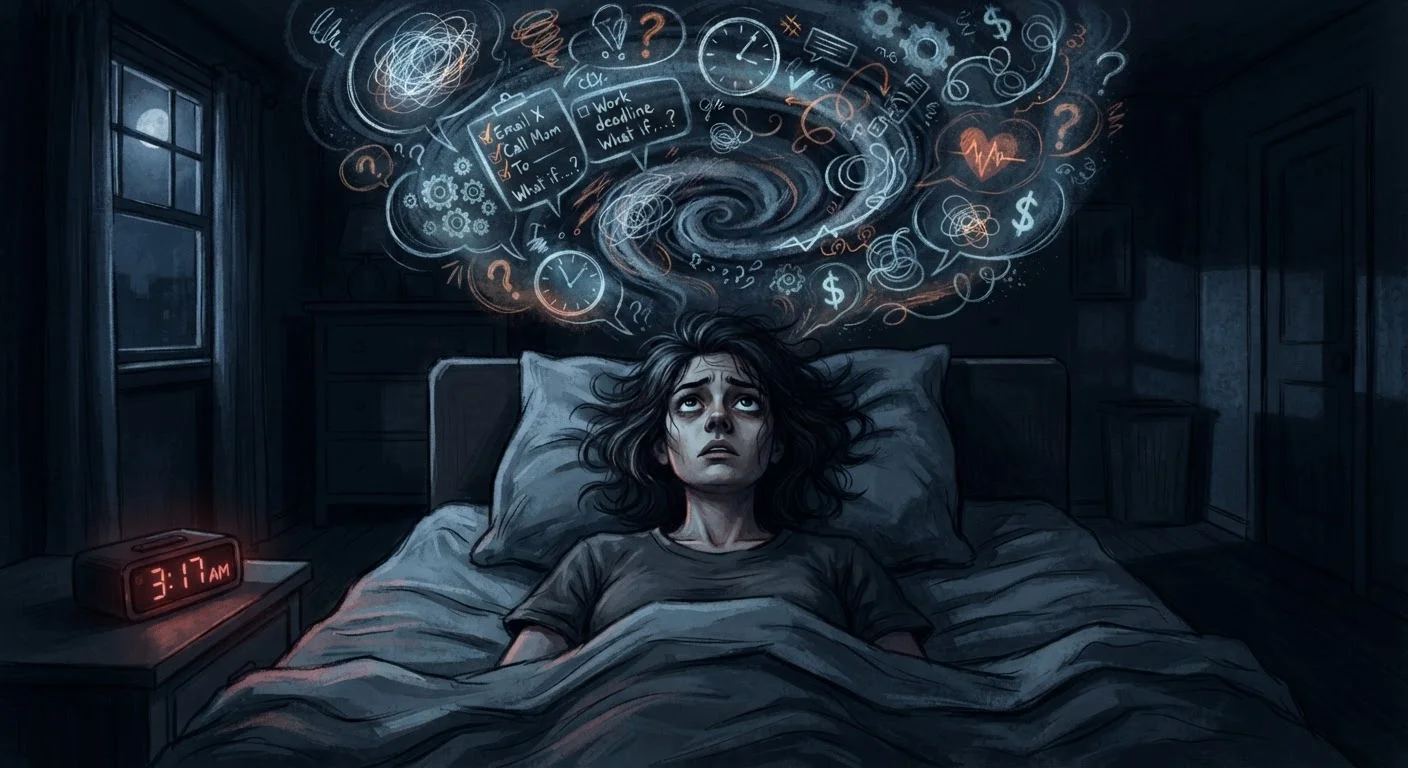
Most people understand that mental health problems can disrupt sleep — lying awake with racing thoughts is a nearly universal experience during stressful periods. What is less commonly recognized is that the relationship works just as powerfully in the other direction: disrupted sleep is itself a driver of poor mental health, not merely a symptom.
This bidirectional loop is one of the most significant — and underappreciated — dynamics in health research. Studies consistently show that people with chronic insomnia face a substantially elevated risk of developing anxiety disorders and major depression compared with those who sleep well. Conversely, anxiety and depression reliably fragment and shorten sleep, creating a self-perpetuating cycle that can be difficult to break without deliberately targeting both sides.
Understanding this dynamic matters because it changes how sleep problems should be approached. Treating insomnia only as a byproduct of emotional struggles misses half the picture. Sleep disruption is an active contributor — and addressing it directly is a legitimate and effective part of supporting mental health. Explore the broader science of how sleep affects the body and mind at our Sleep Science hub.
What Happens in the Brain When Sleep Is Disrupted
Sleep plays a critical role in emotional processing. During rapid eye movement (REM) sleep in particular, the brain consolidates memories and regulates emotional responses — essentially recalibrating reactivity to daily stressors. When sleep is cut short or fragmented, this process is interrupted.
Neuroimaging research has shown that sleep-deprived individuals exhibit a significantly heightened response in the amygdala — the brain's threat-detection center — to negative stimuli. At the same time, functional connectivity between the amygdala and the prefrontal cortex (which moderates emotional responses) weakens. The practical result: irritability, anxiety, and disproportionate emotional reactions become more likely after even a single poor night.
~40%
People with insomnia who also have a mental health condition
Research published in psychiatric literature consistently estimates that 40% or more of people with chronic insomnia have a co-occurring mental health disorder.
2–3×
Elevated depression risk with chronic insomnia
Multiple longitudinal studies have found that individuals with persistent insomnia are roughly two to three times more likely to develop major depression than those without sleep problems.
~20%
Increase in amygdala reactivity after sleep deprivation
Neuroimaging studies, including foundational work by sleep researcher Matthew Walker and colleagues, have documented markedly heightened amygdala responses to negative stimuli following sleep loss.
Chronic sleep loss also disrupts the stress hormone cortisol. Normally, cortisol peaks in the morning and gradually declines through the day. Sleep deprivation can flatten or distort this rhythm, keeping the body in a state of low-grade physiological alertness that compounds psychological stress. For a closer look at this mechanism, see our article on how sleep and stress reinforce each other.
How Mental Health Conditions Alter Sleep Architecture
Depression and anxiety do not simply make it harder to fall asleep — they actively alter the structure of sleep itself. In people with major depressive disorder, research commonly shows earlier onset of REM sleep and reduced slow-wave (deep) sleep. Deep sleep is essential for physical restoration and is believed to play a key role in mood regulation; less of it means the brain receives less of its most restorative rest.
Anxiety disorders, meanwhile, tend to produce hyperarousal — a state in which the nervous system remains on alert even during the night. This elevates sleep-onset latency (the time it takes to fall asleep), increases nighttime awakenings, and reduces overall sleep efficiency. The result is time spent in bed without adequate restorative rest.
Post-traumatic stress disorder (PTSD) presents another dimension: intrusive nightmares and hypervigilance during sleep are among its defining features, creating a form of sleep disruption that is both a symptom of the condition and a barrier to recovery from it.
Breaking the Cycle: Evidence-Backed Starting Points
Because the sleep-mental health relationship is circular, meaningful change can begin from either direction. Addressing sleep directly — rather than waiting for mental health symptoms to resolve first — is supported by a growing body of evidence.
Cognitive Behavioral Therapy for Insomnia (CBT-I) is currently the most rigorously studied behavioral intervention for chronic insomnia. It works by identifying and restructuring the thought patterns and behaviors that perpetuate poor sleep. Importantly, trials have shown that CBT-I not only improves sleep but also reduces anxiety and depression scores in participants — suggesting that sleep improvement carries genuine downstream mental health benefits.
Behavioral sleep practices — consistent wake times, limiting time in bed to actual sleep, and reducing stimulating activity before bed — are among the most reliably supported in research. These form the core of good sleep hygiene practices, which can serve as a foundation alongside any professional treatment.
It is also worth examining habits that may inadvertently worsen the cycle. Behaviors like weekend sleep-ins, excessive caffeine, or relying on alcohol as a sedative can quietly deepen insomnia. Our article on common habits that make sleep disorders worse covers these missteps in detail.
Physical environment also plays a measurable role. Temperature, light exposure, and noise levels affect sleep depth and continuity in ways that are easy to overlook. Our guide on bedroom environment and sleep quality outlines evidence-informed adjustments.
This article is for general informational purposes only and does not constitute medical advice. If you are experiencing persistent sleep difficulties or mental health concerns, please consult a qualified healthcare professional.