How the Brain Cleans Itself While You Sleep
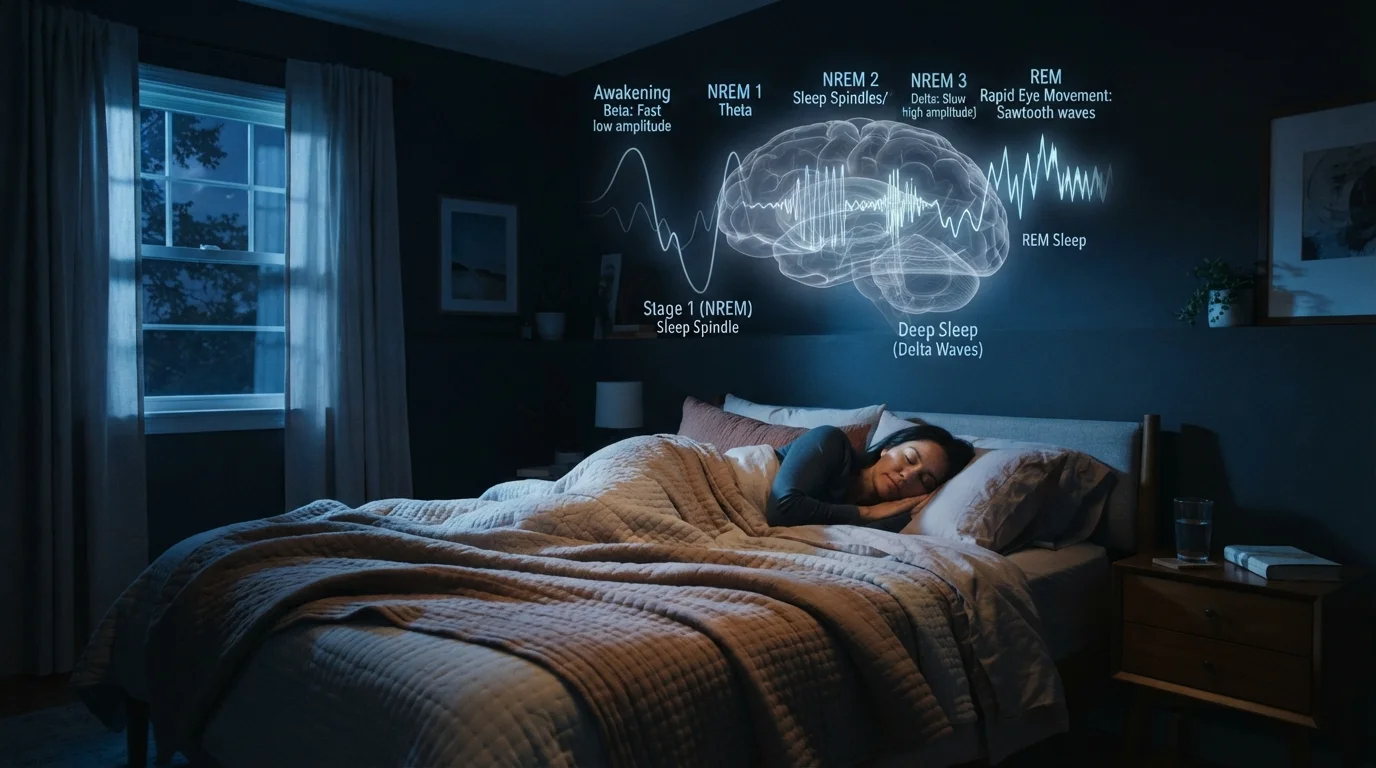
For most of human history, scientists assumed the brain simply rested during sleep. We now know the opposite is true. As explored in our overview, the sleeping brain is remarkably active, carrying out processes impossible to complete while you are awake — including a comprehensive self-cleaning operation.
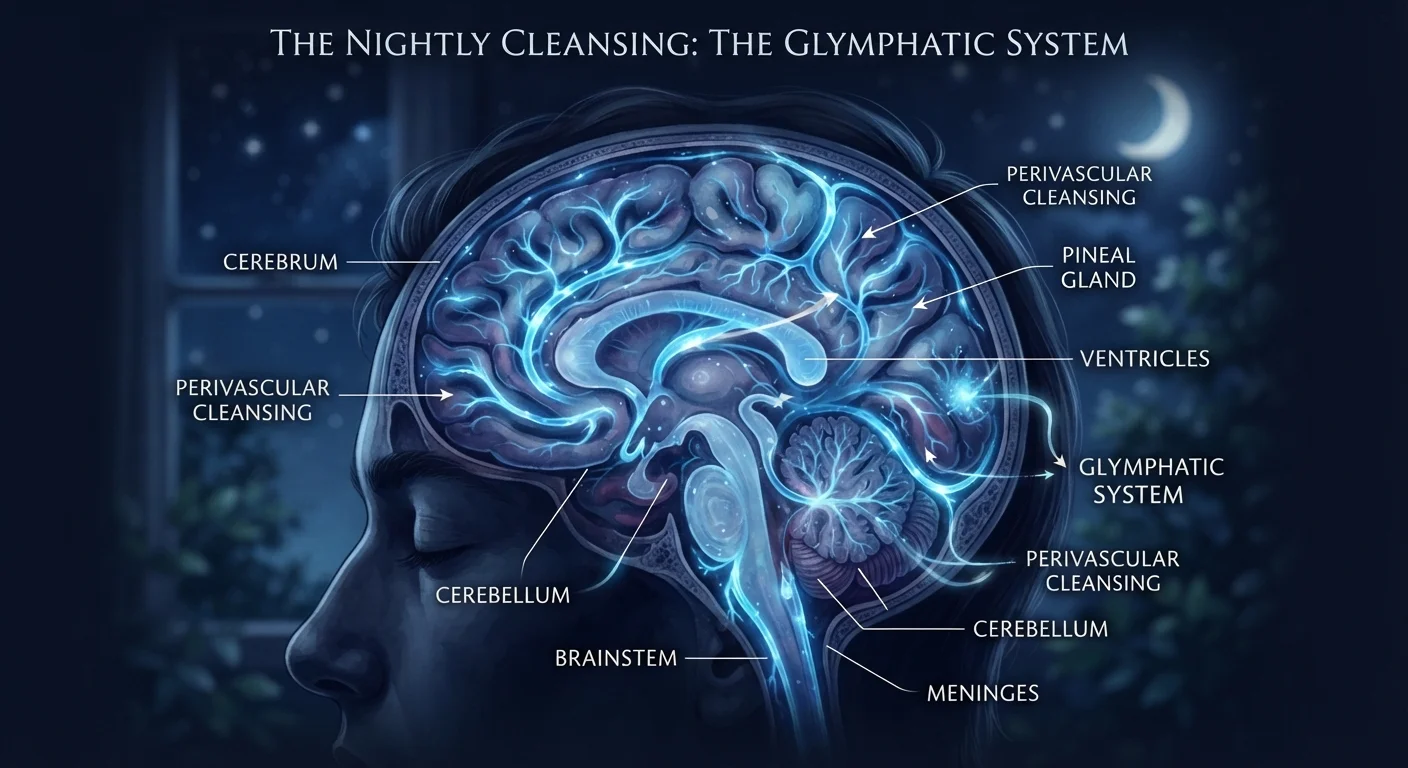
Here is the core mechanism: as your brain's neurons fire throughout the day, they produce metabolic byproducts. These waste proteins and toxins cannot be left to accumulate. During sleep, cerebrospinal fluid (CSF) — a clear, watery fluid that surrounds and cushions the brain — is pumped through channels that wrap around blood vessels deep inside brain tissue. As this fluid flows in, it flushes waste out into the surrounding drainage system, ultimately carrying those byproducts away from the central nervous system.
What makes this system remarkable is its scale and timing. Studies in rodents have shown that CSF flow through these channels increases dramatically during sleep — one widely cited finding suggested interstitial space within the brain expands by roughly 60% during sleep, allowing far greater fluid movement. Whether identical magnitudes apply to humans is still being studied, but directionally, the evidence is consistent: clearance ramps up at night.
Why Deep Sleep Is the Most Important Shift
Not all sleep stages contribute equally to glymphatic activity. Slow-wave sleep — also called deep sleep or N3, part of the NREM (non-rapid eye movement) stages — appears to be when the system is most productive. During this phase, large, synchronized brain waves called slow oscillations help drive the pulsatile flow of CSF through the glymphatic channels.
To understand why this matters, consider what the architecture of a full night's sleep looks like: your brain cycles through lighter sleep, deep sleep, and REM sleep multiple times each night. Disruptions to the early, slow-wave-rich cycles — whether from noise, substances like alcohol, or a sleep disorder — may reduce the window the glymphatic system has to operate effectively.
~60%
Increase in brain interstitial space during sleep
A 2013 study published in Science (Xie et al.) found brain interstitial space expanded by approximately 60% during sleep in mice, facilitating greater CSF flow through glymphatic channels.
2×
Higher amyloid-beta clearance during sleep vs. wake
Research in animal models has suggested that amyloid-beta clearance rates are significantly elevated during sleep compared to wakefulness, underscoring the timing-dependent nature of glymphatic activity.
2013
Year glymphatic system was formally described
Neuroscientist Maiken Nedergaard and colleagues at the University of Rochester first characterized the glymphatic system in detail in a landmark Science paper published in 2013.
This is part of why sleep disorders that fragment or shallow sleep are increasingly of interest to neuroscientists, not only for their immediate effects on alertness and mood, but for what repeated disruption might mean for brain health over years and decades.
The Alzheimer's Connection Researchers Are Watching
Among the waste products the glymphatic system clears are amyloid-beta and tau — proteins that, when they accumulate abnormally, form the plaques and tangles characteristic of Alzheimer's disease. This discovery has made the glymphatic system a significant focus in dementia research.
The question researchers are actively investigating is whether chronically impaired glymphatic clearance — caused by years of poor or insufficient sleep — could contribute to disease progression over time. Animal studies have shown that sleep deprivation leads to faster amyloid accumulation. Human studies using brain imaging have found similar patterns, though the research is still developing and causal relationships are difficult to establish definitively.
It is important not to overstate what is currently known: impaired glymphatic function is one of many factors researchers are examining in relation to neurodegeneration. This is not a straightforward equation where poor sleep directly causes Alzheimer's disease. However, the biological plausibility is strong enough that sleep health is now considered an important area of focus in brain health research more broadly.
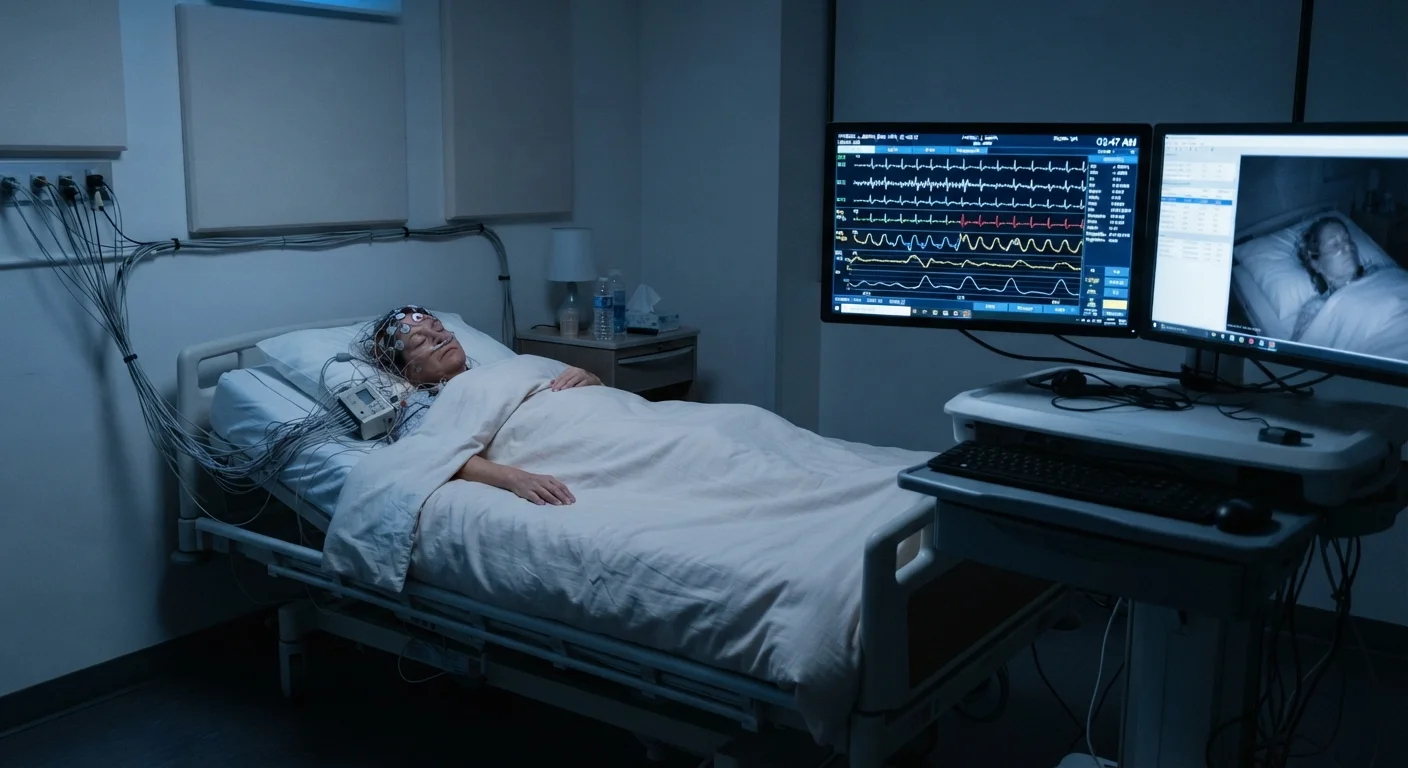
If you have concerns about your sleep quality or patterns, speaking with a qualified healthcare professional is the appropriate first step. For those curious about clinical evaluation, a sleep study can reveal a great deal about what is happening during your nightly rest.
This article is for general informational and educational purposes only and is not a substitute for professional medical advice, diagnosis, or treatment. Always consult a qualified healthcare provider with questions about your health.