
How the Cycle Starts: Stress as a Sleep Disruptor
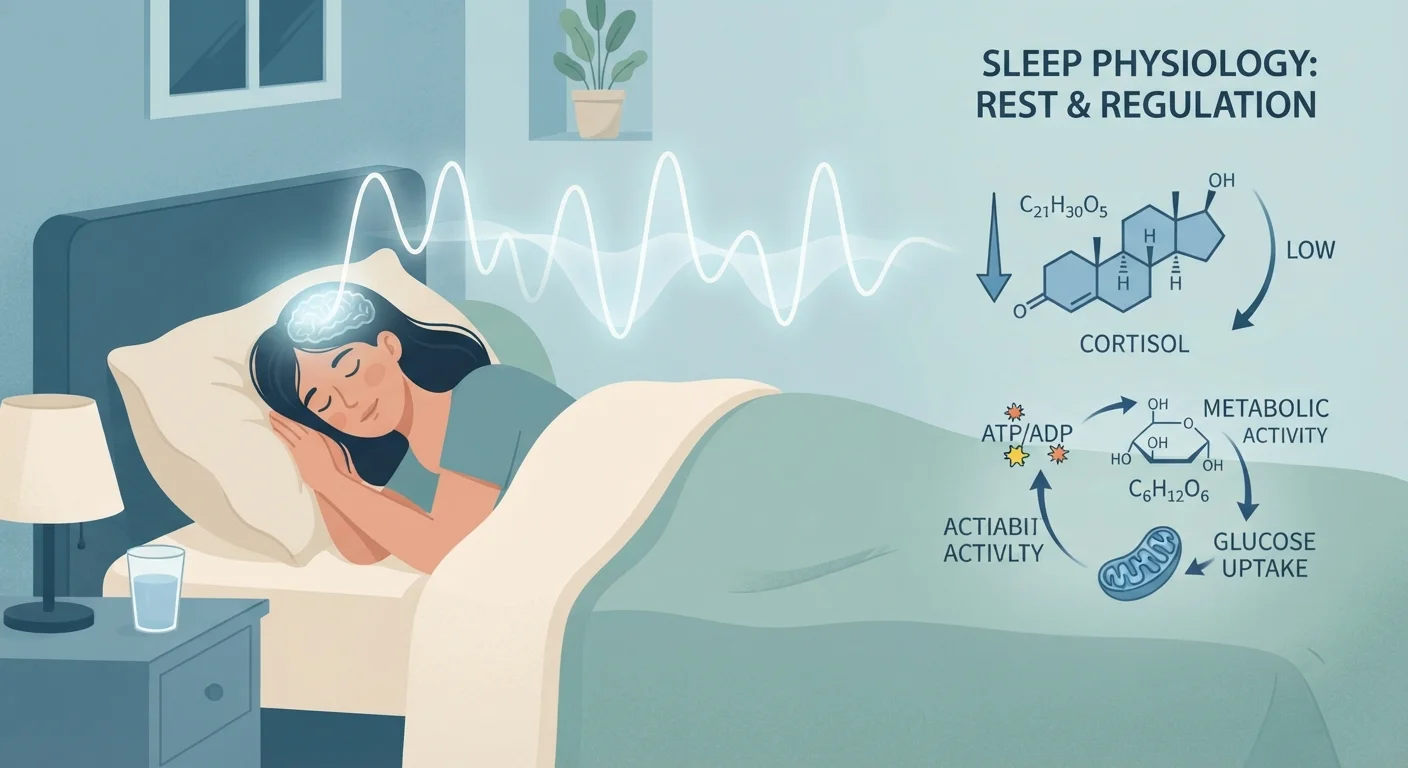
When you encounter a stressor — a difficult conversation, a looming deadline, financial pressure — your body activates what is commonly called the fight-or-flight response. The hypothalamic-pituitary-adrenal (HPA) axis releases cortisol, a hormone designed to keep you alert and responsive to perceived threats. This is useful in short bursts. At bedtime, it becomes a problem.
Cortisol suppresses melatonin production, the hormone that signals to the brain that it's time to sleep. Elevated evening cortisol is associated with difficulty falling asleep, lighter sleep, and more frequent nighttime awakenings. The body essentially stays on guard when it should be recovering.
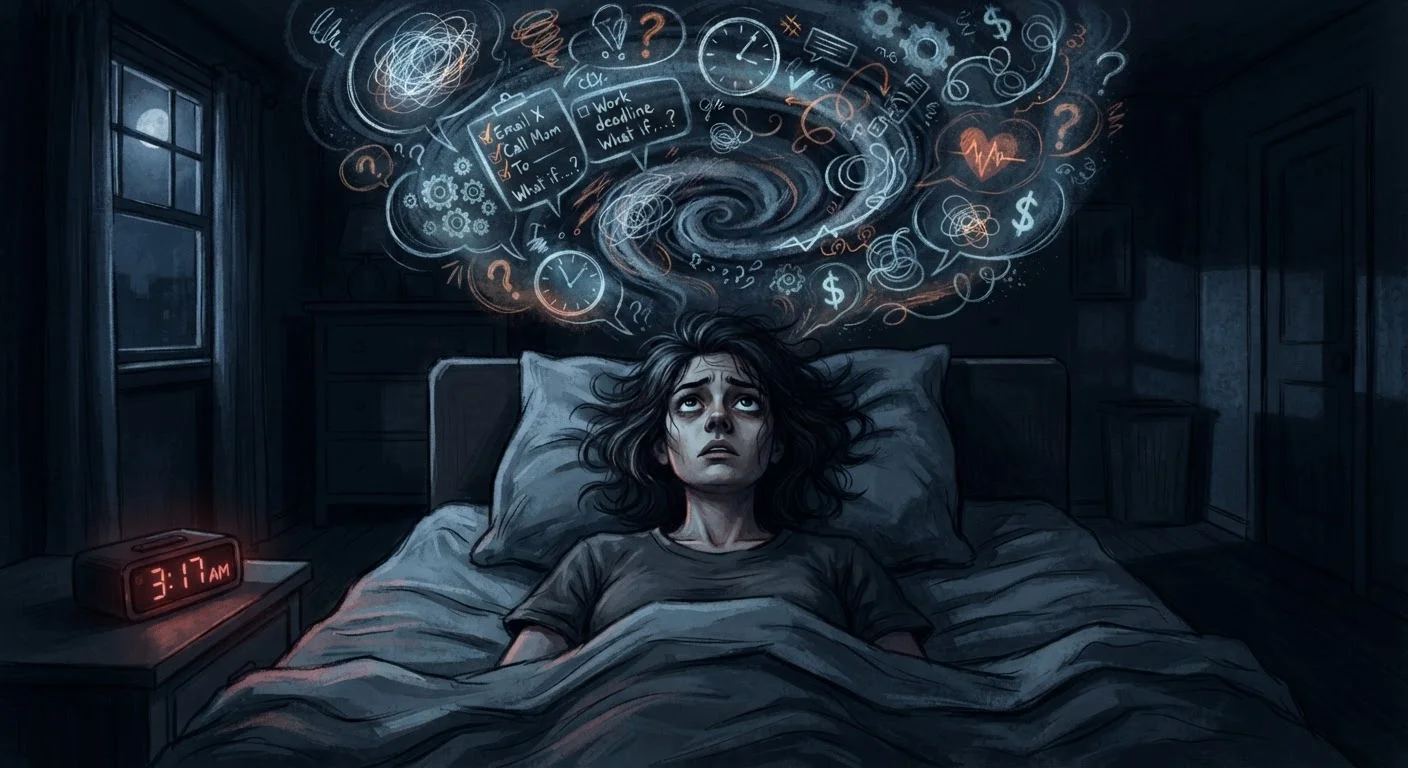
Beyond hormones, stress often brings rumination — the tendency to replay worrying thoughts in a loop. This mental activity keeps the brain's arousal systems engaged, making it difficult to transition into the slow-wave and REM sleep stages where the most restorative processes occur. For a closer look at how this cognitive pattern works, see how rumination and anxiety disrupt sleep.
Time Your Stress-Management Practices Strategically
Relaxation techniques are most effective when practiced consistently, not just during moments of acute stress. Building a brief daily routine — such as five minutes of slow breathing in the early evening — helps gradually lower the body's baseline cortisol level, making it easier for sleep to come naturally. Starting the practice hours before bed, rather than right at bedtime, gives the nervous system adequate time to shift into a calmer state.
The Return Trip: How Poor Sleep Amplifies Stress
The cycle doesn't stop at disrupted sleep. Research consistently shows that inadequate sleep — whether in duration or quality — makes the brain significantly more reactive to stressors the following day. The amygdala, the brain's threat-detection region, becomes more sensitive, while the prefrontal cortex, which helps regulate emotional responses, operates less effectively.
In practical terms, this means that after a poor night of sleep, minor frustrations can register as major threats. Patience thins. Decision-making becomes harder. The nervous system remains in a low-level state of alert, producing more cortisol — which then makes the next night's sleep more difficult. The loop closes.
43%
Americans reporting stress-related sleep loss
According to the American Psychological Association's Stress in America surveys, a substantial portion of U.S. adults consistently report that stress causes them to lie awake at night.
60%
Increase in amygdala reactivity after sleep deprivation
Research published in the journal Current Biology found that sleep-deprived participants showed significantly heightened amygdala responses to negative emotional stimuli compared to well-rested individuals.
This bidirectional relationship is well-documented. As the connection between sleep and stress runs both ways, treating only one side of the equation — say, addressing stress during the day but ignoring sleep hygiene — often produces limited results.
Practical Strategies for Interrupting the Loop
Breaking the stress-sleep feedback loop requires addressing both sides simultaneously. The following evidence-informed approaches are frequently cited in behavioral sleep research:
- Anchor your sleep schedule. Going to bed and waking at consistent times — even on weekends — helps stabilize the body's circadian rhythm and reduces cortisol irregularity. The Better Sleep Habits hub offers practical routines built around this principle.
- Create a wind-down buffer. Allocating 30–60 minutes before bed for low-stimulation activities — reading, light stretching, or a warm shower — allows the nervous system to begin downregulating. Screens and work tasks should be avoided during this window, as they sustain cognitive arousal.
- Use structured relaxation techniques. Slow, diaphragmatic breathing and progressive muscle relaxation are commonly used to activate the parasympathetic nervous system, counteracting the cortisol-driven alertness that stress produces. These practices don't require special equipment or significant time investment.
- Limit rumination at bedtime. Journaling worries or tomorrow's to-do list earlier in the evening — a technique sometimes called a "worry dump" — can reduce the mental load carried into sleep. Externalizing thoughts onto paper gives the brain permission to stop rehearsing them.
For those experiencing persistent symptoms, the interplay between sleep and mental health may be a factor worth exploring with a qualified professional. Cognitive Behavioral Therapy for Insomnia (CBT-I) is a structured, non-pharmacological treatment supported by a substantial body of research.
The Sleep & Recovery hub provides additional evidence-based strategies for improving sleep quality and supporting overall recovery.
This article is for general informational and educational purposes only and is not a substitute for professional medical advice, diagnosis, or treatment. If you are experiencing significant sleep difficulties or stress-related symptoms, please consult a qualified healthcare provider.