Why the Distinction Matters
Most of us use mood, emotion, and feeling as if they're synonyms — and in everyday conversation, that's perfectly fine. But researchers in psychology and neuroscience draw careful lines between them, and understanding those lines can actually change how you relate to your inner life.
When you can tell the difference between a passing emotion and a lingering mood, you're better equipped to respond thoughtfully rather than react automatically. This kind of self-awareness sits at the heart of emotional intelligence and is foundational to practices like mindfulness.
Emotion
A brief, automatic physiological and behavioral response to a specific internal or external stimulus. Emotions occur rapidly and are largely governed by subcortical brain structures like the amygdala before conscious awareness kicks in.
Feeling
The conscious, subjective experience of an emotional state. A feeling is your mind's interpretation and labeling of what your body is doing during an emotion.
Mood
A diffuse, relatively low-intensity affective state that persists over hours or days and is not necessarily tied to a specific trigger. Moods act as a background filter that shapes perception and emotional reactivity.
Affect
A broad umbrella term used in psychology to encompass emotions, feelings, and moods together. Researchers use 'affect' when referring to the general category of valenced (positive or negative) inner states.
Emotional Regulation
The ability to monitor, evaluate, and modify emotional reactions. Healthy emotional regulation involves neither suppressing nor being overwhelmed by emotions, but responding to them in flexible, adaptive ways.
Amygdala
An almond-shaped brain structure in the temporal lobe that plays a central role in processing emotionally significant stimuli, particularly threats. It contributes to the rapid onset of fear and other basic emotions.
This article is for general informational purposes only and is not a substitute for professional mental health advice. If you have concerns about your emotional wellbeing, please speak with a qualified healthcare provider.
Emotions: Short, Sharp, and Body-Based
In psychological and neuroscientific frameworks, an emotion is typically defined as a brief, automatic physiological response to a specific stimulus. Your heart rate spikes when a car cuts you off. Your muscles tense before a difficult conversation. These responses arise quickly — often within milliseconds — and are largely driven by brain structures like the amygdala.
Emotions are generally considered universal in their basic forms. Researchers including Paul Ekman identified a set of core emotions — such as fear, anger, disgust, sadness, happiness, and surprise — that appear across cultures, though how they are expressed and interpreted varies widely.
Crucially, emotions are not primarily cognitive events. They happen to you before your thinking brain fully catches up. For a deeper look at how this plays out in the body, see how emotions show up physically.
| Duration of a typical emotion | Seconds to minutes (American Psychological Association) |
| Duration of a typical mood | Hours to days (APA Dictionary of Psychology) |
| Number of basic emotions (Ekman model) | 6 (Paul Ekman's cross-cultural research) |
| Feelings vs. emotions | Feelings require conscious awareness; emotions do not (Damasio, 'The Feeling of What Happens' (1999)) |
| Mood influence on perception | Low mood lowers threshold for negative emotions (Cognitive behavioral research consensus) |
Feelings: The Conscious Layer
A feeling is what happens when your brain becomes consciously aware of an emotional state and begins to interpret it. Neuroscientist Antonio Damasio drew an influential distinction here: emotions are the raw, body-level events; feelings are the mental representations of those events.
In other words, fear is the emotion — the racing heart, the surge of adrenaline. "I feel afraid" is the feeling — your mind labeling and making sense of that physical experience.
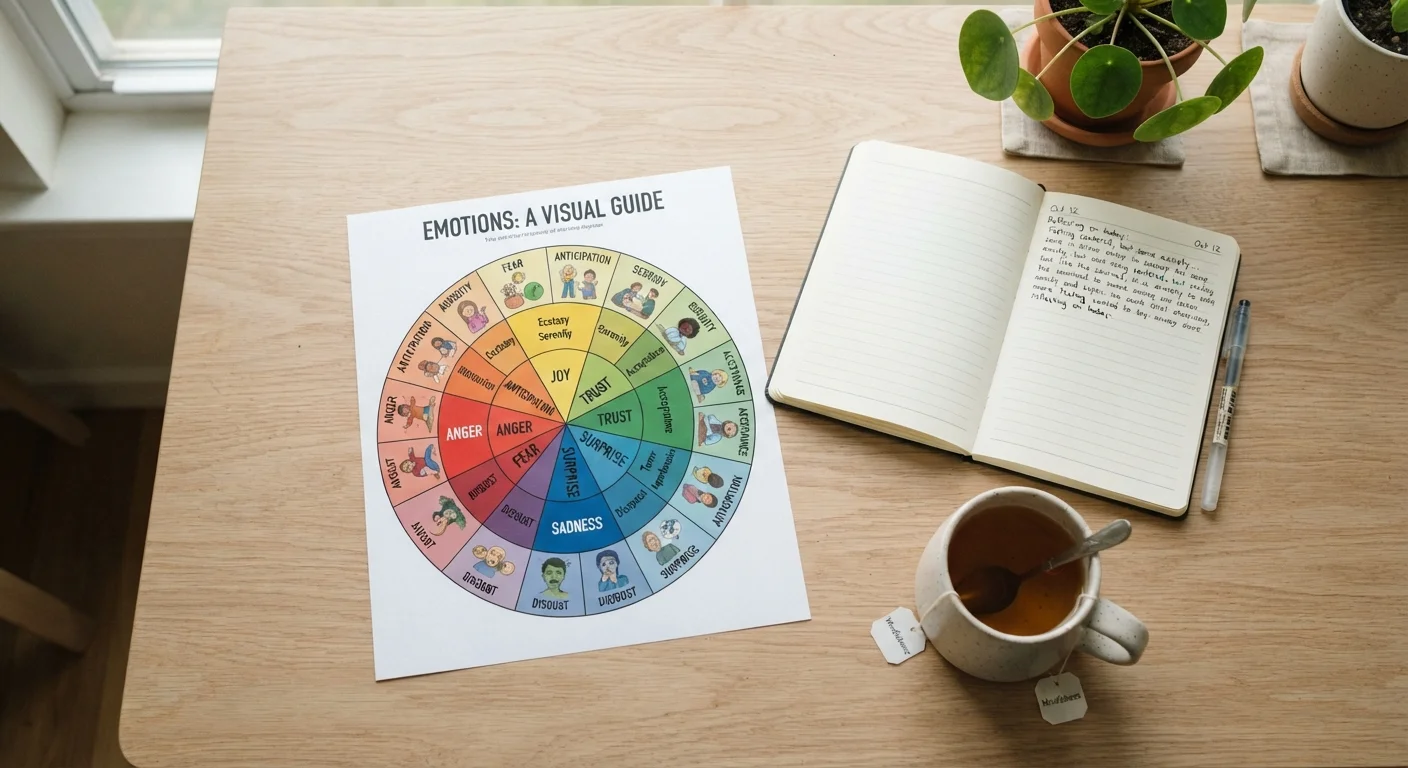
This is why feelings are more personal and subjective than emotions. Two people can experience the same emotion (say, the physiological arousal of a roller coaster) and interpret it as completely different feelings — one person feels exhilarated, the other terrified. Naming feelings more precisely is itself a skill, and tools like the emotion wheel can help you develop it.
Moods: The Background Weather
If emotions are a sudden thunderstorm and feelings are your interpretation of the rain, then a mood is the season. Moods are diffuse, lower-intensity states that persist over hours or days without necessarily being tied to a specific trigger.
You might wake up irritable without knowing exactly why. That low-grade restlessness coloring your whole day? That's a mood. Because moods aren't attached to a clear cause, they can be harder to identify and address — yet they powerfully shape how you perceive and respond to everything around you.
Moods also influence which emotions are most easily activated. When you're in a persistently low mood, it takes less to trigger sadness or frustration. Understanding whether what you're experiencing is a momentary emotion or an entrenched mood matters enormously — it's also central to distinguishing sadness from something more persistent, a topic explored in common misunderstandings about sadness and depression.
Putting It All Together
Here's a simple way to hold all three concepts at once:
- Emotion — automatic, brief, body-level response to a specific trigger
- Feeling — your conscious, subjective interpretation of that emotional state
- Mood — a background, diffuse state that persists and colors experience broadly
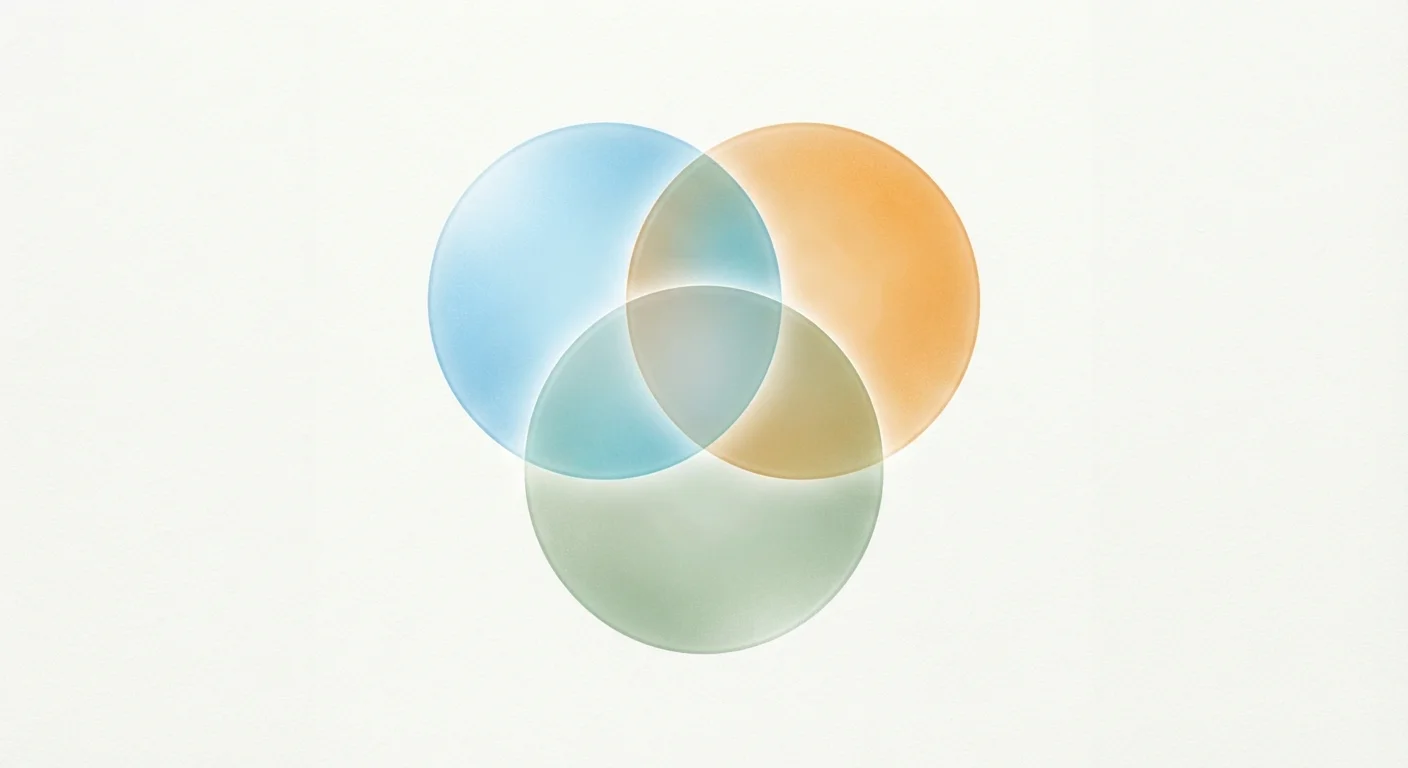
These three layers constantly interact. A bad mood makes certain emotions easier to trigger; those emotions then generate feelings that, if left unexamined, can reinforce the mood. Breaking that cycle starts with noticing which layer you're in. That noticing — non-judgmental, curious attention to your inner experience — is exactly what mindfulness and meditation practices are designed to support.
It's also worth remembering that not all positive states are alike. Joy, contentment, and awe each function differently — a nuance covered in why positive emotions are more complex than they sound.
This article is for general informational purposes only and is not a substitute for professional mental health advice. If you have concerns about your emotional wellbeing, please speak with a qualified healthcare provider.