
What Happens in the Body During an OSA Event
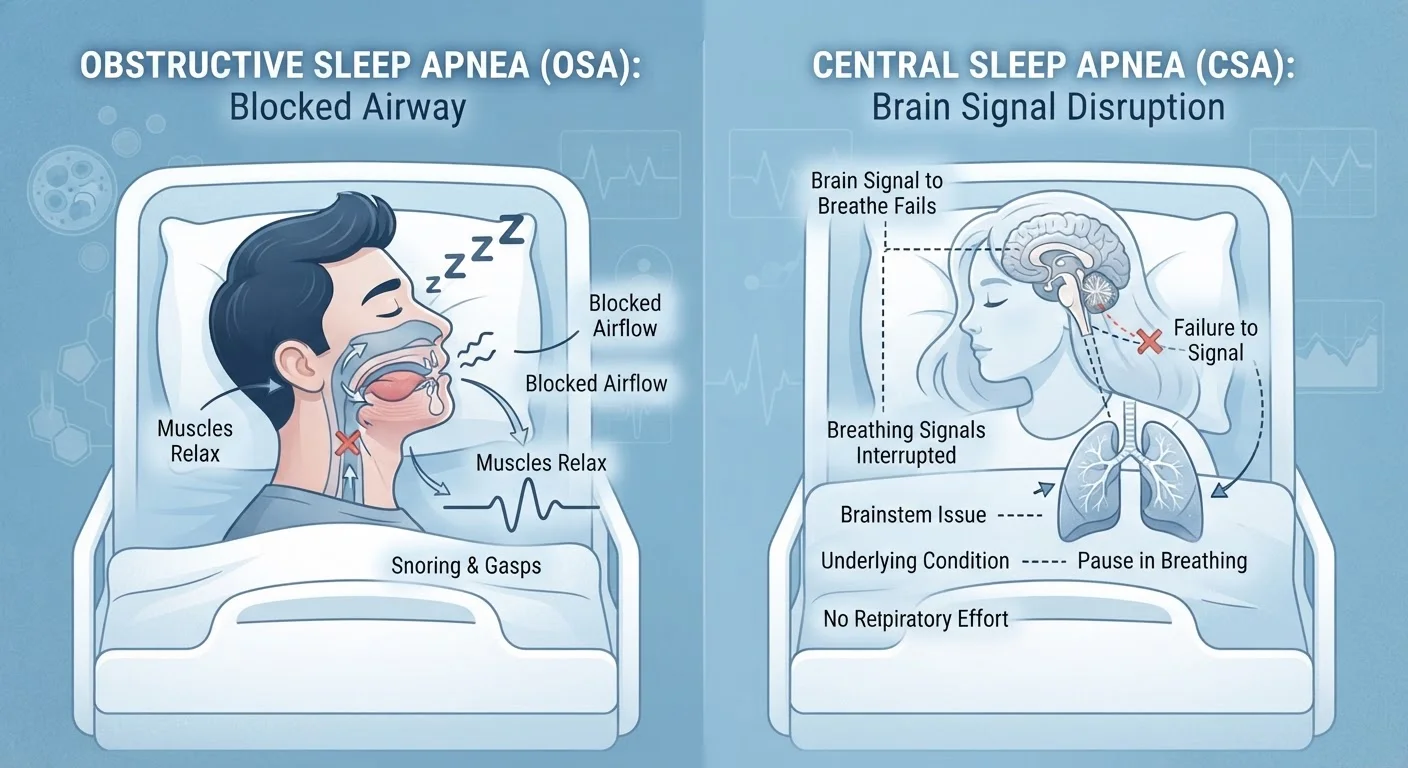
To understand obstructive sleep apnea, it helps to picture what happens inside the airway during sleep. As you drift off, the muscles throughout your body relax — including the soft tissue at the back of the throat. In people with OSA, this relaxation is severe enough that the airway collapses partially or completely, cutting off the flow of air to the lungs.
The brain detects the drop in oxygen and sends an emergency signal that causes a brief awakening — sometimes just long enough to tense the throat muscles and resume breathing. This can happen silently or with a loud snort or gasp. Most people have no memory of these arousals, but the accumulated effect across a night is deeply fragmented, unrestorative sleep.
OSA is distinct from central sleep apnea, in which the airway is open but the brain's breathing signal fails. For a full comparison, see our guide on central vs. obstructive sleep apnea.
~30M
Americans estimated to have OSA
According to the American Academy of Sleep Medicine, approximately 30 million U.S. adults have obstructive sleep apnea.
~80%
OSA cases that go undiagnosed
Research suggests the vast majority of people with clinically significant OSA have never received a formal diagnosis.
2–3×
Increased hypertension risk with severe OSA
Studies show individuals with severe untreated OSA are significantly more likely to develop high blood pressure than those without the condition.
Who Is Most Likely to Develop OSA
OSA is one of the most prevalent sleep disorders in the United States, yet it remains widely underdiagnosed. Several factors increase a person's likelihood of developing it:
- Excess weight: Fat deposits around the upper airway can narrow the throat, making collapse more likely during sleep.
- Sex and age: OSA is more common in men than premenopausal women, though the gender gap narrows significantly after menopause. Risk increases with age across all groups.
- Anatomy: A naturally narrow airway, recessed chin, large tonsils, or certain jaw structures can predispose individuals regardless of weight.
- Family history: Genetics influence both airway anatomy and muscle tone, making OSA more likely if a close relative has it.
- Nasal congestion: Chronic congestion from allergies or a deviated septum forces mouth breathing, which makes airway collapse easier.
- Alcohol and sedatives: These substances relax throat muscles further, worsening OSA or triggering it in susceptible individuals.
OSA also occurs in children, often linked to enlarged tonsils or adenoids. Special-population considerations — including children, pregnant individuals, and older adults — warrant individualized evaluation by a qualified clinician.
For a broader look at how OSA fits among other common conditions, see the most common sleep disorders in American adults.
Recognizing the Signs
Because OSA disrupts sleep without causing full awakening, many people don't identify it themselves — a bed partner's observations are often what first raises concern. Common signs include:
- Loud, chronic snoring — though snoring alone does not confirm OSA
- Witnessed pauses in breathing, followed by gasping or choking
- Waking with a dry mouth or sore throat
- Morning headaches
- Excessive daytime sleepiness, even after a full night in bed
- Difficulty concentrating or irritability
- Frequent nighttime urination (nocturia)
These symptoms overlap with other sleep disorders, which is why professional evaluation matters. Self-reported tiredness alone is not a reliable indicator of OSA severity. If you recognize these patterns, the appropriate next step is speaking with a healthcare provider — not self-diagnosing based on symptom checklists alone.
Our broader explainer on what's actually happening when you can't sleep provides helpful context for placing OSA among other conditions.
Why Unaddressed OSA Matters for Long-Term Health
OSA is more than a nighttime inconvenience. Repeated episodes of low oxygen (intermittent hypoxia) and fragmented sleep place sustained physiological stress on the cardiovascular and metabolic systems. Research consistently associates untreated OSA with elevated risk of:
- High blood pressure (hypertension): Each apnea event triggers a surge in blood pressure. Over time, this can contribute to chronically elevated readings.
- Heart disease and arrhythmias: OSA is linked to increased risk of coronary artery disease, heart failure, and atrial fibrillation.
- Type 2 diabetes: Intermittent hypoxia and sleep disruption can impair insulin sensitivity and glucose regulation.
- Stroke: Both the cardiovascular effects and changes in blood oxygen increase stroke risk.
- Cognitive impairment: Chronic sleep fragmentation is associated with memory difficulties, reduced attention, and a possible elevated risk of dementia over time.
The severity of these associations generally tracks with OSA severity — meaning more frequent and prolonged breathing events carry greater long-term risk. This is one reason early recognition and clinical evaluation are meaningful, not merely convenient.
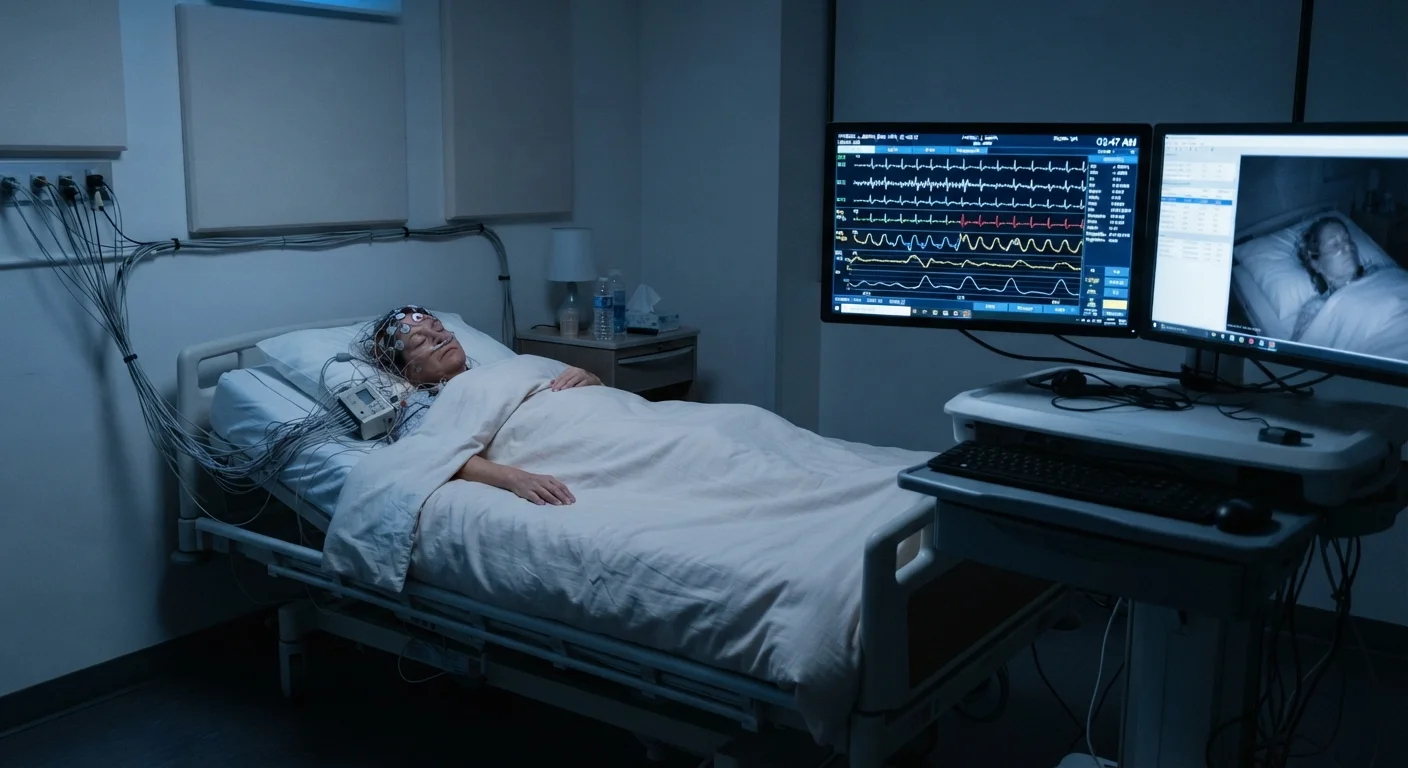
Understanding what a diagnosis pathway looks like can reduce barriers to seeking help. Our article on how sleep disorders are diagnosed walks through what to expect, and what a sleep study actually involves explains the gold-standard evaluation in plain language.
This article is for general informational purposes only and does not constitute medical advice. If you are concerned about your sleep or breathing during the night, please consult a qualified healthcare professional.