What Are Parasomnias?
Parasomnias are a group of sleep disorders characterized by unusual or disruptive behaviors, movements, emotions, or experiences that happen during sleep or during transitions between sleep and waking. Unlike insomnia — which involves difficulty sleeping — parasomnias occur while a person is asleep, often without any conscious awareness.
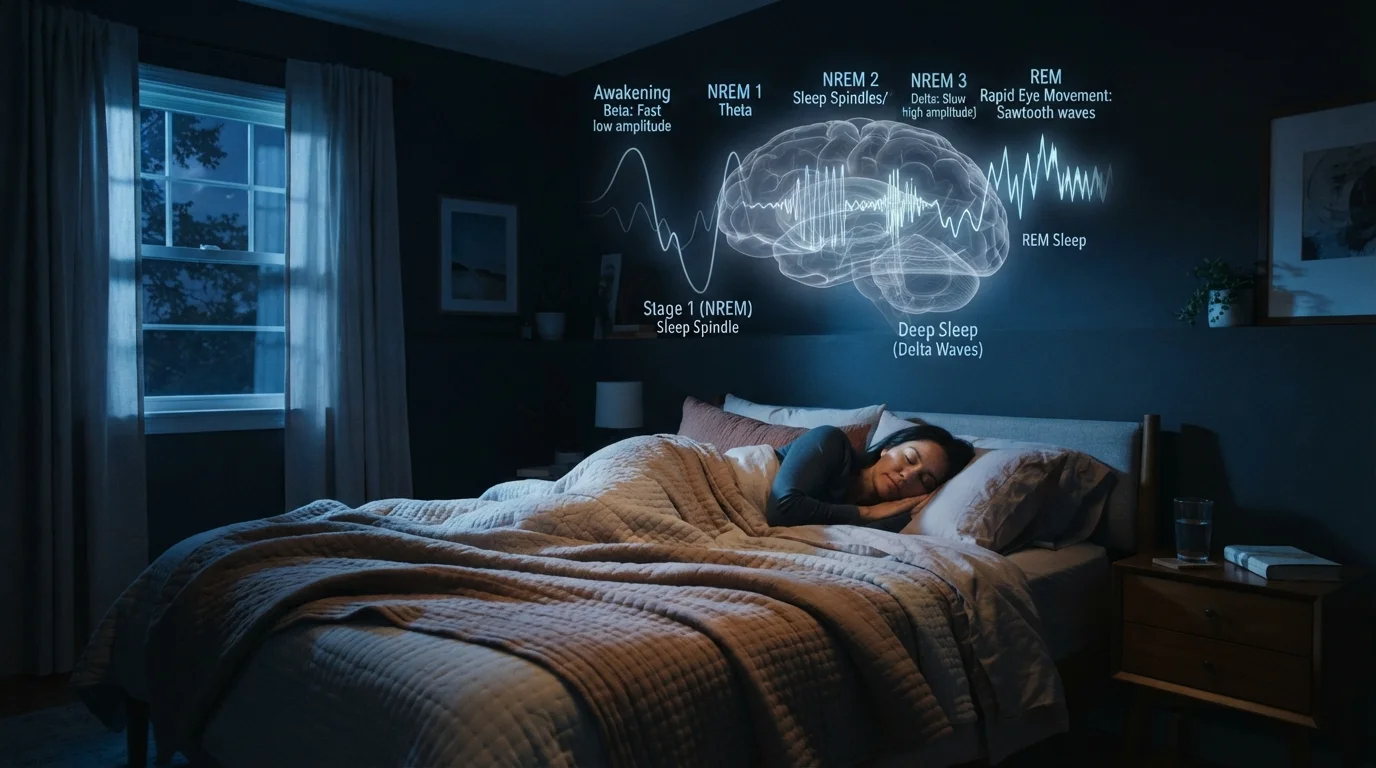
They span a wide range of phenomena, from relatively benign sleep talking to more complex events like sleepwalking or acting out vivid dreams. To understand why they happen, it helps to know that sleep is not a uniform state. Your brain cycles through distinct stages each night — understanding that architecture is foundational. For a clear breakdown, see how REM and NREM stages work. Parasomnias are defined partly by which stage they disrupt.
Parasomnia
An abnormal behavior, movement, or experience that occurs during sleep or during the transition between sleep and waking, usually without full conscious awareness.
NREM sleep
The non-rapid eye movement stages of sleep, including light and deep (slow-wave) sleep, that make up the majority of a typical night's rest.
REM sleep
The sleep stage characterized by rapid eye movements and vivid dreaming, during which the brain is highly active but the body's muscles are normally kept still.
Sleep atonia
The temporary muscle paralysis that naturally occurs during REM sleep to prevent the body from physically acting out dream content.
Polysomnography
A comprehensive overnight sleep study that records brain waves, eye movements, muscle activity, heart rate, and breathing to diagnose sleep disorders.
Confusional arousal
A type of partial awakening from deep sleep in which a person appears dazed or confused but is not fully conscious, often with no memory of the event.
Types of Parasomnias: NREM vs. REM
Parasomnias fall into two broad categories based on the sleep stage in which they occur.
NREM Parasomnias
These events arise from deep, slow-wave sleep — the kind that dominates the first half of the night. The brain is partially aroused but not fully awake, which creates a confused in-between state.
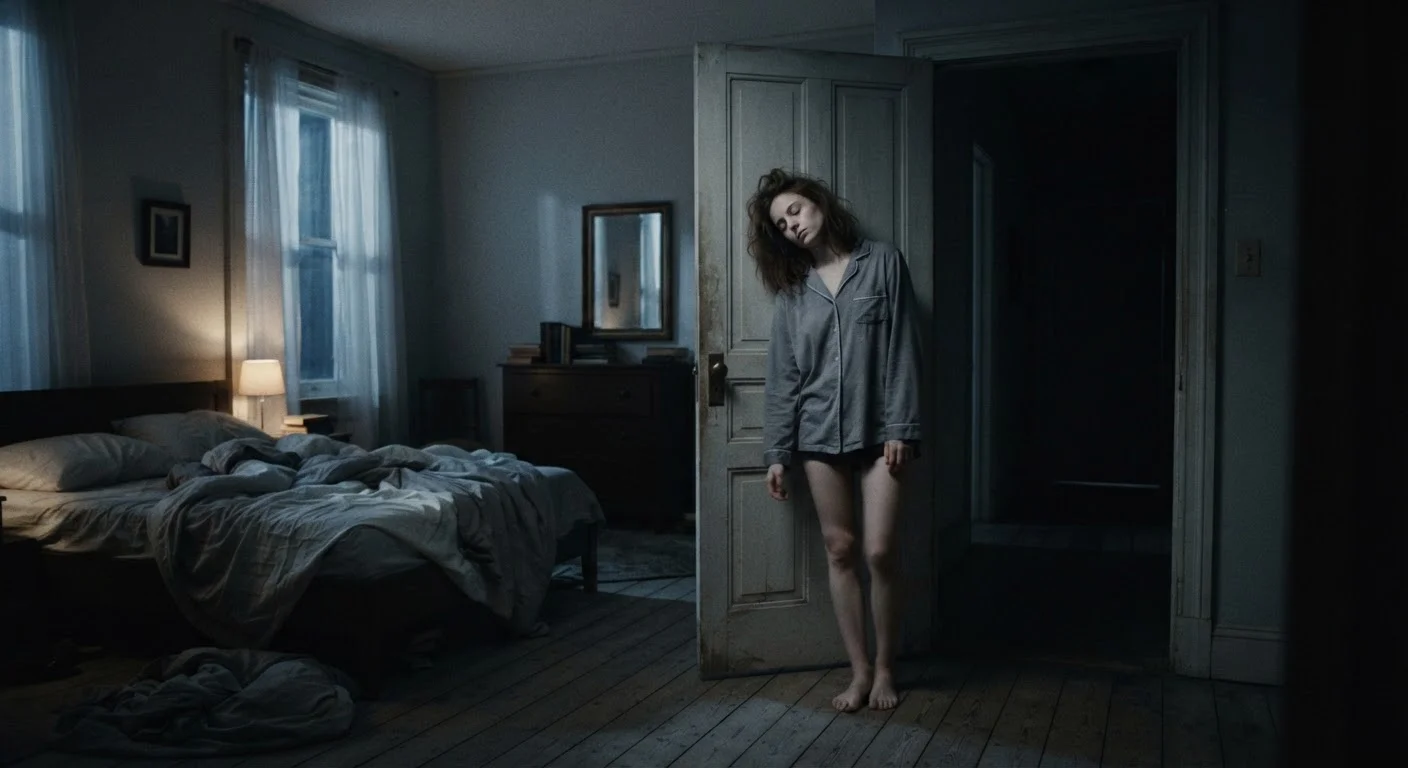
- Sleepwalking (somnambulism): The person moves through the environment with eyes open but is not consciously aware. Episodes can range from sitting up in bed to walking through the house. Memory of the episode is usually absent.
- Night terrors (sleep terrors): Intense episodes of fear, screaming, or thrashing that occur without a recalled dream. The person appears awake but is not and typically has no memory of the event by morning.
- Confusional arousals: A milder form where the person appears dazed and unresponsive, often talking incoherently without leaving bed.
- Sleep-related eating disorder: Recurring episodes of eating during partial arousals, often without awareness or recall.
REM Parasomnias
REM sleep normally includes muscle paralysis (called atonia) to prevent people from acting out their dreams. When this mechanism fails, movement can occur during dreaming.
- REM sleep behavior disorder (RBD): The person physically acts out dream content — talking, shouting, kicking, or punching. Unlike sleepwalking, the individual may recall vivid dream imagery. RBD is more common in older adults and has known associations with certain neurological conditions.
- Nightmare disorder: Repeated, distressing nightmares that cause significant sleep disruption or daytime distress.
For broader context on how parasomnias fit among other disruptions, this overview of sleep disorders provides a helpful starting point.
Common Triggers and Risk Factors
Parasomnias rarely arise from a single cause. A combination of biological predisposition and situational factors tends to set the stage.
- Sleep deprivation: Reducing total sleep time increases the pressure to enter deep sleep rapidly, which can destabilize transitions and trigger NREM events.
- Stress and anxiety: Psychological stress is one of the most frequently reported triggers for both sleepwalking and nightmares.
- Fever or illness: In children especially, febrile illness commonly precedes night terror episodes.
- Irregular sleep schedules: Disrupted circadian rhythms — from shift work, travel, or inconsistent bedtimes — can increase vulnerability.
- Medications: Some sedatives, sleep aids, antidepressants, and beta-blockers have been associated with parasomnia episodes. Never stop or change a medication without consulting a prescribing provider.
- Alcohol: Alcohol suppresses REM sleep early in the night and can produce a rebound effect that intensifies dreaming and arousal later.
- Family history: NREM parasomnias in particular show a strong hereditary component.
Making the Sleep Environment Safer
If someone in your household experiences sleepwalking or sleep terrors, simple environmental steps can reduce injury risk: lock exterior doors and windows, remove sharp or fragile objects from common paths, and consider a floor-level mattress if falls are a concern. These measures address safety without needing to wake the sleeper.
Habits that worsen sleep problems generally can compound parasomnia risk. Common missteps worth reconsidering are detailed in a related piece on sleep habits.
When to Seek Professional Guidance
Many parasomnias — particularly childhood sleepwalking and night terrors — resolve on their own and require little more than a safe sleep environment and consistent routines. However, certain signs indicate that professional evaluation is warranted.
- Episodes are frequent (several nights per week) or increasing in intensity
- The sleeper or a bed partner has been injured during an episode
- Events are causing significant daytime fatigue or psychological distress
- Parasomnias begin in adulthood or in older age without obvious cause
- The behavior involves aggressive movements, especially in older adults
A sleep specialist or primary care provider can assess whether an underlying condition — such as obstructive sleep apnea, a neurological issue, or medication interaction — is contributing. Diagnosis may involve a sleep study (polysomnography), which records brain activity, movement, and breathing simultaneously during sleep.
For perspective on how parasomnias compare to other common sleep problems affecting Americans, see the most common sleep disorders in American adults.
This article is for general informational purposes only and is not a substitute for professional medical advice, diagnosis, or treatment. If you have concerns about your sleep or health, please consult a qualified healthcare provider.